Qingyuan moksha Biotechnology Co., Ltd


Cleansing is the first step of every routine and, for many brands, the product with the steadiest repeat purchase. Yet cleansing products generate a predictable set of complaints: it emulsifies too slowly, the skin feels tight afterwards, it stings the eyes. None of these trace back to a single ingredient. Cleansing products fail on system fit, not on individual raw materials. This article covers what brand owners should expect from a cleansing balm, cleansing oil or makeup remover programme.
Why the Category Deserves Its Own Brief
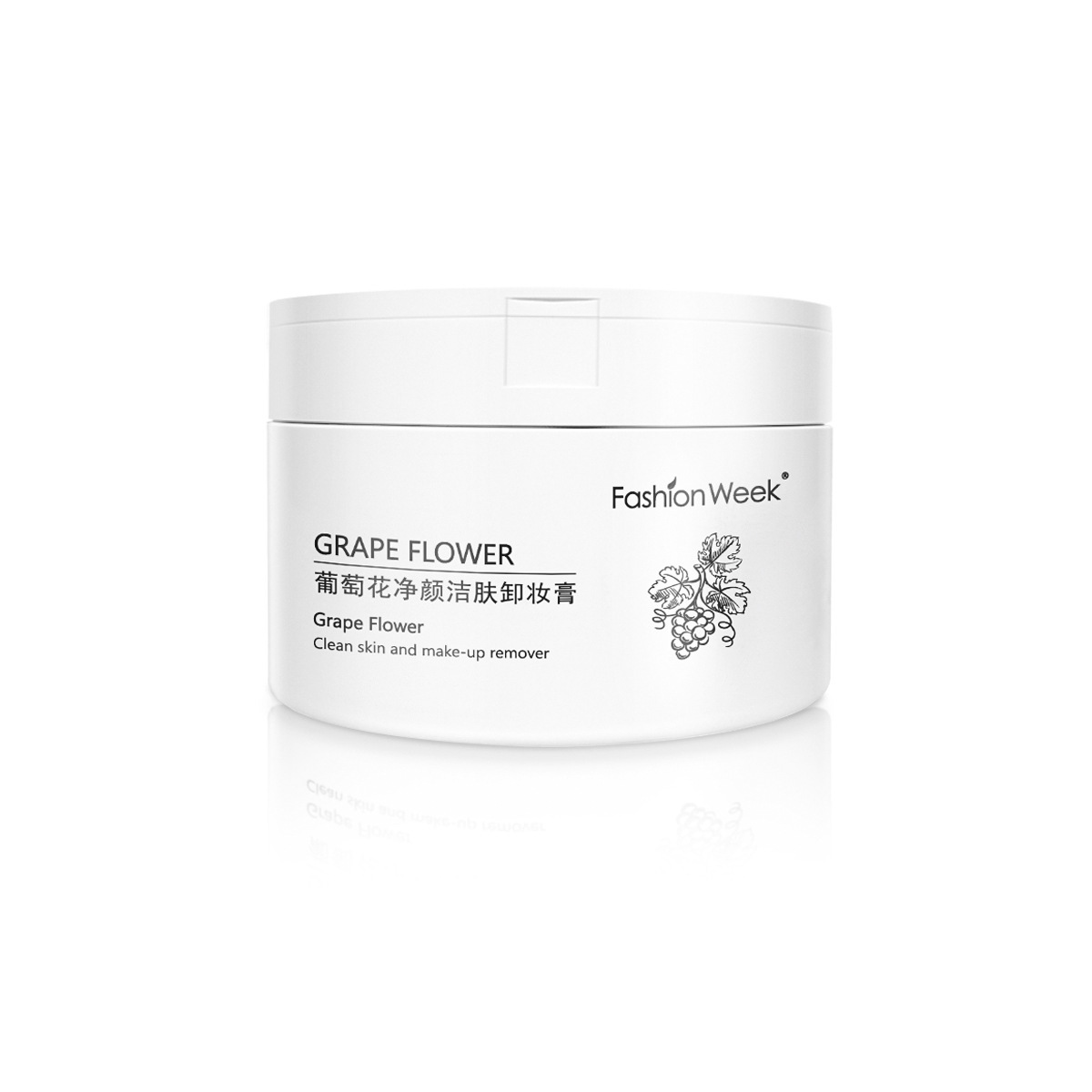
Cleansing demand tracks makeup and sunscreen usage. As daily sunscreen use has spread, cleansing has moved from a makeup-wearer specialty into a routine step for a much wider audience. At the same time, expectations have shifted. The competitive ground has moved from raw cleansing power to the balance between mildness and skin feel. For a brand, cleansing balms, oils and waters can share jar formats, fragrance systems and often the same filling line, which spreads development cost across a family rather than a single SKU. A comparable reference formula is the plant grape flower makeup remover cream.
Cleansing Oil: The Emulsifier System Carries Everything
A cleansing oil is a base oil, an emulsifier blend and a small amount of feel modifier. The base oil governs how efficiently makeup dissolves and how the skin feels after rinsing. The emulsifier governs how quickly the oil turns milky in contact with water. Residual oil film on the skin is almost always an emulsifier problem, and it is the usual root cause behind post-cleansing breakout complaints. Fix emulsifier type and dosage first, then set the oil ratio.
Choosing between emulsifier families
Polyether types emulsify fast and cost less, which suits high-volume entry products. Polyglycerol types feel lighter and are gentler on reactive skin, which suits premium positioning. Blending the two families often outperforms either used alone, holding rinse speed while improving the after-feel. Bi-phase removers for eyes and lips, such as this double layer eye and lip remover, follow the same logic but require tighter surfactant control.
Cleansing Balm: Melt Point, Firmness and Rinse Speed
A balm must hold its shape at room temperature, soften in the palm on contact, and emulsify quickly once water is added. These three requirements pull against each other. Solid fat melt point is the single hardest variable to place: too low and the balm collapses in summer, too high and it drags on the skin. The standard approach pairs high and low melt point butters so the blend softens near palm temperature, then adds a small amount of structurant to keep the body firm.
Cleansing Water and Eye-Area Tolerance
Cleansing waters rely on surfactants and polyols to lift residue. The formula is simpler, but the tolerance requirement is tighter. Eye sting is the key self-check for any remover used near the lash line, so cap the total surfactant load and pair it with soothing components from the start rather than reformulating later.
Sampling, Stability and Packaging Fit
Prepare two or three texture variants in the first sampling round and have the brand team test them on skin before narrowing down. Stability testing should cover warm, cold and ambient conditions, watching for separation, colour shift and odour drift. Verify the pump, spatula or dropper against the actual viscosity, and confirm the filling accuracy the format needs. Details on manufacturing conditions are described in the workshop section.
Run emulsifier system, balm structure and mildness through sampling in one pass and the rework risk at scale drops sharply. Start with one core format, prove the supply chain, then extend into the full family. Send your requirement through the contact page and the sampling plan can be scoped against your timeline.
Frequently asked questions
Can you produce Cleansing Balm and Makeup Remover OEM under our own brand?
Cleansing Balm and Makeup Remover OEM is handled as a private label project: you bring the brand and the market position, we cover formula, bulk, filling and packing. Existing bases can be adjusted for texture, fragrance and active level, or we develop from a new brief. Tooling and artwork belong to you, and our name does not appear on the pack.
What is the minimum order quantity?
MOQ is set by net fill per unit, not by category:
| Net fill | MOQ |
|---|---|
| < 15 ml/g | 5,000 pcs |
| 15-50 ml/g (50 included) | 3,000 pcs |
| 50-200 ml/g (200 included) | 2,000 pcs |
| > 200 ml/g | 1,000 pcs |
Several SKUs in one project can share a production run to reach the threshold, and a smaller trial order is possible once the formula is approved.
How long do samples and bulk production take?
Samples take 7-10 working days from a confirmed brief, or 10-15 days when a new mould or artwork is involved. Bulk runs 25-35 days after sample approval and packaging arrival. Repeat orders with an unchanged formula usually move faster.
Which certificates and documents come with the shipment?
The plant runs under GMPC and ISO 22716 with a 100,000-class cleanroom. Each shipment can include COA, MSDS, the full INCI list, stability data and microbiological reports. For the EU we support CPSR and PIF paperwork; for other markets we prepare the file set your importer asks for.
Can we change the formula, fragrance or packaging?
Yes. Texture, viscosity, fragrance, colour and active percentage are adjustable within regulatory limits. Packaging can be sourced by you or by us: tubes, airless bottles, jars, sachets and aluminium foil bags, with silkscreen, hot stamping or label application.
What information do you need to quote?
Category and target function, quantity per SKU, packaging direction, destination market and launch date. With that we reply within 24 hours on business days with feasibility, MOQ and a price range. An NDA can be signed before formulas are discussed.
Need this produced? Talk to the factory.
Wangsha Bio has run OEM/ODM production since 2006: 60,000 sqm plant, 17 lines, 100,000-class cleanroom, GMPC and ISO 22716 certified. Send your brief and we reply within 24 hours on business days with feasibility, MOQ and a price range.
Email lucky@moksha-bio.com | Product range | Workshop