
 Qingyuan moksha Biotechnology Co., Ltd


Dandruff shampoos are one of the few hair care categories where shoppers buy on function rather than on scent or packaging. That makes them a reliable volume line for private label brands, and also a category where formulation errors show up fast: a base that is too harsh strips the scalp, a base that is too mild leaves the active with nothing to deposit on, and a fragrance that is too strong turns a clinical product into a confusing one. This guide covers the actives still available to formulators, the surfactant decisions that determine whether they work, and the checks a project needs before it ships.
Which anti-dandruff actives a formulator can still use
The regulatory map changed in Europe. Zinc pyrithione is no longer permitted in cosmetic products sold in the EU, following its classification as a CMR substance, and several other markets have tightened or are reviewing their positions. Ranges built for Europe now lean on a narrower set of options, and buyers should confirm the destination market before the brief is written rather than after the artwork is approved.
Piroctone olamine is the workhorse of the current generation. It is well tolerated, works at low percentages, and is easy to build into opaque pearlescent bases. Climbazole offers a similar profile with a different sensorial footprint and is often paired with piroctone olamine in alternating or combined systems. Selenium disulfide sits at the stronger end: effective, but it brings colour, odour and packaging constraints that shape the whole formula. Salicylic acid is frequently added for scale softening rather than for the yeast itself, and it needs a pH window that may conflict with other actives.
The practical lesson is that actives cannot be swapped one for one. Each one carries its own pH preference, solubility behaviour, colour and odour, and each one changes how the base must be built.
How the surfactant base decides whether the active performs
An anti-dandruff active has to reach the scalp and stay there long enough to matter. That is a deposition problem, not a concentration problem. Harsh anionic bases clean aggressively and rinse the active away with the sebum, while very mild amino acid bases may not lift the sebum film that the active needs to penetrate.
Most commercial systems therefore use a mixed base: a primary anionic surfactant for cleansing, a secondary amphoteric for mildness and foam structure, and a low level of a cationic polymer or conditioning agent to improve substantivity. Cationic deposition aids are the lever most buyers overlook, and they need to be matched to the active: some polymers bind strongly to selenium particles and dull the colour, others improve piroctone olamine retention noticeably in rinse-off testing.
Viscosity and foam also interact with the active. Salt-thickened sulfate systems behave differently once an insoluble active is suspended, and a formula that looks acceptable in a beaker can thin out after three months in a bottle.
Sensory design: pearlising, colour and fragrance masking
Consumers judge a dandruff shampoo by how it feels and smells before they judge whether the scalp improved. Pearlescent, opaque bases signal efficacy in most Asian and Middle Eastern markets and hide the slight discolouration that some actives cause. Clear gel formats read as gentle but leave nowhere to hide a colour drift.
Selenium disulfide is the hardest case: it is orange-brown, has a sulfur note, and will stain light-coloured plastic. Formulators typically mask it with a stronger fragrance and a deliberate colour story, and specify a bottle that will not show staining at the shoulder. Fragrance has to be chosen against the base, not on a blotter, because sulfur and amine notes read very differently once diluted into a surfactant system.
Cooling agents such as menthol are popular for the itch-relief positioning, but they add a claim question and can irritate a compromised scalp, so the level needs to stay modest.
Stability, microbiology and packaging checks
Three tests catch most of the failures in this category. First, accelerated stability at elevated temperature, which reveals active settling, pearlising collapse and colour shift. Second, microbiological challenge testing, because high-water surfactant systems with botanical extracts are demanding environments and the preservative system must be validated in the final formula. Third, compatibility with the chosen pack, including stress checks on the bottle and closure, since sulfur-containing formulas are aggressive toward some liners and metallised decorations.
For export ranges, add a review of the destination market requirements for the specific active, plus a label check for any restricted or warning statements that apply. Documentation should be assembled before the first production run, not during registration.
What to settle in the brief
A short, specific brief saves several rounds of samples. Confirm the destination markets, since they determine which actives are available. Confirm the positioning: daily maintenance, seasonal flare-up, or a two-step routine with a separate scalp tonic, because each implies a different active level and a different base. Confirm the pack type and the colour story, since both constrain the formula. Confirm the sensory target, because a cooling, low-foam gel and a rich pearlescent cream are not variations of the same recipe.
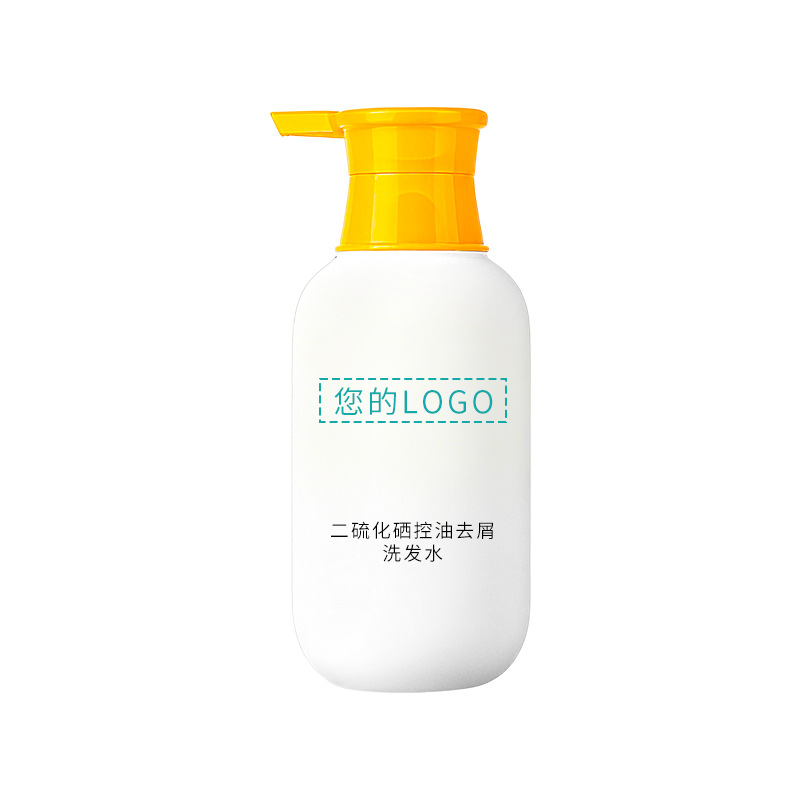
Wangsha Biotechnology runs hair and body wash lines alongside skin care at its Qingyuan plant, covering formulation, fragrance selection, filling and export documentation in one place. Buyers can review the product range and the workshop setup, then look at an existing selenium disulfide shampoo as a reference point.
In short, an anti-dandruff shampoo is a deposition project wrapped in a sensory one. Pick the active for the market, build the base around the active, and test the pair in the pack it will ship in. More formulation notes are published in our industry news section, and project enquiries can go through the RFQ page.
Frequently asked questions
Can you produce Anti-Dandruff Shampoo Actives under our own brand?
Anti-Dandruff Shampoo Actives is handled as a private label project: you bring the brand and the market position, we cover formula, bulk, filling and packing. Existing bases can be adjusted for texture, fragrance and active level, or we develop from a new brief. Tooling and artwork belong to you, and our name does not appear on the pack.
What is the minimum order quantity?
MOQ is set by net fill per unit: under 15 ml/g 5,000 pcs; 15-50 ml/g 3,000 pcs; 50-200 ml/g 2,000 pcs; above 200 ml/g 1,000 pcs. Several SKUs in one project can share a production run to reach the threshold.
How long do samples and bulk production take?
Samples take 7-10 working days from a confirmed brief, or 10-15 days when a new mould or artwork is involved. Bulk runs 25-35 days after sample approval and packaging arrival. Repeat orders with an unchanged formula usually move faster.
Which certificates and documents come with the shipment?
The plant runs under GMPC and ISO 22716 with a 100,000-class cleanroom. Each shipment can include COA, MSDS, the full INCI list, stability data and microbiological reports. For the EU we support CPSR and PIF paperwork; for other markets we prepare the file set your importer asks for.
Can we change the formula, fragrance or packaging?
Yes. Texture, viscosity, fragrance, colour and active percentage are adjustable within regulatory limits. Packaging can be sourced by you or by us: tubes, airless bottles, jars, sachets and aluminium foil bags, with silkscreen, hot stamping or label application.
What information do you need to quote?
Category and target function, quantity per SKU, packaging direction, destination market and launch date. With that we reply within 24 hours on business days with feasibility, MOQ and a price range. An NDA can be signed before formulas are discussed.
Need this produced? Talk to the factory.
Wangsha Bio has run OEM/ODM production since 2006: 60,000 sqm plant, 17 lines, 100,000-class cleanroom, GMPC and ISO 22716 certified. Send your brief and we reply within 24 hours on business days with feasibility, MOQ and a price range.
Email lucky@moksha-bio.com | Product range | Workshop
