Qingyuan moksha Biotechnology Co., Ltd


Body care quietly earns its place in most cosmetic portfolios. Unit prices are lower than facial skincare, but usage volume is much higher and repurchase is fast, which makes the category an efficient way to build repeat customers. It is also a category where early decisions about texture and fragrance carry more weight than the ingredient story. Body care sells on the experience of using it, so texture and scent design belong in the first brief.
Lotion or Butter: Setting the Positioning First
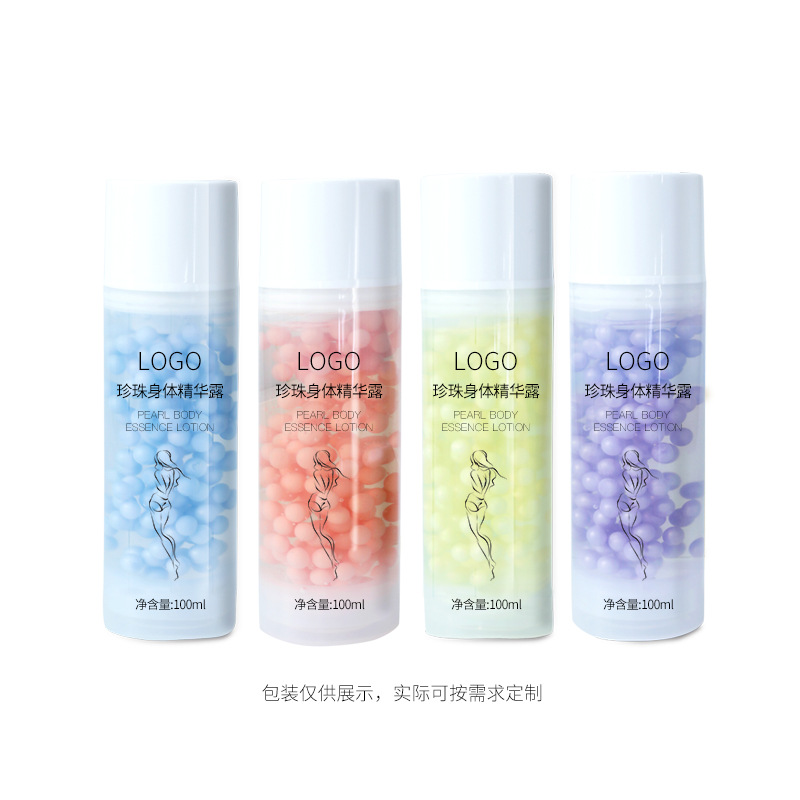
Body lotions spread easily, absorb quickly and suit daily use in warm climates. Body butters are richer, hold a longer massage window and perform better on very dry skin or in winter. The choice is a positioning decision before it is a formula decision, because it determines the pack, the claimed size and the seasonal plan. Many brands run both from one fragrance direction to keep the line coherent. A representative product is this pearl body essence cream.
Building the Texture
Lotions are oil-in-water emulsions where the oil phase sits between roughly 5 and 15 percent, with the emulsifier and thickener doing the work of making a light film feel substantial. Butters use a much higher solid fat content and rely on structurants to stay firm. Spreading time and absorption time are the two texture metrics worth measuring, because they map directly onto how users describe the product.
Hot-climate and cold-climate variants
The same brief needs different answers in different markets. A formula that feels right in summer becomes sticky in humidity, and one built for winter can feel greasy in a warm climate. Preparing a light and a rich version of one concept is cheaper than reformulating after launch.
Actives and Fragrance
Common body care actives include niacinamide, urea, panthenol, shea and various plant oils. Because the application area is large, the cost per use matters more than in facial skincare, so actives should be chosen for visible texture benefit and price per kilogram together. Fragrance is one of the strongest drivers of repurchase in this category: allocation to fragrance should be generous, and the sample should be evaluated on skin rather than on a blotter, since body chemistry changes the dry-down.
It is worth running the fragrance through its own stability programme as well. Some accords shift noticeably at elevated temperature, and a scent that smells correct in a warm room can turn sharp after a few weeks in a warehouse. Ask for an odour comparison between the retained sample and the aged sample at each stability checkpoint, and keep a reference of the approved standard so comparisons stay objective. Fragrance drift is one of the few body care defects that no amount of production discipline can fix after the fact.
Packaging and Formats
Pumps and large tubes suit lotions; wide-mouth jars suit butters. Refill formats are gaining traction in several markets and change the pack specification early, so decide whether refills are in scope before tooling is ordered. Confirm the filling line handles the viscosity and that the pump primes on the first stroke, which is a common complaint point in reviews. Packaging and filling notes appear in the workshop overview.
Sampling and Quality Checkpoints
Request three-condition stability data and confirm the product recovers after a freeze-thaw cycle if it will ship internationally. For butters, check for graininess or fat bloom after a few weeks, since these defects typically appear after a promising first sample. Every body care defect that matters shows up within eight weeks of a well-designed stability programme. Manufacturer credentials can be reviewed on the about us page, and requirements can be submitted through the contact page or the inquiry form.
Body care rewards operational discipline. Get texture, fragrance and packaging aligned in sampling, keep one fragrance direction across the line, and the category becomes a dependable source of repeat purchase rather than a seasonal experiment.
Frequently asked questions
Can you produce Body Care OEM: Developing Body Lotions and Body Butters under our own brand?
Body Care OEM: Developing Body Lotions and Body Butters is handled as a private label project: you bring the brand and the market position, we cover formula, bulk, filling and packing. Existing bases can be adjusted for texture, fragrance and active level, or we develop from a new brief. Tooling and artwork belong to you, and our name does not appear on the pack.
What is the minimum order quantity?
MOQ is set by net fill per unit, not by category:
| Net fill | MOQ |
|---|---|
| < 15 ml/g | 5,000 pcs |
| 15-50 ml/g (50 included) | 3,000 pcs |
| 50-200 ml/g (200 included) | 2,000 pcs |
| > 200 ml/g | 1,000 pcs |
Several SKUs in one project can share a production run to reach the threshold, and a smaller trial order is possible once the formula is approved.
How long do samples and bulk production take?
Samples take 7-10 working days from a confirmed brief, or 10-15 days when a new mould or artwork is involved. Bulk runs 25-35 days after sample approval and packaging arrival. Repeat orders with an unchanged formula usually move faster.
Which certificates and documents come with the shipment?
The plant runs under GMPC and ISO 22716 with a 100,000-class cleanroom. Each shipment can include COA, MSDS, the full INCI list, stability data and microbiological reports. For the EU we support CPSR and PIF paperwork; for other markets we prepare the file set your importer asks for.
Can we change the formula, fragrance or packaging?
Yes. Texture, viscosity, fragrance, colour and active percentage are adjustable within regulatory limits. Packaging can be sourced by you or by us: tubes, airless bottles, jars, sachets and aluminium foil bags, with silkscreen, hot stamping or label application.
What information do you need to quote?
Category and target function, quantity per SKU, packaging direction, destination market and launch date. With that we reply within 24 hours on business days with feasibility, MOQ and a price range. An NDA can be signed before formulas are discussed.
Need this produced? Talk to the factory.
Wangsha Bio has run OEM/ODM production since 2006: 60,000 sqm plant, 17 lines, 100,000-class cleanroom, GMPC and ISO 22716 certified. Send your brief and we reply within 24 hours on business days with feasibility, MOQ and a price range.
Email lucky@moksha-bio.com | Product range | Workshop