Qingyuan moksha Biotechnology Co., Ltd


Hair care is often treated as the easier half of a cosmetic portfolio, and it is not. A shampoo has to clean an oily surface, leave a conditioning film behind, rinse without residue, and hold a fragrance that survives both dilution and drying. A shampoo is a balance problem: every increase in cleansing power removes some of the conditioning the consumer notices. That tension is what brand owners should plan around when sourcing a hair care line.
Choosing the Surfactant System
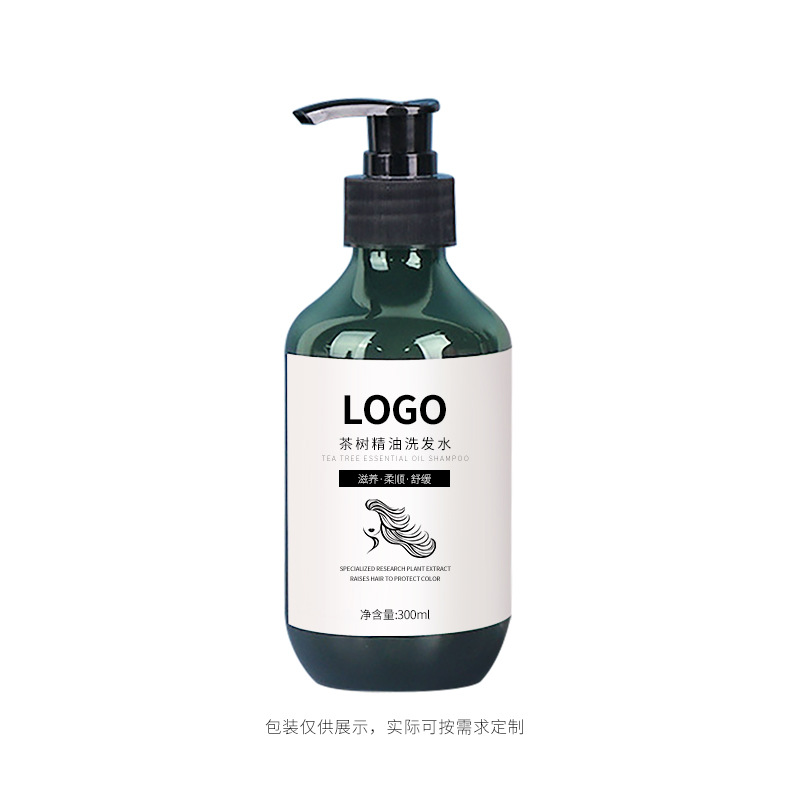
The primary surfactant sets the cleansing strength, the foam character and most of the cost. Sulfate systems foam quickly, clean aggressively and remain the default for high-volume products. Sulfate-free systems based on isethionates, glutamates or amphoteric surfactants are gentler on the scalp and colour-treated hair, but they foam differently and require more careful rheology control. Match the surfactant system to the claimed benefit rather than to the price alone. A scalp-care product positioned on mildness will not succeed if the base cleanses like an industrial degreaser. A representative format is this botanical tea tree shampoo.
Conditioning and Deposit
Conditioning agents in a shampoo must deposit on the fibre while the surfactant is trying to remove everything from it. Cationic polymers and silicone derivatives are chosen for their deposition behaviour, not only for their feel on the hand. Over-depositing produces limpness and build-up; under-depositing produces the dry, squeaky feel that reviewers describe as stripping. The window is narrow, and it moves with water hardness, which varies significantly by market. Test in the water hardness your target market actually has, locally or in a matched lab setup.
Scalp care positioning
Scalp claims such as oil balance, flake control and comfort are popular because they are easy to communicate. They are also the claims most likely to drift into drug territory, so wording should be reviewed against the destination market before the artwork is printed. A comparable item is this calendula amino acid shampoo.
Testing Methods That Predict Consumer Perception
Standard physico-chemical testing confirms the product is stable, but it does not tell you whether users will like it. Two additional measurements are worth requesting. Wet combing force quantifies how easily hair detangles after rinsing, which correlates closely with perceived conditioning. Foam volume and drainage time, measured under controlled water hardness, predict how the lather feels in use. Both metrics are objective and both map onto review language.
Packaging, Filling and Format Decisions
Shampoo viscosity is high, so pump selection matters more than it does for a thin serum: a pump that struggles with the base will be the first complaint in reviews. Confirm the pump dispenses the actual production viscosity, not a thinned sample. Bottle size interacts with the marketing claim as well, since a smaller bottle with a richer formula reads as more concentrated. If refill pouches are in scope, decide before tooling, because the pouch format changes the fill line requirement. Packaging and filling notes appear in the workshop overview.
Claims, Documentation and Launch
Request three-condition stability data plus a freeze-thaw cycle if the product will ship internationally, and confirm compatibility with the pack, because surfactants can interact with closures and printed surfaces. Keep the claim set within what your testing actually supports, and align it with the destination market before printing. Manufacturer credentials are summarised on the about us page, and technical requirements can be submitted through the inquiry form.
Hair care rewards getting the balance right before scaling. Fix the surfactant system against the claimed benefit, tune conditioning in the target market's water, and verify the pump against production viscosity. A shampoo that rinses clean and detangles easily will hold its rating better than one that wins on fragrance alone.
Frequently asked questions
Can you produce Shampoo and Scalp Care OEM under our own brand?
Shampoo and Scalp Care OEM is handled as a private label project: you bring the brand and the market position, we cover formula, bulk, filling and packing. Existing bases can be adjusted for texture, fragrance and active level, or we develop from a new brief. Tooling and artwork belong to you, and our name does not appear on the pack.
What is the minimum order quantity?
MOQ is set by net fill per unit, not by category:
| Net fill | MOQ |
|---|---|
| < 15 ml/g | 5,000 pcs |
| 15-50 ml/g (50 included) | 3,000 pcs |
| 50-200 ml/g (200 included) | 2,000 pcs |
| > 200 ml/g | 1,000 pcs |
Several SKUs in one project can share a production run to reach the threshold, and a smaller trial order is possible once the formula is approved.
How long do samples and bulk production take?
Samples take 7-10 working days from a confirmed brief, or 10-15 days when a new mould or artwork is involved. Bulk runs 25-35 days after sample approval and packaging arrival. Repeat orders with an unchanged formula usually move faster.
Which certificates and documents come with the shipment?
The plant runs under GMPC and ISO 22716 with a 100,000-class cleanroom. Each shipment can include COA, MSDS, the full INCI list, stability data and microbiological reports. For the EU we support CPSR and PIF paperwork; for other markets we prepare the file set your importer asks for.
Can we change the formula, fragrance or packaging?
Yes. Texture, viscosity, fragrance, colour and active percentage are adjustable within regulatory limits. Packaging can be sourced by you or by us: tubes, airless bottles, jars, sachets and aluminium foil bags, with silkscreen, hot stamping or label application.
What information do you need to quote?
Category and target function, quantity per SKU, packaging direction, destination market and launch date. With that we reply within 24 hours on business days with feasibility, MOQ and a price range. An NDA can be signed before formulas are discussed.
Need this produced? Talk to the factory.
Wangsha Bio has run OEM/ODM production since 2006: 60,000 sqm plant, 17 lines, 100,000-class cleanroom, GMPC and ISO 22716 certified. Send your brief and we reply within 24 hours on business days with feasibility, MOQ and a price range.
Email lucky@moksha-bio.com | Product range | Workshop