Qingyuan moksha Biotechnology Co., Ltd


Preservation is the least glamorous part of a skincare brief and the one most likely to cause a recall. A product that separates in a stability chamber is a cost problem; a product that grows microorganisms on a bathroom shelf is a reputation problem. Preservation is a system decision that reaches into packaging, pH and the way a user handles the bottle. This guide explains what brand owners should specify, and which questions expose a weak proposal during sampling.
Why Preservation Is a System, Not an Ingredient
Brand owners often regard preservation as a single line item chosen from a supplier list. In practice the effective protection of a formula depends on the interaction between the preservative, the water content, the pH, the other ingredients and the pack. A preservative that performs well in a gel can underperform in an emulsion at the same use level.
Two mechanisms explain most of the surprises. Some ingredients bind or partition preservatives and reduce the concentration available in the water phase, which is where microorganisms grow. Others shift the pH over time, gradually moving the formula outside the range where the preservative is active. Both effects appear during shelf life rather than on day one, which is why early screening alone is not sufficient.
Matching the Preservative to the Product
The starting point is the product type. Water-rich leave-on products carry the highest risk; anhydrous products carry the lowest; rinse-off products sit in between but are used in wet environments that introduce contamination. The risk category sets the required evidence, and it should be stated in the brief rather than left to the manufacturer.
pH and water activity as design inputs
Most preservative systems have an operating pH window, and the rest of the formula usually has its own preference. Fixing the product pH first and then choosing the system that fits is more efficient than adjusting pH around the preservative. Decide pH at the concept stage, because by sampling time it is usually locked by the actives. Water activity matters as well: lowering available water reduces microbiological pressure and can widen the acceptable options.
Challenge Testing: What the Protocol Should Cover
A challenge test introduces a defined set of microorganisms at a known level and measures how quickly the formula reduces them over time. The result is only meaningful if the test runs on the finished formula in its final pack. Challenge data from a laboratory base is not evidence about your product.
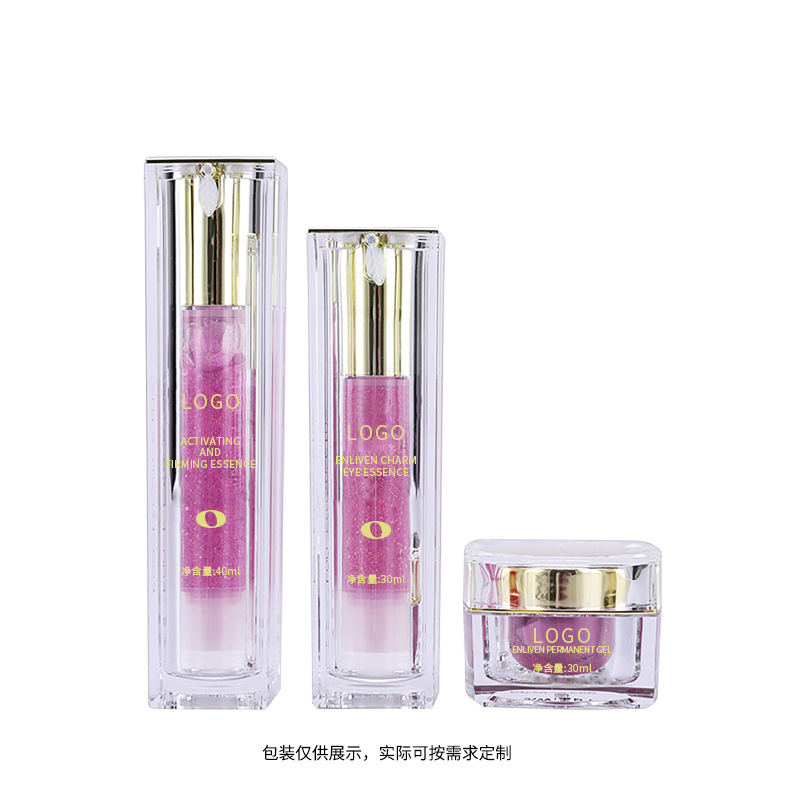
The test should reflect the product as sold, including any claim that it is free from certain materials, because those restrictions limit the system available. If the concept excludes a preservative family, say so before the formula is designed rather than after the first sample is rejected. A multi-unit set such as this multi-step facial kit illustrates how sets multiply the testing surface, since each unit is a separate formula with its own preservation requirement.
Packaging and the User's Hand
Pack format changes the contamination pathway. A sealed pump delivers product without contact; an open jar receives fingers and is the hardest format to protect. The same formula can be acceptable in a pump and unacceptable in a jar, and that judgement belongs to the finished pack.
If a jar is required for positioning reasons, the formula needs a more robust system, and the label should include usage guidance that reduces contamination. Pack and preservation should be decided together; treating them as separate decisions is how projects end up reformulating after tooling. Filling and cleanroom conditions are described in the workshop overview, and the wider range is listed in the product range.
What to Put in the Specification
Four items belong in the written specification: the challenge test method and acceptance criteria, the pH range with an allowable tolerance, the pack format assessed, and a change-notification requirement if the preservative system or its supplier changes. A change-notification clause is the cheapest protection a brand owner can write into a supply agreement. Without it, a formula can be adjusted for cost without the brand knowing, and the first sign is a consumer complaint.
Manufacturer documentation is summarised on the about us page, and technical requirements can be submitted through the inquiry form.
Preservation is invisible when it works and existential when it fails. Specify the risk category, test in the final pack, and lock the change-notification requirement. A product that is stable, preserved and documented will support a brand for years, while a shortcut on any of the three ends the conversation with the retailer.
Frequently asked questions
Can you produce Preservatives and Challenge Testing in Private Label Skincare under our own brand?
Preservatives and Challenge Testing in Private Label Skincare is handled as a private label project: you bring the brand and the market position, we cover formula, bulk, filling and packing. Existing bases can be adjusted for texture, fragrance and active level, or we develop from a new brief. Tooling and artwork belong to you, and our name does not appear on the pack.
What is the minimum order quantity?
MOQ is set by net fill per unit, not by category:
| Net fill | MOQ |
|---|---|
| < 15 ml/g | 5,000 pcs |
| 15-50 ml/g (50 included) | 3,000 pcs |
| 50-200 ml/g (200 included) | 2,000 pcs |
| > 200 ml/g | 1,000 pcs |
Several SKUs in one project can share a production run to reach the threshold, and a smaller trial order is possible once the formula is approved.
How long do samples and bulk production take?
Samples take 7-10 working days from a confirmed brief, or 10-15 days when a new mould or artwork is involved. Bulk runs 25-35 days after sample approval and packaging arrival. Repeat orders with an unchanged formula usually move faster.
Which certificates and documents come with the shipment?
The plant runs under GMPC and ISO 22716 with a 100,000-class cleanroom. Each shipment can include COA, MSDS, the full INCI list, stability data and microbiological reports. For the EU we support CPSR and PIF paperwork; for other markets we prepare the file set your importer asks for.
Can we change the formula, fragrance or packaging?
Yes. Texture, viscosity, fragrance, colour and active percentage are adjustable within regulatory limits. Packaging can be sourced by you or by us: tubes, airless bottles, jars, sachets and aluminium foil bags, with silkscreen, hot stamping or label application.
What information do you need to quote?
Category and target function, quantity per SKU, packaging direction, destination market and launch date. With that we reply within 24 hours on business days with feasibility, MOQ and a price range. An NDA can be signed before formulas are discussed.
Need this produced? Talk to the factory.
Wangsha Bio has run OEM/ODM production since 2006: 60,000 sqm plant, 17 lines, 100,000-class cleanroom, GMPC and ISO 22716 certified. Send your brief and we reply within 24 hours on business days with feasibility, MOQ and a price range.
Email lucky@moksha-bio.com | Product range | Workshop