Qingyuan moksha Biotechnology Co., Ltd


Anti-ageing ingredient trends move faster than formulators can absorb them. Botox-like peptides and retinol alternatives are still on shelf when PQQ, ergothioneine and a new generation of peptide sequences appear at the front of the ingredient list. For a brand owner the question is not whether the name is fashionable but whether it can be built into a formula and survive to the end of shelf life. Whether an active can be commercialised depends on its stability window and system compatibility, not on how often it is mentioned. This guide covers what to check before committing development budget.
Three Hurdles Every New Active Must Clear
The first hurdle is stability: does the material degrade at process temperature, storage temperature or under light. The second is solubility, which decides the whole formula skeleton, because a water-soluble active and an oil-soluble one cannot be handled the same way. The third is compatibility with the preservative system, the thickener network and any other active in the same base. An active that clears all three is worth a sampling round; one that fails any of them is worth a conversation, not a project.
Most concepts that never reach market fail at the first hurdle rather than at the efficacy question. Stability is the entry ticket; efficacy data is only the bonus. Ask the manufacturer for the raw material stability file early, run a screening pass, and decide afterwards whether to spend development resource. Process and cleanroom capability are described in the workshop overview.
PQQ and Ergothioneine: Where the Process Limits Sit
PQQ is strongly water-soluble and tends toward a deep colour, which shows up as progressive colour deepening in a finished product. Ergothioneine is also water-soluble, carries a clear antioxidant positioning, and is comparatively sensitive to a hot emulsification stage. Combining the two in one base adds an interaction question on top of each individual constraint. For this pair, formulation effort belongs in process temperature and light protection rather than in raising the dosage.
Process control points worth writing into the batch record
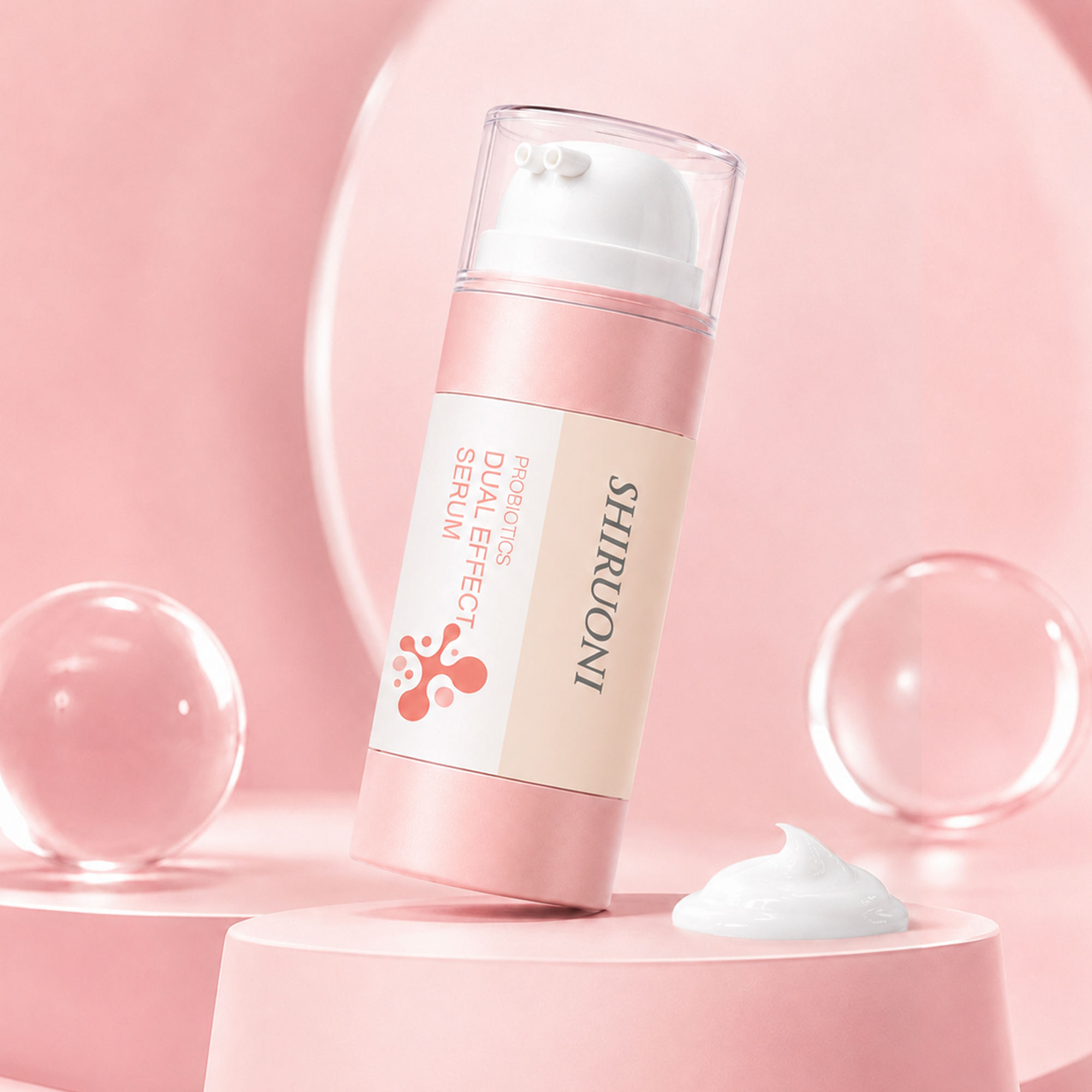
In practice the useful levers are a lower late-stage addition temperature, a shorter hold at elevated temperature, and getting the product into light-protective packaging quickly after filling. Where the format allows, an opaque or dark pack markedly slows colour change. Pack barrier performance is a protection measure for these actives, not an aesthetic preference. Existing multi-step formats are listed in the product range.
Peptides: Purity, pH and Compatibility
Peptides are the best-understood of the three families and the easiest to source from multiple suppliers. Their practical issues are narrower but real: odour variation between raw material grades, the effect of system pH on sequence stability, and compatibility with certain preservation chemistries. Settle pH and the preservative system together before discussing dosage, because changing either afterwards invalidates the peptide data.
Peptide raw materials usually carry a characteristic odour that becomes noticeable at higher doses, so fragrance design has to be planned alongside the dosage rather than after it. Fix the peptide level first and build the scent around it; the reverse order leads to repeated reformulation. A water-based peptide serum format is shown in this firming and hydrating reference.
Dosage Ranges and How to Validate Them
Higher dosage is not automatically better. Solubility limits, viscosity shifts and odour thresholds all impose real ceilings. Set the dose at the highest level the system can carry well, rather than at the highest number that looks impressive on a label. Factories normally offer two or three dosage levels in sampling, and they should be offered inside one base so the comparison is meaningful.
Beyond the standard three-temperature stability programme, request an assay of the active content at each checkpoint for water-soluble actives that are sensitive to light. An assay result tells you what survived; appearance and odour only tell you what changed. Where a formula combines several actives, encapsulation can separate incompatible materials and change the release profile, as illustrated by this eye patch reference.
Cost, Supply and Range Structure
New actives usually cost more than conventional raw materials, and whether the price can be carried depends on the shape of the range rather than on one product. The common approach is a single high-dosage hero item for visibility and a conventional base for volume. Testing a new active in one product is safer than committing an entire line to it.
Supply stability deserves equal attention. Several newer actives are made in limited quantities with long lead times, and sole sourcing puts the production schedule at risk once volume grows. A qualified second source for a critical active is the cheapest insurance available to a launch plan. Manufacturer credentials are summarised on the about us page, and requirements can be submitted through the inquiry form.
Active ingredients will keep rotating, but the test for a brand owner stays constant: can it be built in reliably, will it survive shelf life, and can it carry the price. Answer those three questions and the ingredient trend stops driving the decision.
Frequently asked questions
Can you produce Anti-Ageing Actives Beyond Retinol under our own brand?
Anti-Ageing Actives Beyond Retinol is handled as a private label project: you bring the brand and the market position, we cover formula, bulk, filling and packing. Existing bases can be adjusted for texture, fragrance and active level, or we develop from a new brief. Tooling and artwork belong to you, and our name does not appear on the pack.
What is the minimum order quantity?
MOQ is set by net fill per unit, not by category:
| Net fill | MOQ |
|---|---|
| < 15 ml/g | 5,000 pcs |
| 15-50 ml/g (50 included) | 3,000 pcs |
| 50-200 ml/g (200 included) | 2,000 pcs |
| > 200 ml/g | 1,000 pcs |
Several SKUs in one project can share a production run to reach the threshold, and a smaller trial order is possible once the formula is approved.
How long do samples and bulk production take?
Samples take 7-10 working days from a confirmed brief, or 10-15 days when a new mould or artwork is involved. Bulk runs 25-35 days after sample approval and packaging arrival. Repeat orders with an unchanged formula usually move faster.
Which certificates and documents come with the shipment?
The plant runs under GMPC and ISO 22716 with a 100,000-class cleanroom. Each shipment can include COA, MSDS, the full INCI list, stability data and microbiological reports. For the EU we support CPSR and PIF paperwork; for other markets we prepare the file set your importer asks for.
Can we change the formula, fragrance or packaging?
Yes. Texture, viscosity, fragrance, colour and active percentage are adjustable within regulatory limits. Packaging can be sourced by you or by us: tubes, airless bottles, jars, sachets and aluminium foil bags, with silkscreen, hot stamping or label application.
What information do you need to quote?
Category and target function, quantity per SKU, packaging direction, destination market and launch date. With that we reply within 24 hours on business days with feasibility, MOQ and a price range. An NDA can be signed before formulas are discussed.
Need this produced? Talk to the factory.
Wangsha Bio has run OEM/ODM production since 2006: 60,000 sqm plant, 17 lines, 100,000-class cleanroom, GMPC and ISO 22716 certified. Send your brief and we reply within 24 hours on business days with feasibility, MOQ and a price range.
Email lucky@moksha-bio.com | Product range | Workshop