Qingyuan moksha Biotechnology Co., Ltd


Single-use formats look like the easiest products in a skincare range to develop and behave like some of the most demanding. A cleansing wipe is a liquid formula carried on a substrate, sealed in a pack that the user opens repeatedly with wet hands. Substrate, liquid loading, preservation and seal integrity each change the consumer verdict. In a single-use product the substrate and the liquid form one system, not a liquid that happens to sit on a cloth. This guide covers what to settle before a sampling brief is placed.
Substrate: The First Variable
Substrate material and weight decide softness, thickness and tensile strength. Spunlace nonwovens are soft and hold a high liquid load, which suits cleansing and makeup removal. Spunbond and thermal-bonded substrates are stronger but read as rougher, which suits products where friction is part of the function. Substrate hand feel differs little when dry and diverges sharply once saturated.
Sheet dimensions and fold pattern are underestimated just as often. A sheet that is too small reads as insufficient; one that is too large adds cost without adding function. Fold pattern governs how smoothly a sheet pulls out and how well the stack reseals. Settle dimensions and fold pattern together with the filling line, because changing either later invalidates the tooling.
Liquid Loading and Saturation
Loading is the mass of liquid carried per sheet. Too low and the sheet feels dry and underperforms; too high and liquid pools in the pack, sheets stick together, and one pull brings out three. The usable loading range is set by the substrate absorption capacity and cannot be raised unilaterally.
How to judge whether loading is right
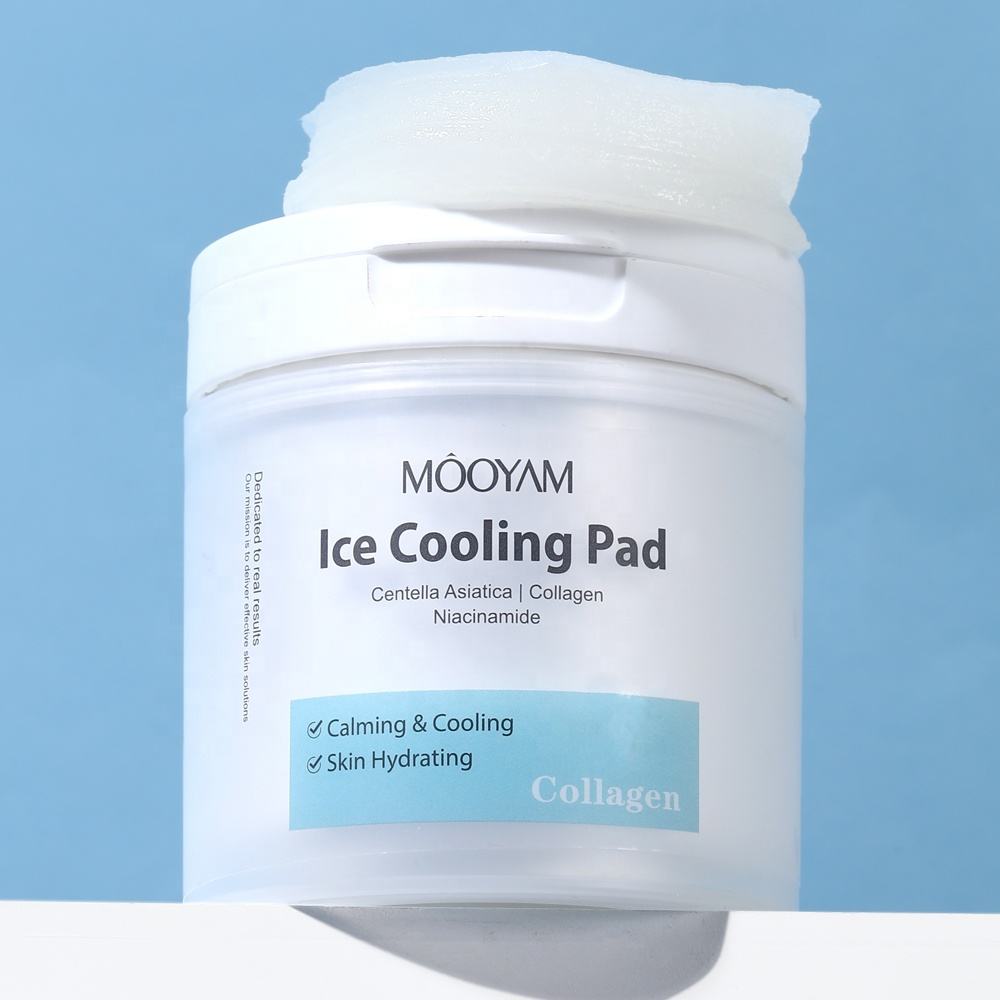
A practical method fixes the substrate and runs three loading levels, then has the same panel remove a standard makeup load from a fixed area, recording how many sheets are needed to finish. That measure tracks real use more closely than asking whether the sheet feels wet enough. Sheets per use is a more repeatable metric than any subjective description of wetness. Related liquid formats are shown in this facial pad reference.
Preservation in an Open, Water-Rich Format
A pack of wipes is a high-water format that the user opens repeatedly, letting air in with every sheet removed. Contamination routes are far more numerous than in a sealed bottle, while the positioning is often gentle and intended for use near the eyes, which narrows the preservation options at the same time. Preservation is harder in a single-use pack than in a bottle, and that expectation belongs in the brief.
The available levers are a more reliable reseal, less headspace inside the pack, lower water activity through humectant content, and a clearly stated period of use after opening. Stating the post-opening use period is itself part of the product protection strategy.
Seal Integrity and Production Consistency
Seal integrity determines whether the pack still holds its liquid at the end of shelf life. Documented failure modes include liquid creeping along the seal, label lift, and lid adhesion falling away after repeated opening. Seal testing must run on the finished pack, because content and pack fail independently.
At production scale, two numbers matter: fill weight variation per pack and stacking consistency. Both drift as line speed rises. Writing a fill weight tolerance into the acceptance criteria is the least expensive quality control available in this category.
Cost Structure and Range Planning
Unit cost divides into substrate, liquid and packaging, and in most single-use products substrate and packaging outweigh the liquid. Cutting cost by simplifying the liquid first is usually the wrong direction. If savings are needed, adjust substrate weight or pack construction and protect the functional components of the formula.
A common range structure uses a core product for volume and a functional variant for margin, sharing one substrate specification across both to pool purchasing. A shared substrate specification lowers cost across the line without compromising feel. Wider format options are listed in the product range, and manufacturing conditions are described in the workshop overview.
Single-use products are decided by the fit between substrate, loading, preservation and pack. Align those four at sampling and the return rate after launch drops sharply. Send your concept through the contact page to scope a sampling plan.
Frequently asked questions
Can you produce Cleansing Wipes and Single-Use Formats in Private Label under our own brand?
Cleansing Wipes and Single-Use Formats in Private Label is handled as a private label project: you bring the brand and the market position, we cover formula, bulk, filling and packing. Existing bases can be adjusted for texture, fragrance and active level, or we develop from a new brief. Tooling and artwork belong to you, and our name does not appear on the pack.
What is the minimum order quantity?
MOQ is set by net fill per unit, not by category:
| Net fill | MOQ |
|---|---|
| < 15 ml/g | 5,000 pcs |
| 15-50 ml/g (50 included) | 3,000 pcs |
| 50-200 ml/g (200 included) | 2,000 pcs |
| > 200 ml/g | 1,000 pcs |
Several SKUs in one project can share a production run to reach the threshold, and a smaller trial order is possible once the formula is approved.
How long do samples and bulk production take?
Samples take 7-10 working days from a confirmed brief, or 10-15 days when a new mould or artwork is involved. Bulk runs 25-35 days after sample approval and packaging arrival. Repeat orders with an unchanged formula usually move faster.
Which certificates and documents come with the shipment?
The plant runs under GMPC and ISO 22716 with a 100,000-class cleanroom. Each shipment can include COA, MSDS, the full INCI list, stability data and microbiological reports. For the EU we support CPSR and PIF paperwork; for other markets we prepare the file set your importer asks for.
Can we change the formula, fragrance or packaging?
Yes. Texture, viscosity, fragrance, colour and active percentage are adjustable within regulatory limits. Packaging can be sourced by you or by us: tubes, airless bottles, jars, sachets and aluminium foil bags, with silkscreen, hot stamping or label application.
What information do you need to quote?
Category and target function, quantity per SKU, packaging direction, destination market and launch date. With that we reply within 24 hours on business days with feasibility, MOQ and a price range. An NDA can be signed before formulas are discussed.
Need this produced? Talk to the factory.
Wangsha Bio has run OEM/ODM production since 2006: 60,000 sqm plant, 17 lines, 100,000-class cleanroom, GMPC and ISO 22716 certified. Send your brief and we reply within 24 hours on business days with feasibility, MOQ and a price range.
Email lucky@moksha-bio.com | Product range | Workshop