Qingyuan moksha Biotechnology Co., Ltd


Microbial problems in cosmetics are rarely caused by a single step. Water, raw materials, equipment, environment and packaging form a chain, and a failure anywhere in it shows up in the finished goods. The link that receives the least attention and carries a great deal of influence is process water. Water is the largest component in most formulas and one of the easiest routes for contamination to enter. This guide runs from treatment to release and sets out what a buyer can reasonably ask about.
Treatment Paths for Process Water
Cosmetic process water normally passes through several stages: pre-treatment removes suspended solids and residual chlorine, reverse osmosis or ion exchange reduces dissolved solids, and ultraviolet or ultrafiltration stages handle the microbiological load. Requirements differ by product type, and a water-rich formula with a narrow preservation window needs a tighter water specification than an anhydrous product. Water quality belongs in the development brief, not in the factory's default settings.
Treated water is only the starting point. Storage and distribution are where day-to-day variation actually appears. A compliant treatment plant with a neglected loop is the most common source of microbiological excursions on a production floor.
Loop and Tank Management
Purified water that sits still, or that accumulates in bends and valve bodies, creates conditions where organisms establish themselves. The usual controls are continuous circulation, scheduled loop sanitation, sealed tanks with filtered vents, and written sampling rules at each point of use.
This work is invisible when it is done properly, and it becomes visible in finished-goods results the moment it slips. During an audit, ask for the sampling point layout, the sampling frequency and the historical results, then check whether the record is continuous and whether excursions were investigated. A continuous history says far more about a quality system than a single recent certificate.
Sampling points and frequency
Sampling normally covers the treatment outlet, the storage tank, the end of the loop and each filling station, at a frequency set by risk. Typical programmes test total microbial counts alongside the parameters that matter for the specific product type, on a weekly or monthly cycle.
Filling Environment and Operator Practice
Filling areas are managed at defined cleanliness grades, maintained through air supply, pressure differentials and air change rates. The more exposed the product is during filling, the higher the grade it needs, which is why open-jar formats are filled in the more tightly controlled areas.
People are the least stable element of any environment. Gowning routines, hand hygiene and the frequency of movement into and out of the controlled area all influence the actual conditions. How well operating rules are followed tells you more about a factory than the equipment list does. Area classification and cleanroom conditions are described in the workshop overview.
Verification and Batch Release
Verification usually runs on three levels: routine monitoring of the water system, microbiological testing of finished goods, and challenge testing of the preservation system. Each answers a different question and none replaces the others. A challenge test is only meaningful when it is run on the finished product in its final pack.
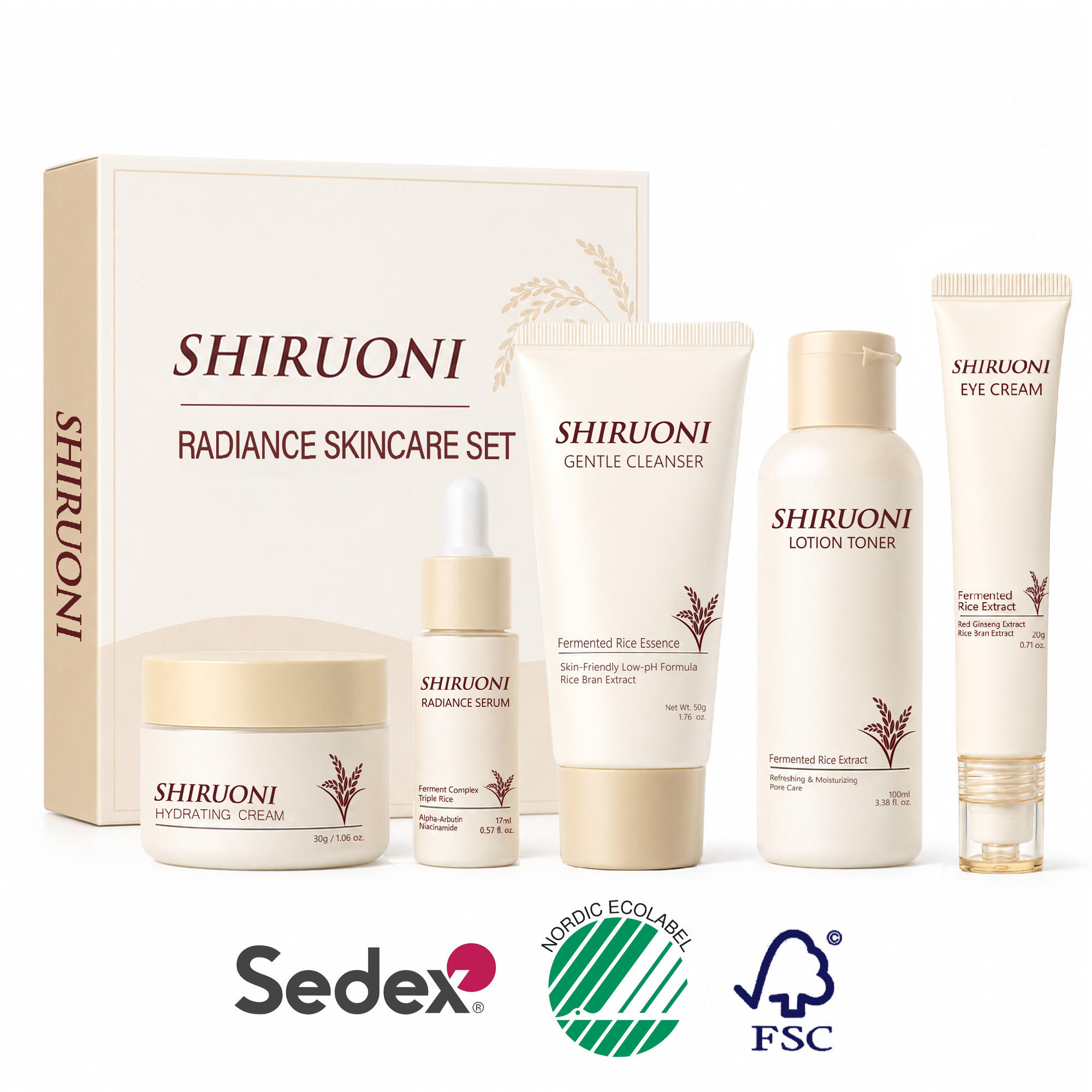
At release, microbiological results should be read alongside the batch record for pH, viscosity and appearance. Formulas built on fermented inputs, such as this fermented rice essence set, show natural variation between batches in colour and odour, so an acceptable range should be agreed in advance. Defining the natural variation band up front is easier than explaining it after the fact.
What a Brand Owner Should Ask
Four questions cover most of the ground: which sampling points and frequencies apply to the water system, what cleanliness grades are used for which product types, how filling operations and records are controlled, and what the release criteria are. Answers to those four give a reasonable picture of a factory's microbial control.
Manufacturer credentials and quality documentation are summarised on the about us page, and related technical topics appear across the product range documentation.
Microbial control is silent when it works and decisive when it fails. Connect water, environment, verification and release into one chain, and the stability of the product stops being a matter of chance. Submit project requirements through the inquiry form to plan an audit and sampling visit.
Frequently asked questions
Can you produce Water Systems and Microbial Control in Cosmetic Manufacturing under our own brand?
Water Systems and Microbial Control in Cosmetic Manufacturing is handled as a private label project: you bring the brand and the market position, we cover formula, bulk, filling and packing. Existing bases can be adjusted for texture, fragrance and active level, or we develop from a new brief. Tooling and artwork belong to you, and our name does not appear on the pack.
What is the minimum order quantity?
MOQ is set by net fill per unit, not by category:
| Net fill | MOQ |
|---|---|
| < 15 ml/g | 5,000 pcs |
| 15-50 ml/g (50 included) | 3,000 pcs |
| 50-200 ml/g (200 included) | 2,000 pcs |
| > 200 ml/g | 1,000 pcs |
Several SKUs in one project can share a production run to reach the threshold, and a smaller trial order is possible once the formula is approved.
How long do samples and bulk production take?
Samples take 7-10 working days from a confirmed brief, or 10-15 days when a new mould or artwork is involved. Bulk runs 25-35 days after sample approval and packaging arrival. Repeat orders with an unchanged formula usually move faster.
Which certificates and documents come with the shipment?
The plant runs under GMPC and ISO 22716 with a 100,000-class cleanroom. Each shipment can include COA, MSDS, the full INCI list, stability data and microbiological reports. For the EU we support CPSR and PIF paperwork; for other markets we prepare the file set your importer asks for.
Can we change the formula, fragrance or packaging?
Yes. Texture, viscosity, fragrance, colour and active percentage are adjustable within regulatory limits. Packaging can be sourced by you or by us: tubes, airless bottles, jars, sachets and aluminium foil bags, with silkscreen, hot stamping or label application.
What information do you need to quote?
Category and target function, quantity per SKU, packaging direction, destination market and launch date. With that we reply within 24 hours on business days with feasibility, MOQ and a price range. An NDA can be signed before formulas are discussed.
Need this produced? Talk to the factory.
Wangsha Bio has run OEM/ODM production since 2006: 60,000 sqm plant, 17 lines, 100,000-class cleanroom, GMPC and ISO 22716 certified. Send your brief and we reply within 24 hours on business days with feasibility, MOQ and a price range.
Email lucky@moksha-bio.com | Product range | Workshop