Qingyuan moksha Biotechnology Co., Ltd


Body care is fragmenting. Where a single body lotion once covered the whole category, brands now build neck creams, hand masks, foot masks and body masks as separate products with their own texture, fragrance and packaging. These items share a pattern: a specific use occasion, a small dose per application, and a consumer who judges them on immediate feel. In targeted body care, the competitive difference usually sits in texture and ritual, not in the length of the ingredient list. This article breaks down the formulation and packaging decisions by product type.
1. Why the Category Deserves Its Own SKUs
Neck and hand skin differ from facial skin in thickness and sebaceous gland distribution, so borrowing a face cream is a compromise: too light for the neck, too expensive for the body. A dedicated product lets texture, fragrance and pack all match the occasion. Splitting body care into occasion-based products is a direct way to lift basket value and repeat purchase.
The category also assembles well into gift sets. A body ritual set holding a lotion, a neck cream and a hand mask reads as more valuable than three body lotions in different scents, even at identical cost. Formats that combine cleanly across a set are easiest to shortlist from the product range. The premium in a set comes from category variety, not from extra millilitres.
2. Neck Cream: Texture and Actives
Neck skin is thin, moves constantly and tolerates tackiness poorly. Neck creams are usually built firmer than a face cream and should dry down quickly without leaving shine. The formulation challenge is combining sufficient richness with a finish that does not mark a collar. That points to esters with good spread and moderate polarity in the oil phase, with tight control over fatty alcohol levels.
Typical active combinations pair hydration (hyaluronic acid, glycerin), firming (peptides, pro-xylane) and soothing (panthenol, bisabolol) agents. Claim boundaries are the same as for facial products: statements about reducing neck lines need efficacy support. Separating supportable from unsupportable wording at artwork stage avoids a reprint, and a neck cream that promises less but feels better usually retains more customers.
3. Hand and Foot Masks: Substrate and Loading
Hand and foot masks are single-use patches, and the technical core is the match between substrate and liquid load. Nonwoven and spunlace offer breathability; PE laminate gives occlusion and a stronger penetration feel. Substrate absorbency and liquid retention decide whether the mask drips during use, which is the single most common complaint in reviews.
The liquid is usually an emulsion or gel with viscosity set so it clings to the substrate without feeling sticky on skin. Foot masks with an exfoliation angle typically use an acid route, which requires strict pH control, defined contact time, and clear on-pack instructions. For acid-based products, the clarity of the usage instructions has a direct effect on complaint rates. Substrate and liquid trials are normally run on the workshop pilot line before a full batch is scheduled.
4. Body Masks: Cream and Hydrogel
Rinse-off body masks are commonly built on kaolin, bentonite or mud with humectants and oils, formulated as a cream that spreads and rinses easily. Hydrogel body masks rely on water-soluble polymers to form a film, giving close contact and a strong visual result. Cream formats win on cost and coverage; hydrogel wins on experience and shelf appeal.
The two formats place different demands on equipment. Cream masks need emulsifying and dispersing capacity for high solids; hydrogels need precise coating and die-cutting. Confirm equipment fit before the format is fixed, since changing format later usually means changing the entire cost model. Format decisions are manufacturing decisions as much as marketing ones.
5. Packaging and Use Occasion
Neck creams typically ship in 30 to 50 ml pumps or tubes, sized to sit on a dressing table and be used without effort. Hand and foot masks go into individual foil sachets where seal strength and residual liquid volume both matter. Packaging should follow the use occasion rather than the unit cost.
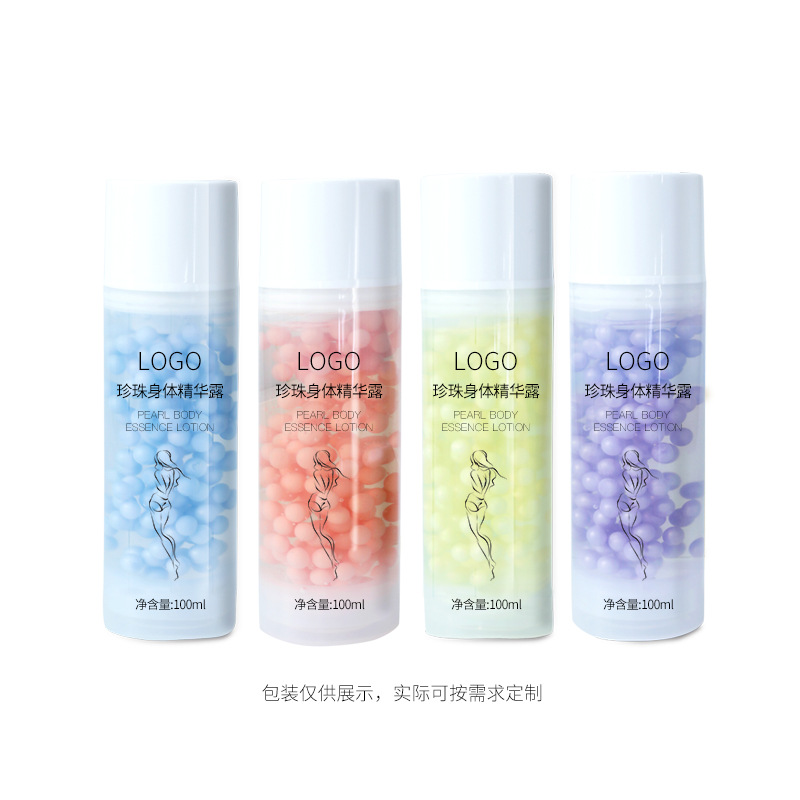
Fragrance load in body care is generally higher than in facial care, so seal quality affects whether the scent survives the shelf. Retain samples of tubes and pumps early and check odour after storage. Scent drift is an underrated return driver in body care. A pearl body essence is a useful reference for texture and fragrance level when building a neck and body ritual range, and paired development across the set keeps the sensory signature consistent. Send the format brief through the inquiry form if you want substrate and pump options compared side by side.
Frequently asked questions
Can you produce Neck Cream and Targeted Body Care OEM under our own brand?
Neck Cream and Targeted Body Care OEM is handled as a private label project: you bring the brand and the market position, we cover formula, bulk, filling and packing. Existing bases can be adjusted for texture, fragrance and active level, or we develop from a new brief. Tooling and artwork belong to you, and our name does not appear on the pack.
What is the minimum order quantity?
MOQ is set by net fill per unit, not by category:
| Net fill | MOQ |
|---|---|
| < 15 ml/g | 5,000 pcs |
| 15-50 ml/g (50 included) | 3,000 pcs |
| 50-200 ml/g (200 included) | 2,000 pcs |
| > 200 ml/g | 1,000 pcs |
Several SKUs in one project can share a production run to reach the threshold, and a smaller trial order is possible once the formula is approved.
How long do samples and bulk production take?
Samples take 7-10 working days from a confirmed brief, or 10-15 days when a new mould or artwork is involved. Bulk runs 25-35 days after sample approval and packaging arrival. Repeat orders with an unchanged formula usually move faster.
Which certificates and documents come with the shipment?
The plant runs under GMPC and ISO 22716 with a 100,000-class cleanroom. Each shipment can include COA, MSDS, the full INCI list, stability data and microbiological reports. For the EU we support CPSR and PIF paperwork; for other markets we prepare the file set your importer asks for.
Can we change the formula, fragrance or packaging?
Yes. Texture, viscosity, fragrance, colour and active percentage are adjustable within regulatory limits. Packaging can be sourced by you or by us: tubes, airless bottles, jars, sachets and aluminium foil bags, with silkscreen, hot stamping or label application.
What information do you need to quote?
Category and target function, quantity per SKU, packaging direction, destination market and launch date. With that we reply within 24 hours on business days with feasibility, MOQ and a price range. An NDA can be signed before formulas are discussed.
Need this produced? Talk to the factory.
Wangsha Bio has run OEM/ODM production since 2006: 60,000 sqm plant, 17 lines, 100,000-class cleanroom, GMPC and ISO 22716 certified. Send your brief and we reply within 24 hours on business days with feasibility, MOQ and a price range.
Email lucky@moksha-bio.com | Product range | Workshop