
 Qingyuan moksha Biotechnology Co., Ltd


Brands spend weeks refining a serum, then accept whatever bottle the factory has on the shelf. That order is backwards. In private label skincare, the pack often decides how the formula performs on the shelf and in the hand, and airless systems in particular change both the preservation strategy and the cost structure. This guide covers what buyers should settle before a dispenser is chosen.
1. Why the Pack Comes Before the Formula
An airless bottle uses a piston or a collapsing pouch, so the formula never meets air except at the outlet. The practical benefits are real: oxidation-sensitive actives last longer and preservative demand drops. The trade-offs are equally real: unit cost is higher, filling lines need different tooling, and not every viscosity works.
If your brief includes vitamin C, retinol, probiotics or a fragrance-free claim, an airless pack is worth pricing early. If the product is a simple body lotion at a low price point, a standard tube will do the same job for half the cost. Deciding this at brief stage avoids reformulating later. The formats already running on our lines are listed in the product range.
2. Dose Per Stroke and Suck-Back
Dose is the volume delivered per full press, usually 0.15 ml to 0.5 ml for facial products. Dose accuracy matters more than dose size: a pump that delivers 0.25 ml with a five percent spread feels consistent, while one that swings twenty percent leaves consumers unsure whether they used too little.
Suck-back is the small reverse movement that pulls residual product back into the nozzle after dispensing. Without it, the orifice stays wet, product dries and clogs. With too much, the nozzle draws air and the next stroke sputters. Ask for a dispense curve across the full life of the pack, not a single measurement at the start, because performance usually changes once the piston passes mid-travel.
3. Material Compatibility and Migration
Inner surfaces are usually PP, PE, PETG or a laminated pouch, and each interacts differently with the formula. Fragrance components and solvents can swell or dull the plastic, acidic formulas can attack metal springs, and essential oils can migrate through thin walls and cause stress cracking.
Compatibility should be tested with the final formula in the final pack, not with a generic simulant. A practical protocol is eight weeks at 40°C with packs stored upright, inverted and on their side, checking weight loss, colour, odour, pH and the appearance of the plastic. For export markets, request cosmetic-contact declarations for every wetted material, including the valve and dip tube, which are often forgotten.
4. Filling, Priming and Line Trials
Airless packs are usually filled from the bottom and then sealed at the base, which means the line needs bottom-fill capability. Overfilling traps pressure and can cause seepage at the seal; underfilling produces a short dose near the end of life. Specify net content plus a fill tolerance, and agree how the tolerance is measured.
Priming is the step brands forget. The pack needs several strokes before product appears, and the number depends on pump design and viscosity. If the retail carton tells the consumer to pump twice, the factory must confirm that two strokes are enough at the tested viscosity. A line trial of 200 to 500 units will reveal leakage, dose drift and label alignment problems that a lab sample never shows. Production capability is described on the workshop page.
5. Cost and MOQ Trade-Offs
Airless components carry higher MOQs than tubes, often 5,000 to 10,000 pieces per colour, and decoration adds another threshold. The cheapest path is normally a stock mould in a neutral colour with a printed label, which keeps tooling out of the budget and shortens lead time.
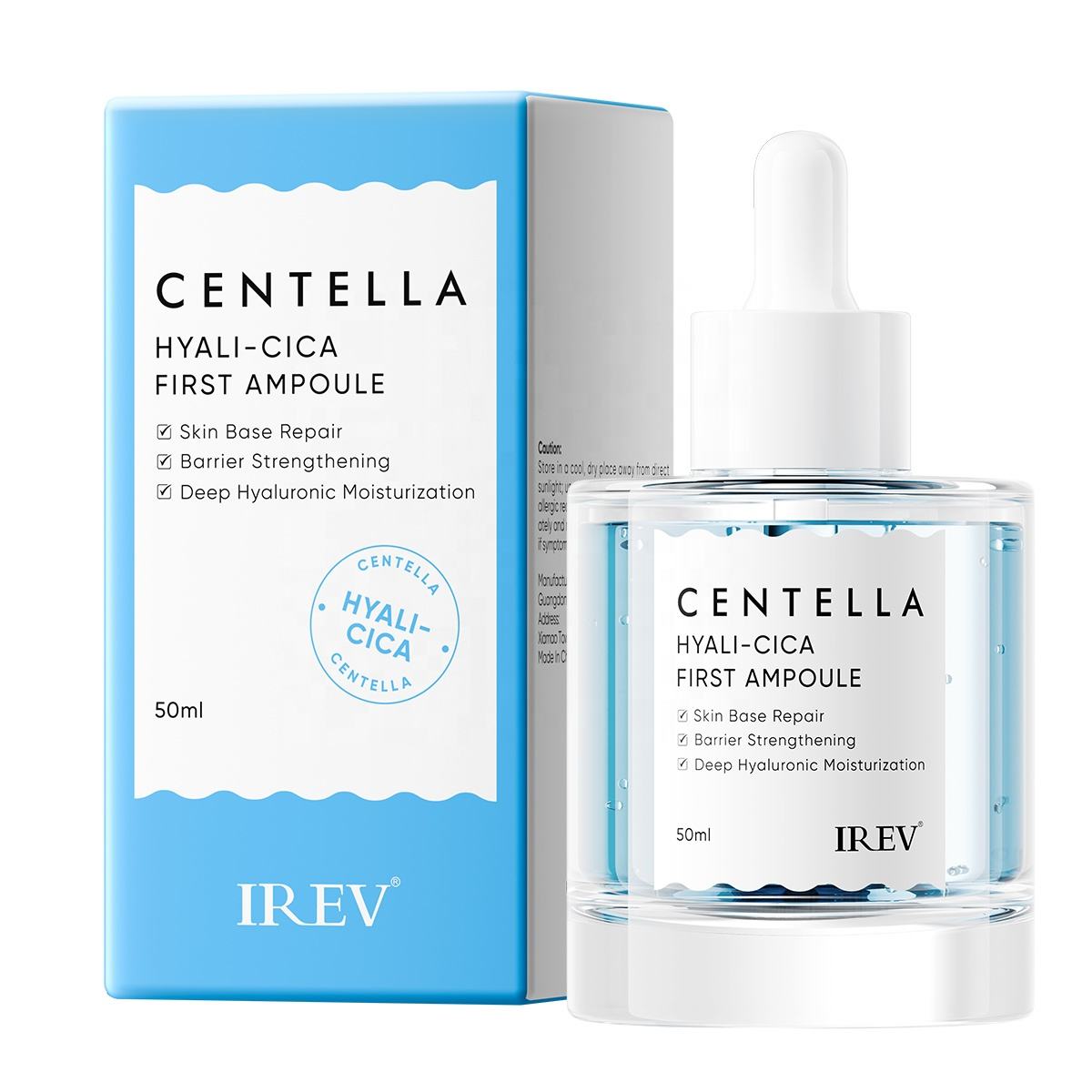
Before committing, ask for three quotes: stock pack, stock pack with decoration, and custom mould. Compare total landed cost including filling efficiency and defect rate, not just the unit price of the component. A pump or dropper format that suits this type of serum is shown in the centella ampoule serum listing, and the company profile is on the about us page. Pack selection questions can go through contact.
Frequently asked questions
Can you produce Airless Bottles and Pumps under our own brand?
Airless Bottles and Pumps is handled as a private label project: you bring the brand and the market position, we cover formula, bulk, filling and packing. Existing bases can be adjusted for texture, fragrance and active level, or we develop from a new brief. Tooling and artwork belong to you, and our name does not appear on the pack.
What is the minimum order quantity?
MOQ is set by net fill per unit, not by category:
| Net fill | MOQ |
|---|---|
| < 15 ml/g | 5,000 pcs |
| 15-50 ml/g (50 included) | 3,000 pcs |
| 50-200 ml/g (200 included) | 2,000 pcs |
| > 200 ml/g | 1,000 pcs |
Several SKUs in one project can share a production run to reach the threshold, and a smaller trial order is possible once the formula is approved.
How long do samples and bulk production take?
Samples take 7-10 working days from a confirmed brief, or 10-15 days when a new mould or artwork is involved. Bulk runs 25-35 days after sample approval and packaging arrival. Repeat orders with an unchanged formula usually move faster.
Which certificates and documents come with the shipment?
The plant runs under GMPC and ISO 22716 with a 100,000-class cleanroom. Each shipment can include COA, MSDS, the full INCI list, stability data and microbiological reports. For the EU we support CPSR and PIF paperwork; for other markets we prepare the file set your importer asks for.
Can we change the formula, fragrance or packaging?
Yes. Texture, viscosity, fragrance, colour and active percentage are adjustable within regulatory limits. Packaging can be sourced by you or by us: tubes, airless bottles, jars, sachets and aluminium foil bags, with silkscreen, hot stamping or label application.
What information do you need to quote?
Category and target function, quantity per SKU, packaging direction, destination market and launch date. With that we reply within 24 hours on business days with feasibility, MOQ and a price range. An NDA can be signed before formulas are discussed.
Need this produced? Talk to the factory.
Wangsha Bio has run OEM/ODM production since 2006: 60,000 sqm plant, 17 lines, 100,000-class cleanroom, GMPC and ISO 22716 certified. Send your brief and we reply within 24 hours on business days with feasibility, MOQ and a price range.
Email lucky@moksha-bio.com | Product range | Workshop
