
 Qingyuan moksha Biotechnology Co., Ltd


Fragrance is one of the few product attributes a buyer can evaluate in the aisle without opening the pack, and one of the first to fade after purchase. Encapsulation is the standard answer: wrap the oil in a shell, slow its evaporation, and release it when the consumer touches the product or the skin.
The concept is simple. Making it work at production scale, in a surfactant-heavy base, is not. The notes below cover what decides success in practice.
1. Why encapsulate a fragrance at all
Free fragrance oil in a shower gel or shampoo partitions into the surfactant micelles and rinses away with the foam. Encapsulated oil survives the wash, stays on the skin or hair, and releases later through friction or moisture. The result is a scent that returns hours after the shower rather than disappearing at the towel.
Encapsulation also protects fragile top notes from oxidation and from interacting with other ingredients. It is a delivery decision, not only a longevity trick.
2. Wall materials and release triggers
Melamine-formaldehyde shells give strong retention but face scrutiny in some markets. Gelatin and gum Arabic systems are well established and release on rubbing. Starch-based and polyurethane shells offer alternatives with different moisture sensitivity. Silica carriers hold oil in pores and release slowly by diffusion.
The release trigger must match the use case: friction for body wash, moisture for a leave-on cream, heat for a mask that is rinsed with warm water. A shell that never breaks delivers nothing; one that breaks in the bottle delivers nothing either.
3. Process control on the line
Shear is the main risk. High-shear homogenisation after encapsulation ruptures shells, and so does an oversized transfer pump. Add the slurry late in the process, under low shear, and keep the temperature below the shell softening point.
Particle size distribution should be checked on incoming slurry and again after the batch is complete. A widening distribution is an early sign of damage. If the fragrance level in the headspace rises during storage, the shells are leaking.
4. Compatibility with the base
High surfactant levels can extract oil through the shell over time. pH extremes attack gelatin and starch walls. Opacifiers and high electrolyte loads can destabilise the slurry and cause visible specks. A compatibility trial at 40°C for four weeks reveals most of these issues before a launch commitment.
Visual appearance matters as much as chemistry: coloured shells in a clear gel are a design statement, while the same shells in a white cream may show as grey dots. Decide the shell colour against the final base, not against a water sample.
5. What to specify in a sample brief
Give the supplier the base composition, target fragrance level, expected shelf life, pack type and the release behaviour you want. Ask for the shell material, residual formaldehyde status if relevant, particle size range and a stability data package in a similar base.
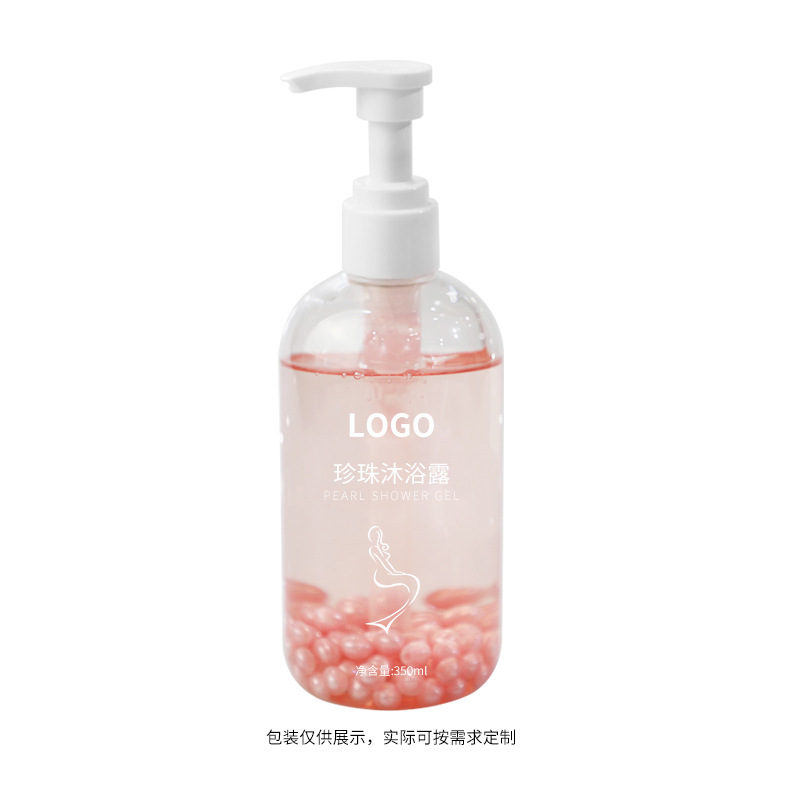
Our microcapsule personal care range uses this approach for shower gel and body wash formats, with encapsulation runs scheduled in the workshop under controlled shear. A sample that performs in water but fails in surfactant has not been tested at all.
Cost is the other half of the conversation. Encapsulated fragrance is priced per kilo of slurry, and the use level is often two to four times the free oil equivalent, so the fragrance line in the cost sheet can rise sharply. Buyers should compare cost per finished unit rather than cost per kilo of compound.
Dosing accuracy matters as well. Slurry is viscous and settles, so it needs gentle circulation in the storage tank and a calibrated dosing line. A five percent swing in slurry addition becomes a visible swing in scent intensity between batches.
Document the slurry lot on the batch record. When a consumer complaint about weak scent arrives six months later, the lot number is the only way to tell whether the cause was the slurry, the dosing or the base.
Encapsulated fragrance is a strong differentiator when the release behaviour is designed deliberately rather than added at the end of a formula. Brief the delivery system together with the scent, and the claims will hold up in the shower. Review the product range for available formats, or contact us for a compatibility trial in your target base.
Frequently asked questions
Can you produce Fragrance Microencapsulation in Personal Care under our own brand?
Fragrance Microencapsulation in Personal Care is handled as a private label project: you bring the brand and the market position, we cover formula, bulk, filling and packing. Existing bases can be adjusted for texture, fragrance and active level, or we develop from a new brief. Tooling and artwork belong to you, and our name does not appear on the pack.
What is the minimum order quantity?
MOQ is set by net fill per unit, not by category:
| Net fill | MOQ |
|---|---|
| < 15 ml/g | 5,000 pcs |
| 15-50 ml/g (50 included) | 3,000 pcs |
| 50-200 ml/g (200 included) | 2,000 pcs |
| > 200 ml/g | 1,000 pcs |
Several SKUs in one project can share a production run to reach the threshold, and a smaller trial order is possible once the formula is approved.
How long do samples and bulk production take?
Samples take 7-10 working days from a confirmed brief, or 10-15 days when a new mould or artwork is involved. Bulk runs 25-35 days after sample approval and packaging arrival. Repeat orders with an unchanged formula usually move faster.
Which certificates and documents come with the shipment?
The plant runs under GMPC and ISO 22716 with a 100,000-class cleanroom. Each shipment can include COA, MSDS, the full INCI list, stability data and microbiological reports. For the EU we support CPSR and PIF paperwork; for other markets we prepare the file set your importer asks for.
Can we change the formula, fragrance or packaging?
Yes. Texture, viscosity, fragrance, colour and active percentage are adjustable within regulatory limits. Packaging can be sourced by you or by us: tubes, airless bottles, jars, sachets and aluminium foil bags, with silkscreen, hot stamping or label application.
What information do you need to quote?
Category and target function, quantity per SKU, packaging direction, destination market and launch date. With that we reply within 24 hours on business days with feasibility, MOQ and a price range. An NDA can be signed before formulas are discussed.
Need this produced? Talk to the factory.
Wangsha Bio has run OEM/ODM production since 2006: 60,000 sqm plant, 17 lines, 100,000-class cleanroom, GMPC and ISO 22716 certified. Send your brief and we reply within 24 hours on business days with feasibility, MOQ and a price range.
Email lucky@moksha-bio.com | Product range | Workshop