
 Qingyuan moksha Biotechnology Co., Ltd


Almost every moisturiser brief includes the word hydration. Far fewer briefs explain what hydration should feel like thirty minutes after application, which is where most formulas succeed or fail. Humectants bind water, but they also change tackiness, absorption speed, gloss and how the product behaves under a foundation.
This note covers the practical side of building a humectant system for a private label range.
1. Humectants are not one function
Some humectants sit on the surface and hold water from the environment and from deeper layers; others penetrate and act as part of the natural moisturising factor pool. Some are film-formers at higher levels, which reads as tightness rather than moisture. Grouping them all as "hydration" leads to formulas that feel wet but not comfortable.
Decide first whether the product should feel wet, plump, or soft, then choose the humectant class.
2. Glycerin: effective, cheap, and easy to overuse
Glycerin remains the most cost-effective humectant and has decades of safety data. Above roughly ten percent in a simple cream it starts to feel tacky and slows absorption, and in high humidity it can draw water to the surface and feel clammy.
Blending glycerin with a lighter diol reduces tackiness while keeping the water-binding capacity. Most "sticky moisturiser" complaints are a glycerin level problem, not a sensory preference problem.
3. Betaine, hyaluronic acid and NMF blends
Betaine is a mild osmolyte with a clean, non-tacky feel and works well in gel and fluid formats. Hyaluronic acid comes in a wide range of molecular weights: high molecular weight stays on the surface and gives immediate smoothing, low molecular weight penetrates but can feel thin. A combination usually outperforms either alone.
NMF-style blends of amino acids, urea, lactate and minerals are popular for barrier-focused positioning. Molecular weight and dosage decide the sensory result far more than the ingredient name on the front of the pack.
4. Texture: the real constraint
Humectants compete with emulsifiers and thickeners for water and change the rheology of the emulsion. Adding three percent of a humectant blend can drop viscosity noticeably, and in a gel it can produce syneresis. Preservative efficacy also shifts when water activity changes.
Build the humectant system before finalising the emulsifier pair, then re-check viscosity, gloss and rub-in speed. If the texture only works at one humectant level, the system is not robust enough for production.
5. Measuring moisture performance
Corneometry and transepidermal water loss are standard, but they say little about how the product feels. Pair instrumental data with a short sensory panel that scores tack, spread, absorption time and after-feel at fifteen and sixty minutes.
Accelerated stability should confirm that no humectant crystallises or separates at low temperature. A formula that hydrates well but separates at 5°C cannot be shipped to northern markets.
Climate changes the answer more than most briefs allow for. In a dry, heated room a high humectant load pulls water from deeper layers and can leave skin feeling tighter after an hour, while in a humid climate the same formula may never dry down. Two market versions built from one base are often cheaper than one compromise.
Cost per unit is worth checking early. Hyaluronic acid grades vary by an order of magnitude in price at the same stated percentage, and the sensory gap between a mid-grade and a premium grade is frequently smaller than the price gap suggests.
Finally, check how the humectant system behaves under a foundation. High polyol levels can cause pilling when the next layer is applied, which is a common reason a technically sound moisturiser fails in consumer testing.
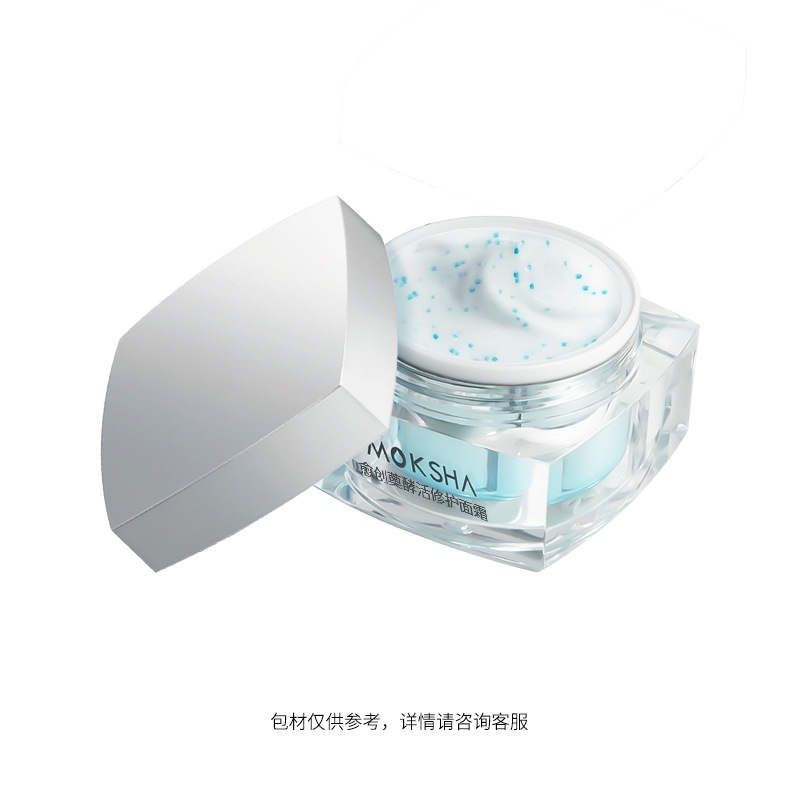
Our repair cream base uses a layered humectant approach with a low-glycerin outer phase, produced in the workshop with in-process viscosity control. Humectant choice is a sensory decision as much as a functional one. Compare formats in the product range, check the company profile for capacity, or contact us with your target after-feel and climate to plan a sample set.
Frequently asked questions
Can you produce Humectant Systems in Private Label Moisturisers under our own brand?
Humectant Systems in Private Label Moisturisers is handled as a private label project: you bring the brand and the market position, we cover formula, bulk, filling and packing. Existing bases can be adjusted for texture, fragrance and active level, or we develop from a new brief. Tooling and artwork belong to you, and our name does not appear on the pack.
What is the minimum order quantity?
MOQ is set by net fill per unit, not by category:
| Net fill | MOQ |
|---|---|
| < 15 ml/g | 5,000 pcs |
| 15-50 ml/g (50 included) | 3,000 pcs |
| 50-200 ml/g (200 included) | 2,000 pcs |
| > 200 ml/g | 1,000 pcs |
Several SKUs in one project can share a production run to reach the threshold, and a smaller trial order is possible once the formula is approved.
How long do samples and bulk production take?
Samples take 7-10 working days from a confirmed brief, or 10-15 days when a new mould or artwork is involved. Bulk runs 25-35 days after sample approval and packaging arrival. Repeat orders with an unchanged formula usually move faster.
Which certificates and documents come with the shipment?
The plant runs under GMPC and ISO 22716 with a 100,000-class cleanroom. Each shipment can include COA, MSDS, the full INCI list, stability data and microbiological reports. For the EU we support CPSR and PIF paperwork; for other markets we prepare the file set your importer asks for.
Can we change the formula, fragrance or packaging?
Yes. Texture, viscosity, fragrance, colour and active percentage are adjustable within regulatory limits. Packaging can be sourced by you or by us: tubes, airless bottles, jars, sachets and aluminium foil bags, with silkscreen, hot stamping or label application.
What information do you need to quote?
Category and target function, quantity per SKU, packaging direction, destination market and launch date. With that we reply within 24 hours on business days with feasibility, MOQ and a price range. An NDA can be signed before formulas are discussed.
Need this produced? Talk to the factory.
Wangsha Bio has run OEM/ODM production since 2006: 60,000 sqm plant, 17 lines, 100,000-class cleanroom, GMPC and ISO 22716 certified. Send your brief and we reply within 24 hours on business days with feasibility, MOQ and a price range.
Email lucky@moksha-bio.com | Product range | Workshop