Qingyuan moksha Biotechnology Co., Ltd


Vitamin C has the strongest consumer recognition of any cosmetic active, and also one of the most awkward formulation profiles: pure ascorbic acid oxidises in water, prefers low pH, and turns an unwelcome amber colour long before the bottle is empty. Derivatives exist to solve exactly this problem, and choosing among them shapes the product's cost, texture and claims. It also decides the packaging, because oil-soluble and water-soluble options pull the formula in different directions. Here is a buyer's comparison of the three derivatives we handle most often in private label projects.
Why Not Just Use Pure Ascorbic Acid
Pure ascorbic acid at effective levels demands an anhydrous or very low pH system, airless packaging and disciplined cold-chain handling. When those conditions hold, it performs beautifully; when they slip, the formula discolours and the active degrades on the shelf. For mid-price private label lines, where products may sit in varied warehouses and climates, derivatives usually deliver a better balance of reliability and cost.
The Three Common Derivatives Compared
Sodium ascorbyl phosphate (SAP) is the workhorse. It is water-soluble, stable near neutral pH, gentle on the skin and inexpensive, which makes it the natural pick for cleansers, toners and entry-level serums. It also dissolves clearly, so the finished product stays visually clean on mass-market shelves. Its limitation is penetration depth, so positioning it as a brightening-support ingredient rather than a heavy-duty active keeps claims honest.
Ascorbyl glucoside is the most regulated-friendly of the family: it is listed in cosmetic ingredient annexes in several markets and converts to ascorbic acid gradually on the skin. It tolerates a wider pH window than pure ascorbic acid and pairs well with niacinamide, a combination consumers actively look for. Conversion to ascorbic acid happens gradually through skin enzymes, so it behaves like a slow-release reservoir rather than a single high dose. For brands planning multi-market distribution, glucoside is usually the lower-risk listing choice.
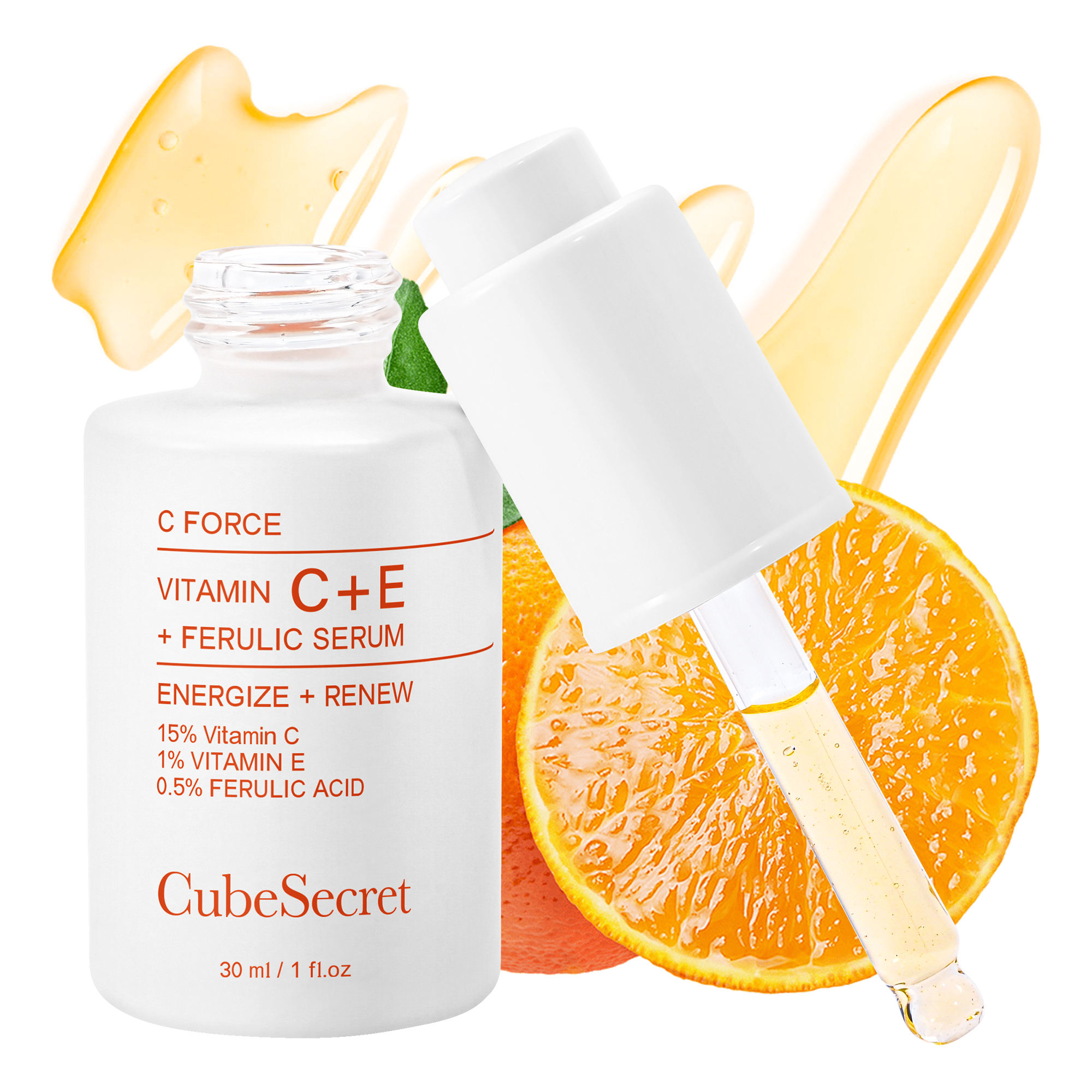
Tetrahexyldecyl ascorbate (THD) is the oil-soluble premium option. It penetrates lipid pathways, stays stable in oil-phase systems, and supports a luxurious sensory profile in oils and anhydrous balms. Because it lives in the oil phase, it pairs naturally with the squalane and plant oils brands already use. Its costs run clearly higher, and it suits serums positioned at the upper end of the range, such as the vitamin C and E ferulic serum format in our catalogue.
Stability Testing and Colour Management
Whatever the derivative, the acceptance criterion is measurable: colour drift and content retention through accelerated storage. A derivative that retains most of its content after eight weeks at elevated temperature is a viable shelf product; one that browns visibly fails regardless of its ingredient-list appeal. Pairing with ferulic acid or vitamin E and using opaque, air-restricted packaging extends the window further, as covered in our production notes. Run the test in the actual sales packaging, not in glass jars, since oxygen ingress differs sharply.
Choosing for Your Line Architecture
A practical architecture uses one derivative per price tier: SAP in cleansers and entry toners, glucoside in the core brightening serum, THD in the premium oil serum. This keeps the vitamin C story consistent across the line while matching cost to position. Reviewing the tier split once a year keeps the line aligned with ingredient prices. Consistency between tier and ingredient is what makes the claims feel credible rather than aspirational.
In summary, the derivative choice is a positioning decision as much as a chemistry decision. Match the derivative to the price tier, verify stability in the real packaging, and the vitamin C line will hold both its colour and its promise. For sample requests and formulation support, reach us through the contact page or browse the latest industry notes.
Frequently asked questions
Can you produce Vitamin C Derivatives under our own brand?
Vitamin C Derivatives is handled as a private label project: you bring the brand and the market position, we cover formula, bulk, filling and packing. Existing bases can be adjusted for texture, fragrance and active level, or we develop from a new brief. Tooling and artwork belong to you, and our name does not appear on the pack.
What is the minimum order quantity?
MOQ is set by net fill per unit: under 15 ml/g 5,000 pcs; 15-50 ml/g 3,000 pcs; 50-200 ml/g 2,000 pcs; above 200 ml/g 1,000 pcs. Several SKUs in one project can share a production run to reach the threshold.
How long do samples and bulk production take?
Samples take 7-10 working days from a confirmed brief, or 10-15 days when a new mould or artwork is involved. Bulk runs 25-35 days after sample approval and packaging arrival. Repeat orders with an unchanged formula usually move faster.
Which certificates and documents come with the shipment?
The plant runs under GMPC and ISO 22716 with a 100,000-class cleanroom. Each shipment can include COA, MSDS, the full INCI list, stability data and microbiological reports. For the EU we support CPSR and PIF paperwork; for other markets we prepare the file set your importer asks for.
Can we change the formula, fragrance or packaging?
Yes. Texture, viscosity, fragrance, colour and active percentage are adjustable within regulatory limits. Packaging can be sourced by you or by us: tubes, airless bottles, jars, sachets and aluminium foil bags, with silkscreen, hot stamping or label application.
What information do you need to quote?
Category and target function, quantity per SKU, packaging direction, destination market and launch date. With that we reply within 24 hours on business days with feasibility, MOQ and a price range. An NDA can be signed before formulas are discussed.
Need this produced? Talk to the factory.
Wangsha Bio has run OEM/ODM production since 2006: 60,000 sqm plant, 17 lines, 100,000-class cleanroom, GMPC and ISO 22716 certified. Send your brief and we reply within 24 hours on business days with feasibility, MOQ and a price range.
Email lucky@moksha-bio.com | Product range | Workshop