Qingyuan moksha Biotechnology Co., Ltd


Toners and essence waters look like the simplest products in a range: mostly water, a few humectants, a low level of actives. In production they are among the least forgiving, because a formula that is 90 percent water has almost no structure to hide behind. Clarity, tackiness, preservation and pH all have to be right at once, and any error shows immediately in the bottle. A toner is judged before it is opened, so appearance is part of the specification.
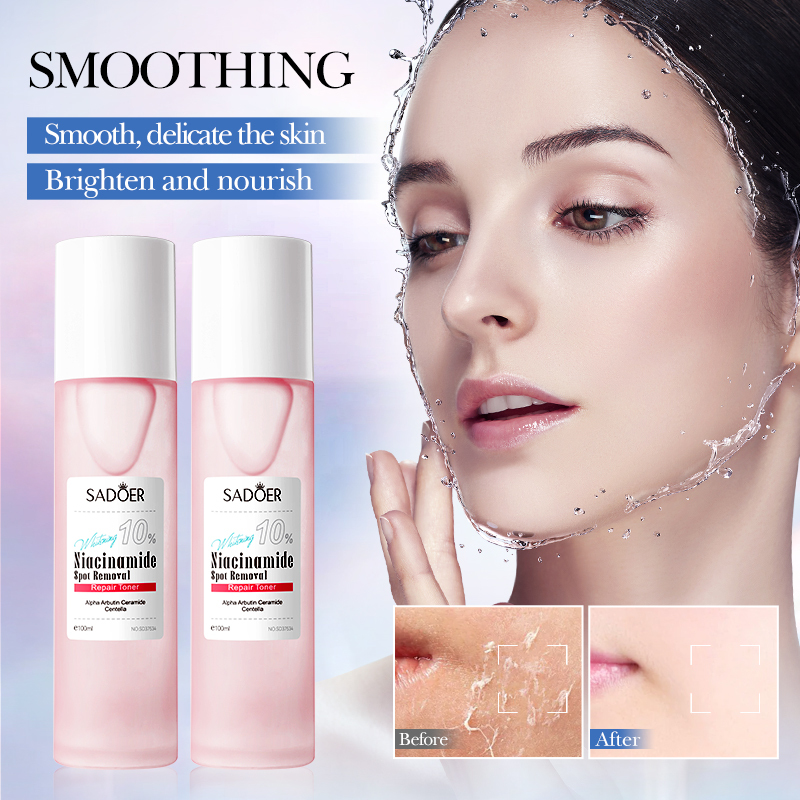
What Separates a Toner From an Essence Water
The line between the two is mostly about positioning and solids content rather than chemistry. A toner traditionally refreshes and rebalances after cleansing; an essence water carries a higher load of humectants and water-soluble actives and is marketed as a treatment step. The functional difference is the humectant and active load, and that load is what drives every processing decision. Deciding which one the brand is selling should happen before the formula is written.
The choice also drives cost and texture. Heavier loads feel richer but leave tack; lighter loads feel clean but can read as plain water. Perceived value in this category comes from how the liquid moves on the skin in the first ten seconds.
Humectant Load and the Tackiness Ceiling
Glycerin is the workhorse: cheap, effective and widely accepted. Above a certain level it becomes sticky, especially in humid climates, and the tack persists after the water evaporates. Betaine and other osmolyte-type humectants reduce tack at the same water-binding capacity. The practical limit is set by climate and skin type, not by the number on the brief.
Hyaluronic acid of different molecular weights adds a film-forming, cushioning feel, but high-molecular grades can feel slippery in a watery base. Low-molecular grades penetrate the surface layers more readily but contribute less to the immediate feel. Blending two molecular weights usually gives a better result than pushing one grade higher.
Alcohol, Glycols and the Sensory Trade
Ethanol delivers a fast-drying, fresh sensation and helps solubilise fragrance, but it is also the first thing reviewers flag in a hydrating product. Glycols such as propanediol and butylene glycol act as humectants and mild solubilisers and are far easier to position. Removing alcohol usually means adding glycols, and both must be declared honestly.
High glycol levels change viscosity and wetting behaviour, which affects how the liquid travels through a spray or a pump. A toner intended for a mist format needs a lower solids load than the same formula in a bottle. Format comes before formula in this category, because the delivery decides the texture. Pump and bottle options are described alongside the product range.
Preservation in a High-Water System
Water activity is high, nutrient content is low, and there is no oil phase to partition into, so microbial risk sits squarely on the preservative system. Phenoxyethanol with ethylhexylglycerin is a common pairing; organic acids work only when the pH stays in the acidic range. Preservative choice and pH window have to be decided together in this format.
Testing should include a challenge test on the finished product in its final container, not in a lab beaker, because adsorption onto plastic and the headspace above the liquid both change the effective dose. A challenge test on lab glass overstates protection. Filling conditions are described in the workshop overview.
Clarity, Colour and Stability
Clarity is the defining visual attribute, and it is the first thing to fail. Trace insolubles from botanical extracts, chelating deficiencies with hard process water, and pH drift that precipitates an active will all produce haze. Filter the bulk and check clarity under a light box before filling, not after.
Colour drift is the second. Botanical and fermented ingredients vary by lot, and a toner sold on transparency shows that variation clearly. Setting an acceptable colour range at sampling prevents arguments later. Record the colour of the approved standard against a fixed light source. Market and formulation updates are published in our news section; briefs can be submitted through the contact page.
A toner has nowhere to hide: the consumer sees clarity, feels tack and smells the alcohol before any claim lands. Set the humectant ceiling, keep glycols and preservation aligned, and control clarity at filling, and the simplest product in the range becomes the most consistent.
Frequently asked questions
Can you produce Hydrating Toners and Essence Waters under our own brand?
Hydrating Toners and Essence Waters is handled as a private label project: you bring the brand and the market position, we cover formula, bulk, filling and packing. Existing bases can be adjusted for texture, fragrance and active level, or we develop from a new brief. Tooling and artwork belong to you, and our name does not appear on the pack.
What is the minimum order quantity?
MOQ is set by net fill per unit: under 15 ml/g 5,000 pcs; 15-50 ml/g 3,000 pcs; 50-200 ml/g 2,000 pcs; above 200 ml/g 1,000 pcs. Several SKUs in one project can share a production run to reach the threshold.
How long do samples and bulk production take?
Samples take 7-10 working days from a confirmed brief, or 10-15 days when a new mould or artwork is involved. Bulk runs 25-35 days after sample approval and packaging arrival. Repeat orders with an unchanged formula usually move faster.
Which certificates and documents come with the shipment?
The plant runs under GMPC and ISO 22716 with a 100,000-class cleanroom. Each shipment can include COA, MSDS, the full INCI list, stability data and microbiological reports. For the EU we support CPSR and PIF paperwork; for other markets we prepare the file set your importer asks for.
Can we change the formula, fragrance or packaging?
Yes. Texture, viscosity, fragrance, colour and active percentage are adjustable within regulatory limits. Packaging can be sourced by you or by us: tubes, airless bottles, jars, sachets and aluminium foil bags, with silkscreen, hot stamping or label application.
What information do you need to quote?
Category and target function, quantity per SKU, packaging direction, destination market and launch date. With that we reply within 24 hours on business days with feasibility, MOQ and a price range. An NDA can be signed before formulas are discussed.
Need this produced? Talk to the factory.
Wangsha Bio has run OEM/ODM production since 2006: 60,000 sqm plant, 17 lines, 100,000-class cleanroom, GMPC and ISO 22716 certified. Send your brief and we reply within 24 hours on business days with feasibility, MOQ and a price range.
Email lucky@moksha-bio.com | Product range | Workshop