Qingyuan moksha Biotechnology Co., Ltd


Bakuchiol has moved from ingredient trade shows into mainstream shelves in a few short years. Derived from the seeds and leaves of Psoralea corylifolia, it delivers visible smoothing and firming results while avoiding the flaking and stinging that push many consumers away from retinoids. For private label brands, bakuchiol is a positioning gift: an anti-ageing story that sensitive-skin customers can actually finish the bottle. This article explains what bakuchiol does, how to formulate with it, and what buyers should confirm before committing to a line.
What Bakuchiol Actually Does
Bakuchiol is not a retinoid, yet it influences several of the same visible markers: fine lines, loss of firmness, uneven tone and rough texture. Published comparative studies have shown comparable visible improvement on wrinkle depth and pigmentation versus retinol over similar testing durations, with noticeably fewer reports of irritation. The key message for marketing is similarity of results with a very different tolerance profile, not identity with retinol.
Because it does not behave like a retinoid chemically, bakuchiol does not carry the same photosensitivity concerns in normal use, which makes it friendlier for daytime positioning and for markets with strong sun exposure. A usable morning-and-night story is one of bakuchiol's cleanest commercial advantages. Brands that pair it with barrier-supporting ingredients often see better repeat-purchase feedback.
Dosage Windows and Pairing
Most finished formulas sit between 0.5% and 2.0% bakuchiol. Around 1% is a common target for a lead-claim serum; below 0.5% it usually serves as a supporting ingredient rather than the hero. Set the dosage by the product's role in the line: the hero serum gets 1% or more, supporting creams can sit lower.
Bakuchiol pairs well with squalane, niacinamide, peptides and ceramides. Oil-soluble systems suit it naturally, which is why serums and facial oils dominate the category. For emulsions, add it in the oil phase during cooling, below 70 degrees Celsius. Avoid stacking it with high levels of exfoliating acids in the same formula; the tolerance story weakens and the positioning gets muddled. For reference on emulsion structures, browse the site's product catalogue.
Stability and Manufacturing Notes
Bakuchiol is sensitive to light and oxygen over long storage, so amber or opaque packaging and airless pumps are preferred. Colour drift is the usual early warning sign: a formula darkening noticeably in accelerated testing indicates the antioxidant system or packaging needs work. Bakuchiol formulas should pass accelerated stability with colour and odour benchmarks written into the specification.
Manufacturing-wise, it is a low-drama ingredient: no special dispersing equipment, no incompatibility with common preservative systems. Buyers should nevertheless ask suppliers for the extract's purity profile and batch consistency data, since plant-derived actives vary more than synthetic ones. A specification sheet with measurable purity limits is what separates a reliable active from a marketing document. Production and quality control conditions can be reviewed on the workshop page.
Claims, Positioning and Compliance
Bakuchiol supports cosmetic claims around firming, smoothing and a more even look, and it is especially strong in gentle-alternative positioning. Claims should stay cosmetic: describe visible improvement and tolerance, not cellular mechanisms promised as guaranteed outcomes. The strongest safe claim set is visible firming and smoothing with high tolerance, supported by consumer testing where possible.
Positioning ideas that work well: a bakuchiol serum for first-time anti-ageing users, a night oil-balm hybrid for dry mature skin, or a pregnancy-conscious skincare line developed with medical advisors. Each of these leans on the same core formula base. One well-built bakuchiol base can seed three products, which is exactly how small brands stretch development budgets. Compliance questions can be raised via the contact page.
What Buyers Should Ask the Factory
Before signing, buyers should ask for: the dosage in the finished formula and the reasoning behind it; stability and challenge test data; packaging recommendations for oxidation control; and the supplier documentation trail for the raw material. A factory that answers these four questions with documents, not adjectives, is a factory ready for bakuchiol production.
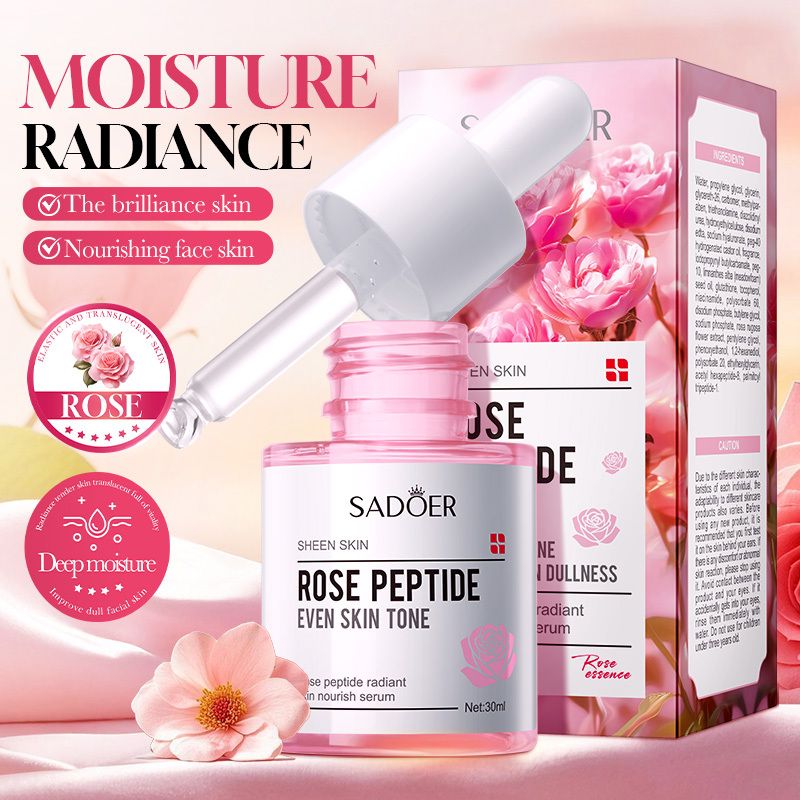
An example of a compatible product base is a rose polypeptide serum such as the one on the product page, where peptide and botanical systems sit comfortably beside bakuchiol. Sampling and customisation requests can be sent through the inquiry page.
In summary, bakuchiol gives private label brands a rare combination: a science-backed story, gentle tolerance and broad positioning freedom. Lock the dosage, protect the formula from light and air, keep claims cosmetic, and bakuchiol becomes a long-running line rather than a trend experiment.
Frequently asked questions
Can you produce Bakuchiol for Private Label Skincare under our own brand?
Bakuchiol for Private Label Skincare is handled as a private label project: you bring the brand and the market position, we cover formula, bulk, filling and packing. Existing bases can be adjusted for texture, fragrance and active level, or we develop from a new brief. Tooling and artwork belong to you, and our name does not appear on the pack.
What is the minimum order quantity?
MOQ is set by net fill per unit: under 15 ml/g 5,000 pcs; 15-50 ml/g 3,000 pcs; 50-200 ml/g 2,000 pcs; above 200 ml/g 1,000 pcs. Several SKUs in one project can share a production run to reach the threshold.
How long do samples and bulk production take?
Samples take 7-10 working days from a confirmed brief, or 10-15 days when a new mould or artwork is involved. Bulk runs 25-35 days after sample approval and packaging arrival. Repeat orders with an unchanged formula usually move faster.
Which certificates and documents come with the shipment?
The plant runs under GMPC and ISO 22716 with a 100,000-class cleanroom. Each shipment can include COA, MSDS, the full INCI list, stability data and microbiological reports. For the EU we support CPSR and PIF paperwork; for other markets we prepare the file set your importer asks for.
Can we change the formula, fragrance or packaging?
Yes. Texture, viscosity, fragrance, colour and active percentage are adjustable within regulatory limits. Packaging can be sourced by you or by us: tubes, airless bottles, jars, sachets and aluminium foil bags, with silkscreen, hot stamping or label application.
What information do you need to quote?
Category and target function, quantity per SKU, packaging direction, destination market and launch date. With that we reply within 24 hours on business days with feasibility, MOQ and a price range. An NDA can be signed before formulas are discussed.
Need this produced? Talk to the factory.
Wangsha Bio has run OEM/ODM production since 2006: 60,000 sqm plant, 17 lines, 100,000-class cleanroom, GMPC and ISO 22716 certified. Send your brief and we reply within 24 hours on business days with feasibility, MOQ and a price range.
Email lucky@moksha-bio.com | Product range | Workshop