
 Qingyuan moksha Biotechnology Co., Ltd


Powder formats sit outside the mainstream of private label skincare, yet they appear across cleansing powders, exfoliating grains, loose powders, pressed compacts, bath salts and scrub bases. The development logic is unlike an emulsion: there is no emulsifier, no thickener, and the quality criteria are particle size, flow and blend uniformity. Most defects in a powder product are decided at the mill and the blender, long before filling. This note walks through the process points that matter.
Where Powder Fits on the Line
Powder equipment does not overlap with cream equipment. A mill, a sieve, a V-blender or ribbon blender and a dust extraction system form a fairly separate line. Buyers should confirm at quotation stage whether the plant runs a dedicated powder room. Sharing a cream line for powder work raises cross-contamination risk sharply.
Minimum batch size matters too. Uniformity depends on batch volume, so small batches are often easier to blend, but equipment hold-up takes a larger share of the charge and yield falls. Discuss batch size and yield together, otherwise quotations are not comparable. The general line configuration is described in the workshop overview.
Milling and Sieving: Distribution Beats Average
Particle size is a distribution, not a number. Two powders with the same 20 micron mean can feel completely different on the skin if one has a wide spread and the other a narrow one. Controlling the distribution matters more than chasing a smaller mean. The usual approach is to mill, then classify by sieving and handle the out-of-range fraction separately.
Sieve mesh sets the top cut and also sets throughput. A finer mesh slows sieving, generates finer dust and puts more load on extraction. Mesh size and capacity should be settled during sampling, not after the first bulk order. Moisture also matters: powder above its critical moisture blocks the mesh, so drying belongs upstream of the sieve.
Proving Blend Uniformity
Uniformity cannot be judged by eye. The defensible method is to sample at several positions in the blender, assay a marker component and calculate the relative standard deviation. Sampling top, middle and bottom is the minimum for a representative result. Low-dose actives usually need a pre-blend and stepwise dilution before the main charge.
Longer blending is not automatically better. Some powders segregate when over-blended, especially where particle size and density differ between components. Blend time should be established by trial, not copied from an equipment manual. The batch record should carry speed, time and charging order so that an out-of-spec result can be traced.
Dust Control and Room Safety
Dust in a powder room is both a quality risk and a safety risk. Fine powder at sufficient concentration can deflagrate, so extraction, earthing and anti-static measures are mandatory rather than optional. Dust control is one of the clearest visible signals of day-to-day discipline in a plant. During an audit, ask for extraction runtime logs and filter replacement intervals.
Operator protection is part of the same system. Masks, eye protection and dedicated workwear are the baseline, and charging points should have local exhaust so the station is not permanently in a dust cloud. Written work instructions hold up better than posters on the wall. Management systems and certifications are summarised on the about us page.
Filling and Stability
Filling accuracy follows flow behaviour. Free-flowing powder suits volumetric filling; poor-flowing powder needs vibration or auger assistance. Filling accuracy must be validated in the final container, because bench data does not transfer directly. For pressed formats, pressing force and tablet hardness consistency drive transport breakage rates.
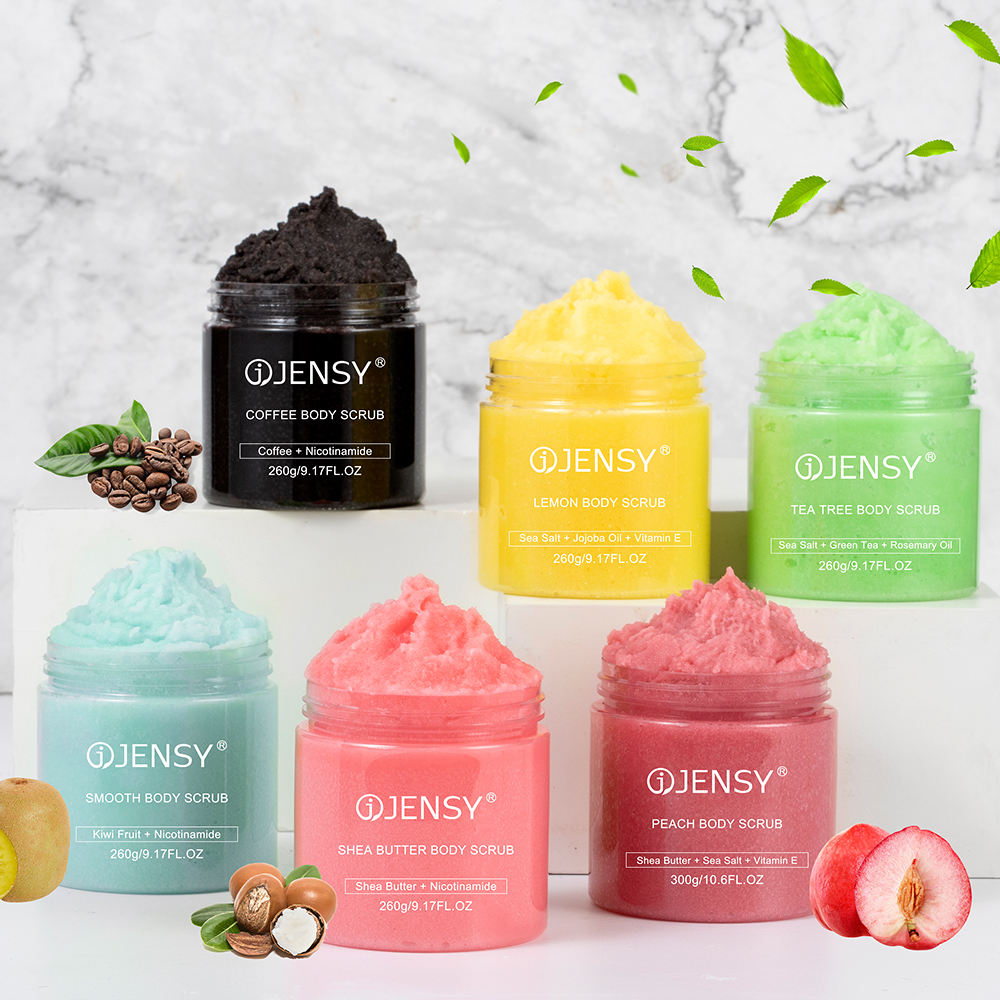
On stability, powder products are judged on moisture pick-up, caking and colour shift. Beyond standard temperature and humidity conditions, add a repeated open-and-dispense simulation. In-use behaviour after opening usually shapes repeat purchase more than shelf life does. Exfoliating bases and grains are listed in the product range, and sampling starts from the contact page.
Frequently asked questions
Can you produce Powder Handling in Private Label Cosmetics under our own brand?
Powder Handling in Private Label Cosmetics is handled as a private label project: you bring the brand and the market position, we cover formula, bulk, filling and packing. Existing bases can be adjusted for texture, fragrance and active level, or we develop from a new brief. Tooling and artwork belong to you, and our name does not appear on the pack.
What is the minimum order quantity?
MOQ is set by net fill per unit: under 15 ml/g 5,000 pcs; 15-50 ml/g 3,000 pcs; 50-200 ml/g 2,000 pcs; above 200 ml/g 1,000 pcs. Several SKUs in one project can share a production run to reach the threshold.
How long do samples and bulk production take?
Samples take 7-10 working days from a confirmed brief, or 10-15 days when a new mould or artwork is involved. Bulk runs 25-35 days after sample approval and packaging arrival. Repeat orders with an unchanged formula usually move faster.
Which certificates and documents come with the shipment?
The plant runs under GMPC and ISO 22716 with a 100,000-class cleanroom. Each shipment can include COA, MSDS, the full INCI list, stability data and microbiological reports. For the EU we support CPSR and PIF paperwork; for other markets we prepare the file set your importer asks for.
Can we change the formula, fragrance or packaging?
Yes. Texture, viscosity, fragrance, colour and active percentage are adjustable within regulatory limits. Packaging can be sourced by you or by us: tubes, airless bottles, jars, sachets and aluminium foil bags, with silkscreen, hot stamping or label application.
What information do you need to quote?
Category and target function, quantity per SKU, packaging direction, destination market and launch date. With that we reply within 24 hours on business days with feasibility, MOQ and a price range. An NDA can be signed before formulas are discussed.
Need this produced? Talk to the factory.
Wangsha Bio has run OEM/ODM production since 2006: 60,000 sqm plant, 17 lines, 100,000-class cleanroom, GMPC and ISO 22716 certified. Send your brief and we reply within 24 hours on business days with feasibility, MOQ and a price range.
Email lucky@moksha-bio.com | Product range | Workshop
