Qingyuan moksha Biotechnology Co., Ltd


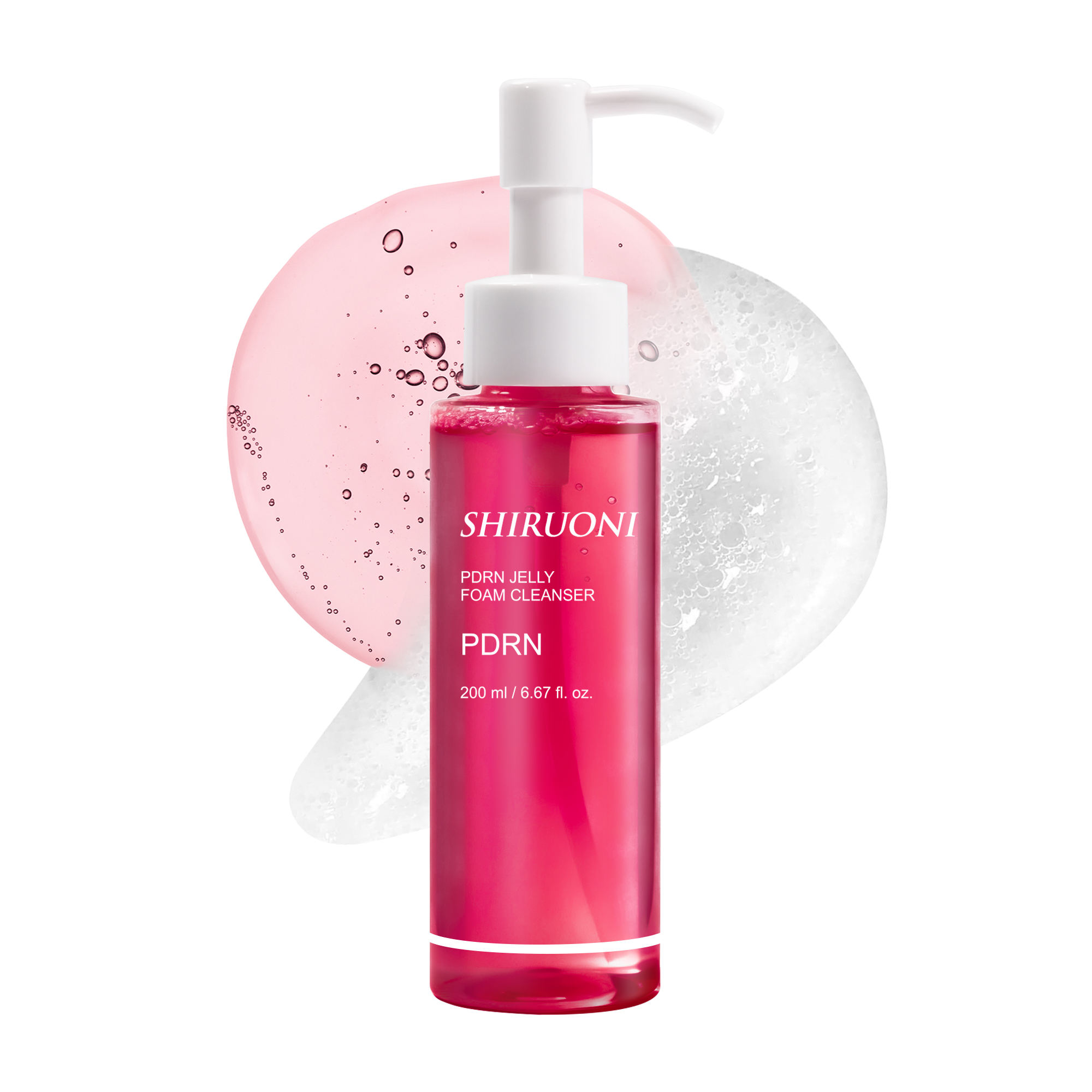
Between a plain gel cleanser and a pump-foam product sits a format that keeps winning shelf space: the gel-to-foam cleanser. It dispenses as a clear or translucent gel, transforms into a cushioned lather as water and massage join in, and rinses to a fresh finish. The transformation is the selling point, and it is also the hardest part to hold consistent at scale. Gel-to-foam is a timing product: the lather must arrive neither too early in the tube nor too late on the face.
How the Transformation Works
The format rests on surfactant systems that stay dissolved and inactive in the concentrated gel and only assemble into foam when diluted with water and worked with air. Amphoterics paired with mild anionics, plus a gel network that keeps the concentrate stable, are the usual architecture. The gel phase must keep the surfactant asleep during storage, then let it wake instantly on contact with water.
Clarity is part of the promise for many launches. Transparent gels limit the gelling choices and make compatibility between gel network and surfactant the central formulation question. Every new surfactant or active addition re-opens the clarity question, so lock the base before decorating it.
Designing the Gel Phase
The gel phase has three jobs: suspend nothing and stay clear, dispense without running off the hand, and break instantly under water. Polymer blends deliver the balance, and their concentration is tuned against viscosity targets that differ by pack: tubes tolerate higher viscosity than pumps. Set the viscosity by the dispensing format first, because a gel that fights the pack loses the experience before the face is involved.
A reference for this format is the gel-to-foam cleanser on the product page, and the wider cleanser family sits in the product section.
Lather Onset, Density and the Sensory Window
Lather quality is judged on three beats: how quickly foam appears after water joins, how dense and creamy the peak is, and how long it holds during a sixty-second wash. Gel-to-foam products live on the first beat, because the transformation is the demo moment. Standardise the test: fixed dose, fixed water temperature, fixed massage time, and score the foam against those beats every sampling round.
Mildness rides along with the foam quality, since well-formed lather reduces the friction between fingers and skin. For sensitive-skin positioning, pair the surfactant system with soothing agents and verify with repeated-patch studies rather than assuming. A dense, fast lather is a mildness feature as much as a sensory one.
Rinse-Off and After-Feel
The after-rinse target decides the surfactant balance. A squeaky finish signals stripped skin to informed consumers, while a slippery film suggests the formula hardly cleansed. The workable target is a clean, soft finish that feels hydrated rather than coated. Score the after-feel on real skin with a fixed panel, because instrumental rinse data does not capture what users complain about.
Humectants such as glycerin support the hydrated finish, but levels interact with foam quality and with the gel network. Adjust humectant load together with the foam tests, not after them, or the panel results will contradict each other between rounds.
Pack Matching and Buyer Advice
Tubes, airless pumps and squeeze bottles all serve this format; what matters is that viscosity and orifice agree. A gel too thick for the orifice dispenses in blobs and users over-dose; too thin and it runs before foaming. Run a dispensing test with the final pack before freezing the formula, and carry pack changes back into viscosity review. Facility conditions are summarised on the workshop page.
For buyers briefing the format, state the clarity expectation, the lather beat priority, the after-feel target and the pack, in that order, and the sampling loop converges in two or three rounds. Those four inputs fix the architecture and leave the creative choices where they belong. Sampling runs through the contact page, an RFQ form is on the Inquiry page, and further notes are in the news section.
Frequently asked questions
Can you produce Gel-to-Foam Cleansers under our own brand?
Gel-to-Foam Cleansers is handled as a private label project: you bring the brand and the market position, we cover formula, bulk, filling and packing. Existing bases can be adjusted for texture, fragrance and active level, or we develop from a new brief. Tooling and artwork belong to you, and our name does not appear on the pack.
What is the minimum order quantity?
MOQ is set by net fill per unit: under 15 ml/g 5,000 pcs; 15-50 ml/g 3,000 pcs; 50-200 ml/g 2,000 pcs; above 200 ml/g 1,000 pcs. Several SKUs in one project can share a production run to reach the threshold.
How long do samples and bulk production take?
Samples take 7-10 working days from a confirmed brief, or 10-15 days when a new mould or artwork is involved. Bulk runs 25-35 days after sample approval and packaging arrival. Repeat orders with an unchanged formula usually move faster.
Which certificates and documents come with the shipment?
The plant runs under GMPC and ISO 22716 with a 100,000-class cleanroom. Each shipment can include COA, MSDS, the full INCI list, stability data and microbiological reports. For the EU we support CPSR and PIF paperwork; for other markets we prepare the file set your importer asks for.
Can we change the formula, fragrance or packaging?
Yes. Texture, viscosity, fragrance, colour and active percentage are adjustable within regulatory limits. Packaging can be sourced by you or by us: tubes, airless bottles, jars, sachets and aluminium foil bags, with silkscreen, hot stamping or label application.
What information do you need to quote?
Category and target function, quantity per SKU, packaging direction, destination market and launch date. With that we reply within 24 hours on business days with feasibility, MOQ and a price range. An NDA can be signed before formulas are discussed.
Need this produced? Talk to the factory.
Wangsha Bio has run OEM/ODM production since 2006: 60,000 sqm plant, 17 lines, 100,000-class cleanroom, GMPC and ISO 22716 certified. Send your brief and we reply within 24 hours on business days with feasibility, MOQ and a price range.
Email lucky@moksha-bio.com | Product range | Workshop