Qingyuan moksha Biotechnology Co., Ltd


PDRN has become one of the fastest-moving ingredient stories in skincare. Originating in clinical settings and now appearing across serums, masks and ampoules, it appeals to brands because it is easy to explain and easy to position. It is also an ingredient where sourcing quality and formulation decisions determine whether the product is credible or merely well-labelled. Here is a practical guide for brand owners considering a PDRN line.
What brands should clarify about the raw material
PDRN is a DNA-derived material, and raw material quality varies more than most buyers expect. Before sampling, ask your manufacturer for the specification sheet and confirm four things: the source, the declared purity or concentration, the form the material is supplied in, and the certificate of analysis for the current lot.
Ask whether the supplier has a certificate of analysis for the specific lot, not a generic brochure. Ingredients that are supplied as liquid dispersions are especially worth checking, because the declared activity per gram differs from supplier to supplier and directly changes the real cost per unit.
Molecular weight also matters. Materials marketed under the PDRN label are not all equivalent in size distribution, and size affects how the material behaves in a water-based serum system. If the answer to this question is vague, that is worth noting.
Formulation considerations
PDRN is typically delivered in aqueous or low-oil systems, which makes texture design straightforward but makes preservation and stability the harder problems. Three points deserve attention:
- Thermal exposure during emulsification and filling should be kept as low as the process allows
- pH of the finished formula should be checked against the material supplier's stated compatibility range
- Preservative system must suit a water-rich, multi-use format and be verified with efficacy testing
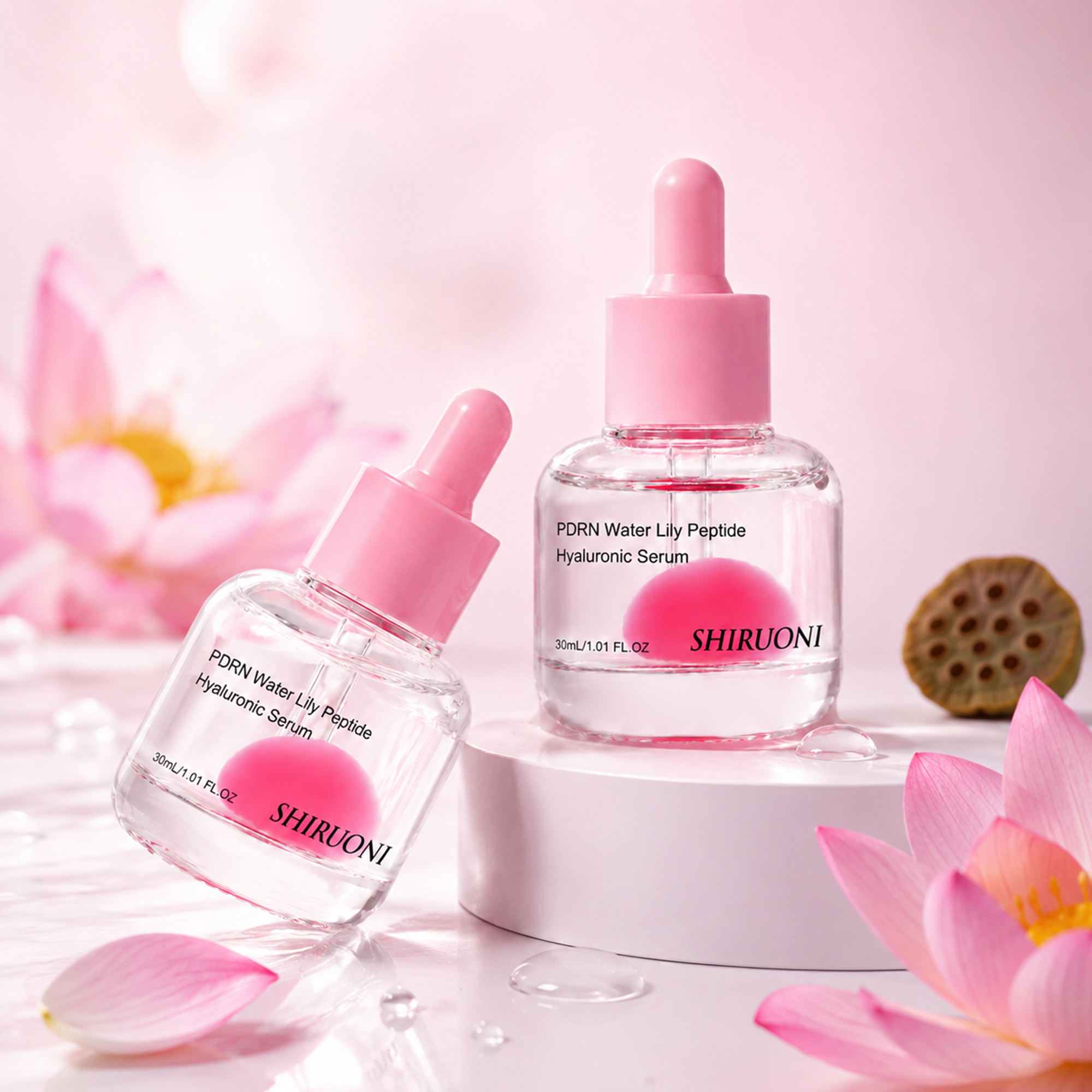
Combining PDRN with peptides, niacinamide or hydrating actives is common and can improve the sensory result, but each addition costs stability margin. Every extra active in the formula is another variable to test. A representative example of a multi-active system is our PDRN peptide facial serum.
Realistic claims and compliance
This is where PDRN projects most often overreach. Because the ingredient has a clinical history, it is tempting to carry clinical language into consumer copy, and that crosses the line between a cosmetic claim and a medical one.
Skincare products cannot claim to treat, heal or cure a condition. Safer territory includes descriptions of hydration, the appearance of firmness, skin comfort and the sensory experience of the texture. Avoid absolute wording and avoid implying a result that only a procedure can deliver.
Also check market-specific rules. What is acceptable in one country may require additional notification or substantiation in another, and requirements are revised periodically.
Sourcing questions that separate suppliers
When you compare manufacturers on a PDRN project, the useful questions are:
- Which raw material supplier do you use, and can I see the specification?
- What concentration is actually in the finished formula, and how is it verified?
- What stability data do you have for this material in a water-based serum?
- Has this formula been produced at commercial scale before, or only in the lab?
A manufacturer that answers all four in writing is a better partner than one that offers the lowest quote. You can review our OEM product range or visit the production workshop to see how these questions apply in practice.
Positioning the product line
PDRN works best as one hero item rather than an entire range. A tight line — one serum, one mask, one eye product — is easier to explain, easier to produce and easier to keep in stock than a sprawling collection.
Submit your brief through the inquiry form if you would like a formulation direction quoted.
The summary: PDRN is a sourcing story before it is a marketing story. Verify the raw material, keep the formula simple, test properly, and keep the claims inside the cosmetic boundary. Do those four things and the product will survive contact with informed customers.
Frequently asked questions
Can you produce PDRN Skincare under our own brand?
PDRN Skincare is handled as a private label project: you bring the brand and the market position, we cover formula, bulk, filling and packing. Existing bases can be adjusted for texture, fragrance and active level, or we develop from a new brief. Tooling and artwork belong to you, and our name does not appear on the pack.
What is the minimum order quantity?
MOQ is set by net fill per unit, not by category:
| Net fill | MOQ |
|---|---|
| < 15 ml/g | 5,000 pcs |
| 15-50 ml/g (50 included) | 3,000 pcs |
| 50-200 ml/g (200 included) | 2,000 pcs |
| > 200 ml/g | 1,000 pcs |
Several SKUs in one project can share a production run to reach the threshold, and a smaller trial order is possible once the formula is approved.
How long do samples and bulk production take?
Samples take 7-10 working days from a confirmed brief, or 10-15 days when a new mould or artwork is involved. Bulk runs 25-35 days after sample approval and packaging arrival. Repeat orders with an unchanged formula usually move faster.
Which certificates and documents come with the shipment?
The plant runs under GMPC and ISO 22716 with a 100,000-class cleanroom. Each shipment can include COA, MSDS, the full INCI list, stability data and microbiological reports. For the EU we support CPSR and PIF paperwork; for other markets we prepare the file set your importer asks for.
Can we change the formula, fragrance or packaging?
Yes. Texture, viscosity, fragrance, colour and active percentage are adjustable within regulatory limits. Packaging can be sourced by you or by us: tubes, airless bottles, jars, sachets and aluminium foil bags, with silkscreen, hot stamping or label application.
What information do you need to quote?
Category and target function, quantity per SKU, packaging direction, destination market and launch date. With that we reply within 24 hours on business days with feasibility, MOQ and a price range. An NDA can be signed before formulas are discussed.
Need this produced? Talk to the factory.
Wangsha Bio has run OEM/ODM production since 2006: 60,000 sqm plant, 17 lines, 100,000-class cleanroom, GMPC and ISO 22716 certified. Send your brief and we reply within 24 hours on business days with feasibility, MOQ and a price range.
Email lucky@moksha-bio.com | Product range | Workshop