
 Qingyuan moksha Biotechnology Co., Ltd


Rice extract and fermented ingredients have moved from niche launches into mainstream private label briefs, and they arrive with a set of formulation and sourcing questions that the marketing material rarely covers. Both are natural-origin inputs, both vary by lot, and both interact with preservation and colour. The appeal of a natural-origin story is easy to sell; the discipline of controlling the input is what makes it repeatable. This guide covers sourcing forms, process conditions and claims.
How Rice Extract Arrives
Rice-derived input is supplied as a water-based extract, as a fermented filtrate, as a powder, or as an oil fraction from the bran. Each form carries a different declaration on the ingredient list and a different behaviour in the base. Choose the supply form before drafting the formula, because the form defines the solids load and the preservation picture.
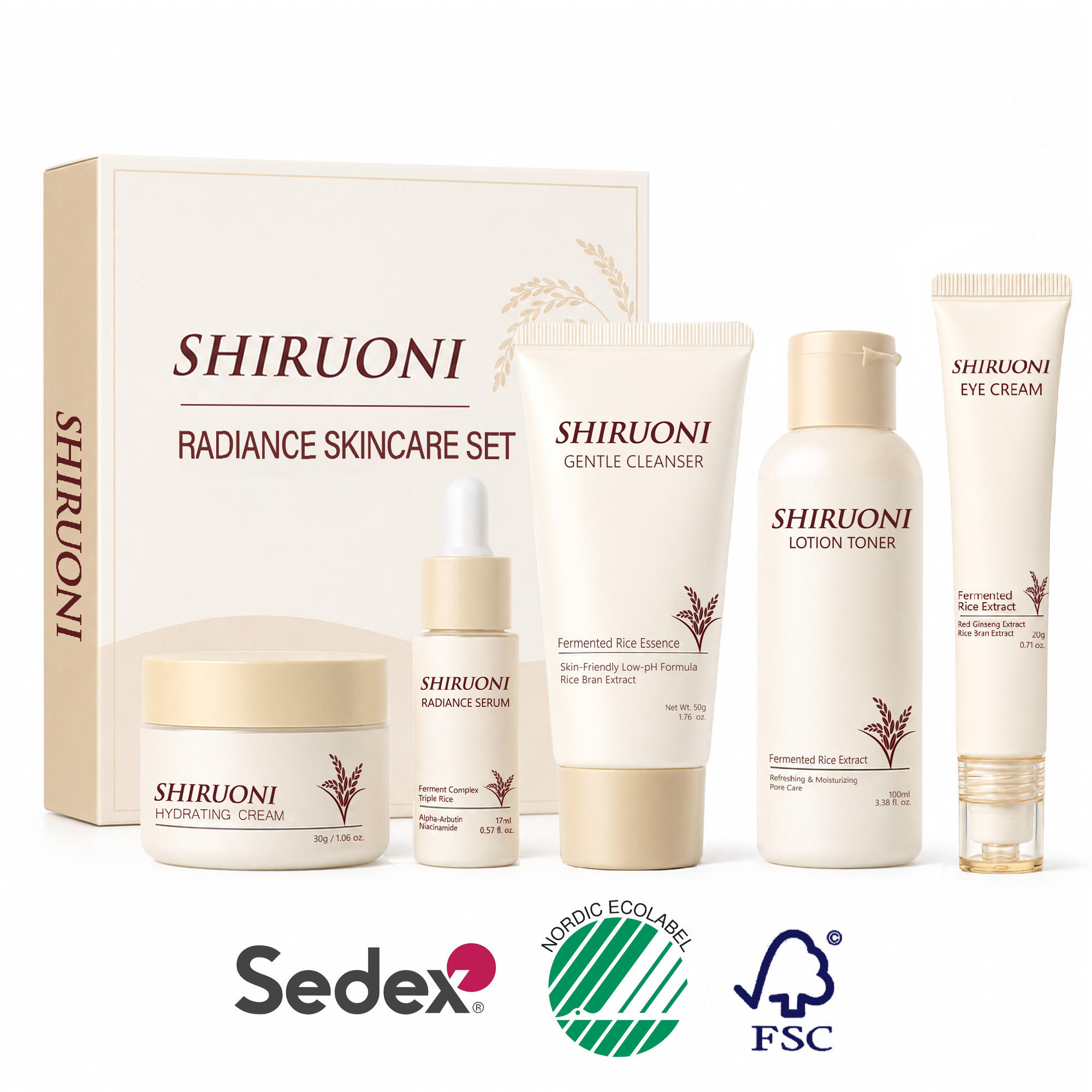
Powders give the most consistent base but require dispersion work and can introduce colour. Liquid extracts are easier to incorporate and carry a fresher story, and they also bring water and microbiological load into the batch. A liquid extract is a water-phase input, and it should be specified and tested as one. A related fermented format is shown in this fermented rice kit reference.
Fermented Ingredients and Process Sensitivity
Fermented filtrates are produced by microbial action, so their composition depends on the strain, the substrate and the fermentation time. That is the source of their appeal and the reason lot-to-lot variation is wider than for mineral inputs. A fermented input needs a specification that describes the functional range, not only a single assay value.
Heat sensitivity is the second issue. Fermented filtrates are usually added late in the process to limit thermal exposure, which in turn constrains the emulsification temperature and the order of addition. Late-stage addition is a process decision that has to be written into the batch record.
Odour as a specification item
Fermented materials carry a characteristic odour that can read as authentic or as a defect depending on the market. Odour should be described in the incoming specification with a reference standard, and the fragrance strategy should be planned around it rather than against it. A related kombucha-based format is shown in this soft cleansing reference.
Colour Stability in the Finished Product
Both rice and fermented inputs tend to shift colour over time, particularly in transparent packs and in formulas without a full antioxidant system. The change is usually progressive rather than abrupt, which makes it easy to miss until a batch is compared against a retained sample. Colour should be measured against a retained standard at every stability checkpoint.
An opaque or amber pack slows the change markedly. Where a clear pack is essential to the positioning, the base needs a stronger antioxidant approach and the acceptable colour window has to be defined before artwork is signed off. The acceptable colour window is a commercial decision, because it determines how much drift the customer will see.
Preservation and Microbiological Control
Natural-origin water-phase inputs raise the microbiological load delivered to the batch, which is the practical reason the preservation system has to be assessed in combination with them rather than separately. A challenge test run without the actual input does not describe the finished product.
Reducing water activity helps, as does a sealed pack that limits contamination during use. Both approaches change texture, so the trade-off should be made deliberately. Decide whether the formula or the pack carries the protection burden, and design that one properly. Cleanroom and filling conditions are described in the workshop overview.
Claims and Documentation
Natural-origin and fermented positioning invites claims about origin, purity and traditional use. Origin claims have to be substantiated by supplier documentation, and any percentage stated on pack must have a traceable basis. A percentage without a documented basis becomes the weakest point of an otherwise sound product.
Documentation worth requesting at the outset includes the input specification, the method of manufacture, the safety data and the allergen or residual statement. Collect the documentation before the pack design is finalised, because it constrains the ingredient list and the claim set. Manufacturer credentials are summarised on the about us page, and concepts can be submitted through the contact page.
Rice and fermented ingredients reward brands that regard them as inputs rather than as stories. Fix the supply form, control the incoming load, protect the colour and document the claim: that is what turns a familiar ingredient into a product that behaves the same in every batch.
Frequently asked questions
Can you produce Rice Extract and Fermented Ingredients in Private Label Skincare under our own brand?
Rice Extract and Fermented Ingredients in Private Label Skincare is handled as a private label project: you bring the brand and the market position, we cover formula, bulk, filling and packing. Existing bases can be adjusted for texture, fragrance and active level, or we develop from a new brief. Tooling and artwork belong to you, and our name does not appear on the pack.
What is the minimum order quantity?
MOQ is set by net fill per unit, not by category:
| Net fill | MOQ |
|---|---|
| < 15 ml/g | 5,000 pcs |
| 15-50 ml/g (50 included) | 3,000 pcs |
| 50-200 ml/g (200 included) | 2,000 pcs |
| > 200 ml/g | 1,000 pcs |
Several SKUs in one project can share a production run to reach the threshold, and a smaller trial order is possible once the formula is approved.
How long do samples and bulk production take?
Samples take 7-10 working days from a confirmed brief, or 10-15 days when a new mould or artwork is involved. Bulk runs 25-35 days after sample approval and packaging arrival. Repeat orders with an unchanged formula usually move faster.
Which certificates and documents come with the shipment?
The plant runs under GMPC and ISO 22716 with a 100,000-class cleanroom. Each shipment can include COA, MSDS, the full INCI list, stability data and microbiological reports. For the EU we support CPSR and PIF paperwork; for other markets we prepare the file set your importer asks for.
Can we change the formula, fragrance or packaging?
Yes. Texture, viscosity, fragrance, colour and active percentage are adjustable within regulatory limits. Packaging can be sourced by you or by us: tubes, airless bottles, jars, sachets and aluminium foil bags, with silkscreen, hot stamping or label application.
What information do you need to quote?
Category and target function, quantity per SKU, packaging direction, destination market and launch date. With that we reply within 24 hours on business days with feasibility, MOQ and a price range. An NDA can be signed before formulas are discussed.
Need this produced? Talk to the factory.
Wangsha Bio has run OEM/ODM production since 2006: 60,000 sqm plant, 17 lines, 100,000-class cleanroom, GMPC and ISO 22716 certified. Send your brief and we reply within 24 hours on business days with feasibility, MOQ and a price range.
Email lucky@moksha-bio.com | Product range | Workshop
