Qingyuan moksha Biotechnology Co., Ltd


Tinted base sits between skincare and colour cosmetics, and that is exactly why it is hard to brief. A BB cream, a tinted moisturiser and a cushion are judged on coverage, shade accuracy and wear, yet they are also expected to feel like skincare and carry skincare language on the front of the pack. A tinted base is a skincare formula with a pigment system bolted on, and the two halves fight each other unless the project is planned as one. This article walks through what brand owners should settle before sampling starts.
1. What Counts as a Tinted Base
The category covers fluid tints, tinted moisturisers, BB and CC creams, and cushion products. The dividing line is not the name on the pack but the pigment load and the coverage the shade is expected to deliver. A tinted moisturiser may sit at a few percent pigment and simply even out tone, while a cushion has to build visible coverage in thin layers. Decide the coverage target first, because pigment load drives shade matching, texture and cost at the same time.
Brand owners should also decide early whether the product is positioned as makeup with skincare support or as skincare with a tint. That single sentence determines which claims are defensible, how the shade range is documented and what testing is needed. The positioning decides the paperwork long before the formula is written. Existing formats can be reviewed in the product range.
2. Pigment Systems and Shade Matching
Tinted bases normally combine titanium dioxide and iron oxides, sometimes with zinc oxide. Each pigment has its own oil absorption and particle size, so the same shade percentage can produce a very different feel depending on the grade chosen. Pigments are chosen as a system, not as a list of colourants.
Shade matching is where timelines slip. Approving a shade from a digital file is unreliable, because oxidised pigments shift under different lighting and on different skin tones. Physical drawdowns on coated cards, viewed under daylight and indoor light, remain the practical standard. A shade approved only on screen will almost always be re-approved after the first physical sample. Ground tones used for coverage often drift toward orange or grey at higher loads, and that shift has to be tested rather than assumed.
3. Texture: From Watery Fluid to Cushion Cream
Texture is set by the emulsion type. A water-in-oil system gives a richer, more transfer-resistant film and suits cushions and long-wear fluids. An oil-in-water system feels lighter, spreads faster and suits tinted moisturisers. The emulsion choice determines how the product wears through a working day far more than any single emollient.
Powder-to-liquid ratio then tunes the finish. More powder gives a matte look and better coverage but can feel dry; less powder keeps the skin-like finish but slides during the day. Film formers and silicone blends are used to hold pigment in place. Every gram of pigment added to improve coverage takes something away from the skincare feel, so the target has to be set as a compromise rather than a maximum.
4. Preservation, Stability and Colour Drift
Pigment and water together create a demanding preservation problem, because pigments can adsorb part of the preservative system and reduce its effective concentration. Challenge testing on the final pigmented formula, not on the base alone, is the only reliable route. A preservation system validated without pigment cannot be trusted in a tinted base.
Colour drift is the second risk. Iron oxides can react with certain ingredients and shift hue over time, and heat exposure accelerates it. Stability protocols therefore need to record colour measurements at intervals, not just check that the emulsion has not separated. If colour is not measured during stability, drift is usually discovered by the consumer. Manufacturing conditions and quality routines are described in the workshop overview.
5. Packaging and Fill for Cushion and Tube Formats
Cushion formats need a sponge that releases the right dose, a compact that seals well enough to stop evaporation, and a fill weight that matches the claimed number of uses. Tubes and pumps are more forgiving but demand viscosity control so the product dispenses evenly to the last gram. Packaging approval should be treated as a formulation milestone, because fill accuracy changes the apparent texture.
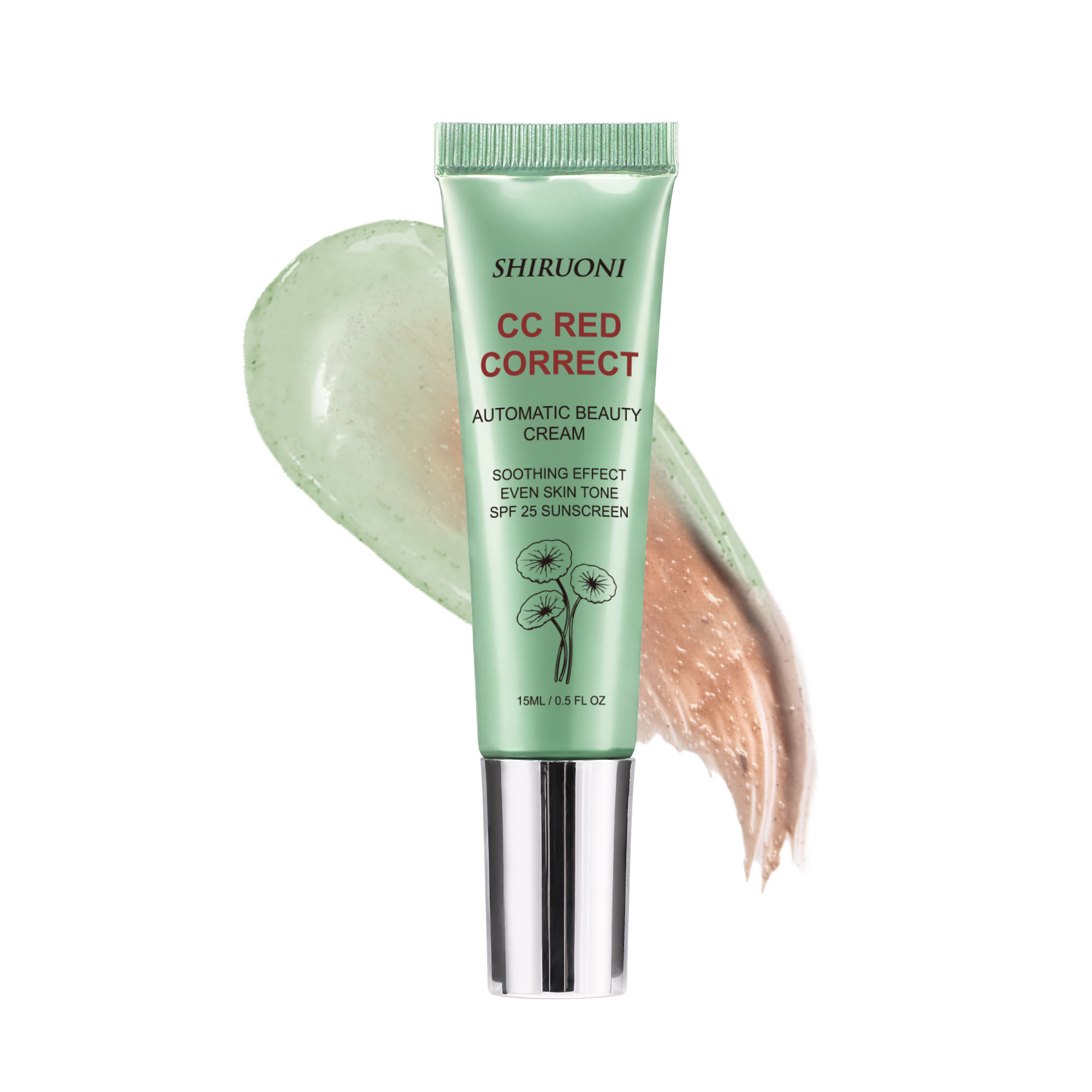
Airless pumps suit high pigment loads and oxidation-sensitive actives, while glass or thick-wall bottles signal a more premium tier at higher unit cost. Match the pack to the texture and the price tier together, since a premium pack with a weak pump undermines both. A reference tinted format is shown on the CC sunscreen product page, and briefs can be submitted through the inquiry page.
Tinted base projects succeed when the brief fixes coverage, shade references, finish and pack before sampling begins. Settle coverage and shade method first, prove preservation on the pigmented formula, and measure colour through stability, and the launch schedule becomes predictable.
Frequently asked questions
Can you produce Colour Cosmetics and Tinted Base OEM under our own brand?
Colour Cosmetics and Tinted Base OEM is handled as a private label project: you bring the brand and the market position, we cover formula, bulk, filling and packing. Existing bases can be adjusted for texture, fragrance and active level, or we develop from a new brief. Tooling and artwork belong to you, and our name does not appear on the pack.
What is the minimum order quantity?
MOQ is set by net fill per unit, not by category:
| Net fill | MOQ |
|---|---|
| < 15 ml/g | 5,000 pcs |
| 15-50 ml/g (50 included) | 3,000 pcs |
| 50-200 ml/g (200 included) | 2,000 pcs |
| > 200 ml/g | 1,000 pcs |
Several SKUs in one project can share a production run to reach the threshold, and a smaller trial order is possible once the formula is approved.
How long do samples and bulk production take?
Samples take 7-10 working days from a confirmed brief, or 10-15 days when a new mould or artwork is involved. Bulk runs 25-35 days after sample approval and packaging arrival. Repeat orders with an unchanged formula usually move faster.
Which certificates and documents come with the shipment?
The plant runs under GMPC and ISO 22716 with a 100,000-class cleanroom. Each shipment can include COA, MSDS, the full INCI list, stability data and microbiological reports. For the EU we support CPSR and PIF paperwork; for other markets we prepare the file set your importer asks for.
Can we change the formula, fragrance or packaging?
Yes. Texture, viscosity, fragrance, colour and active percentage are adjustable within regulatory limits. Packaging can be sourced by you or by us: tubes, airless bottles, jars, sachets and aluminium foil bags, with silkscreen, hot stamping or label application.
What information do you need to quote?
Category and target function, quantity per SKU, packaging direction, destination market and launch date. With that we reply within 24 hours on business days with feasibility, MOQ and a price range. An NDA can be signed before formulas are discussed.
Need this produced? Talk to the factory.
Wangsha Bio has run OEM/ODM production since 2006: 60,000 sqm plant, 17 lines, 100,000-class cleanroom, GMPC and ISO 22716 certified. Send your brief and we reply within 24 hours on business days with feasibility, MOQ and a price range.
Email lucky@moksha-bio.com | Product range | Workshop