
 Qingyuan moksha Biotechnology Co., Ltd


Overnight masks occupy a useful position in a skincare routine: they are used when the consumer has time, they carry a higher perceived value than a daily moisturiser, and they generate repeat purchases because the format invites a habit. They are also the format most likely to be abandoned after one use, because a product that feels uncomfortable on a pillow at midnight does not get a second night. An overnight product is judged by what it feels like eight hours later, not by how it feels when applied.
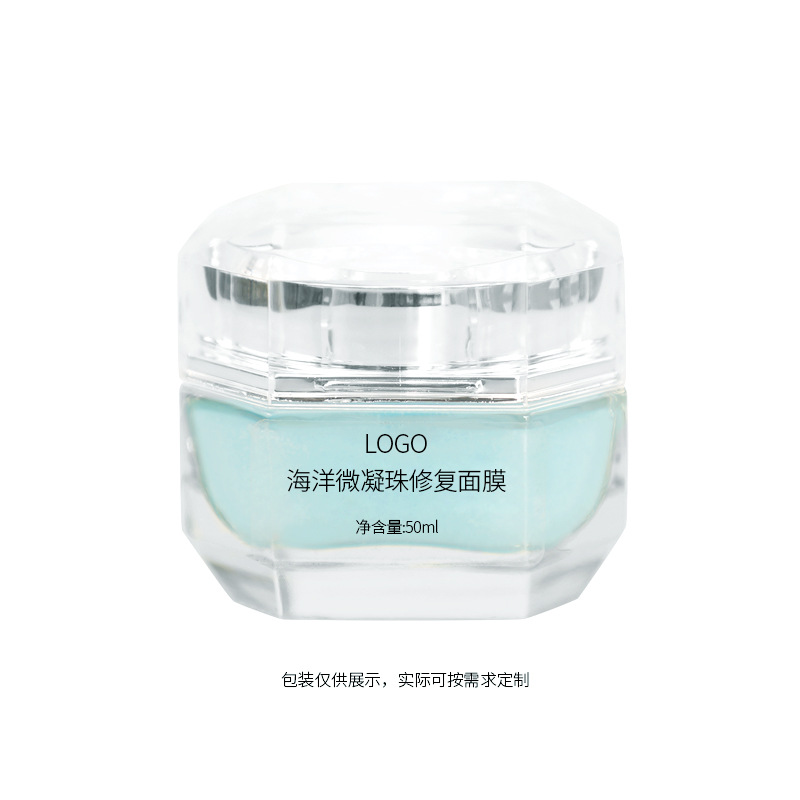
How a Sleeping Mask Differs from a Sheet Mask
A sheet mask delivers a large dose in twenty minutes and is then removed. A sleeping mask stays on the skin for hours, which changes almost every design constraint. Dose is lower but exposure is far longer, so tolerance and comfort matter more than immediate intensity. The sheet mask competes on a single visible moment; the sleeping mask competes on whether the user repeats it tomorrow night.
The commercial logic differs too. A sheet mask is a single-use consumable with an obvious per-unit cost, while a sleeping mask is a jar or tube used over weeks, which supports a higher price point and a slower repurchase cycle. Positioning one as the other leads to mismatched expectations on both price and result. Related mask formats are listed in the product range.
Gelling Systems and Film-Forming Options
The base can be built as a simple gel, a gel cream or a light emulsion with a film-forming component. A pure gel reads as fresh and light but can feel tight as it dries; a gel cream holds moisture longer and feels more substantial. Film-forming ingredients add a perceptible layer that many consumers associate with the product working overnight. Film formers buy perceived performance at the cost of a residue that some users dislike, so the level is a positioning decision.
Electrolyte tolerance is the recurring technical constraint in a gel base. Actives, humectants and botanical inputs all bring dissolved solids, and many gelling agents lose viscosity as electrolyte content rises. Test gelling performance with the actual actives in place rather than in a plain water system, because the result often differs. A microcapsule-based mask direction is shown in this repair mask reference.
Texture at application versus texture after an hour
Two textures matter and they are not the same one. The texture at application drives repurchase intent, but the texture after an hour on the skin determines whether the product is used again. Both need to be measured.
Occlusivity, Breathability and Comfort
Some occlusion helps a leave-on product hold water in the skin overnight, but too much traps heat and produces the heavy, sweaty feeling that gets a jar relegated to a shelf. The target is enough film to reduce water loss without blocking the skin's own regulation. The comfort target is not maximum occlusion but the point where moisture retention stops improving and discomfort starts.
Pillow transfer is the practical test that consumers apply and rarely mention in feedback. A product that leaves a mark on bedding is judged as greasy regardless of how it scored in a panel. Pillow transfer should be assessed directly, on a defined material, at a defined time after application.
Preservation in a Leave-On Water-Rich Base
A water-rich leave-on gel carries the microbiological risk of an emulsion without the oil phase that helps create a hostile environment. It also tends to be sold in a wide-mouth jar that the user opens with wet hands. That combination puts the preservative system under real pressure. Where the positioning allows, a sealed pump or tube removes most of the contamination pathway for a fraction of the cost of a stronger preservative system.
Low water activity through high humectant content is the other lever, but it changes texture, so the trade-off should be made deliberately rather than discovered at sampling. Decide early whether the formula or the pack will carry the protection burden, then design that one properly. Cleanroom and filling conditions are described in the workshop overview.
Claims, Pack Format and Consumer Expectations
Claims for overnight products gravitate toward replenishment and renewal language, which sits close to the medical line. Wording should describe appearance and how the skin feels in the morning, not what the body is doing overnight. Any claim about what happens to the body during sleep is outside the claim boundary.
Pack format carries the format's promise: a jar signals a rich night product, a tube signals a lighter leave-on gel, and a small applicator format signals something to be used sparingly. Net content tolerance and the recommended usage amount should be specified together, because the amount per use defines how long a unit lasts and therefore the repurchase cycle. Getting the usage amount right protects both the consumer experience and the repeat order pattern. Manufacturer documentation is summarised on the about us page, and briefs can be submitted through the inquiry form.
Overnight formats succeed when the user forgets they are wearing a product. Design for the eighth hour rather than the first, prove the pack holds the formula, and keep the claims tied to how the skin looks in the morning. Send your concept through the contact page to begin sampling.
Frequently asked questions
Can you produce Overnight Sleeping Masks and Leave-On Gel Formats under our own brand?
Overnight Sleeping Masks and Leave-On Gel Formats is handled as a private label project: you bring the brand and the market position, we cover formula, bulk, filling and packing. Existing bases can be adjusted for texture, fragrance and active level, or we develop from a new brief. Tooling and artwork belong to you, and our name does not appear on the pack.
What is the minimum order quantity?
MOQ is set by net fill per unit, not by category:
| Net fill | MOQ |
|---|---|
| < 15 ml/g | 5,000 pcs |
| 15-50 ml/g (50 included) | 3,000 pcs |
| 50-200 ml/g (200 included) | 2,000 pcs |
| > 200 ml/g | 1,000 pcs |
Several SKUs in one project can share a production run to reach the threshold, and a smaller trial order is possible once the formula is approved.
How long do samples and bulk production take?
Samples take 7-10 working days from a confirmed brief, or 10-15 days when a new mould or artwork is involved. Bulk runs 25-35 days after sample approval and packaging arrival. Repeat orders with an unchanged formula usually move faster.
Which certificates and documents come with the shipment?
The plant runs under GMPC and ISO 22716 with a 100,000-class cleanroom. Each shipment can include COA, MSDS, the full INCI list, stability data and microbiological reports. For the EU we support CPSR and PIF paperwork; for other markets we prepare the file set your importer asks for.
Can we change the formula, fragrance or packaging?
Yes. Texture, viscosity, fragrance, colour and active percentage are adjustable within regulatory limits. Packaging can be sourced by you or by us: tubes, airless bottles, jars, sachets and aluminium foil bags, with silkscreen, hot stamping or label application.
What information do you need to quote?
Category and target function, quantity per SKU, packaging direction, destination market and launch date. With that we reply within 24 hours on business days with feasibility, MOQ and a price range. An NDA can be signed before formulas are discussed.
Need this produced? Talk to the factory.
Wangsha Bio has run OEM/ODM production since 2006: 60,000 sqm plant, 17 lines, 100,000-class cleanroom, GMPC and ISO 22716 certified. Send your brief and we reply within 24 hours on business days with feasibility, MOQ and a price range.
Email lucky@moksha-bio.com | Product range | Workshop
