Qingyuan moksha Biotechnology Co., Ltd


Changeover is the quiet source of many quality incidents. Two products share a line, the first is a strongly fragranced shampoo, the second a fragrance-free cream, and the second batch carries an odour it should not have. Cleaning validation is what turns changeover from a habit into a controlled process. For buyers auditing a supplier, it is also one of the clearest signals of how seriously the factory runs its lines.
1. Why Changeover Is a Quality Topic
Residue from a previous batch can carry actives, fragrance, colour or preservative into the next product. The risk is highest when the next product makes a sensitive claim: fragrance-free, colour-free, preservative-lean, or a product for children. The cleaning standard should be set by the most sensitive product on the line, not by the average one.
This is where brand owners often underestimate their own exposure. A crossover of fragrance into a fragrance-free claim is a label mismatch, which is a compliance problem rather than a cosmetic one.
2. Setting Acceptance Limits
Three approaches are common. Visual inspection is the baseline but misses invisible residues. A specified rinse volume with a conductivity or pH check works for water-soluble residues. The most rigorous is a marker-based limit: choose a representative active or fragrance marker, set a maximum carryover in the next batch, and calculate the permitted residue on the equipment surface.
Whichever route is chosen, the limit must be written down before cleaning is validated. A limit invented after the swab results arrive is not a validation. The calculation should also state the batch size used, because the same surface residue becomes more dilute in a larger batch.
3. Cleaning Methods and Verification
Clean-in-place systems handle tanks and piping; disassembly cleaning covers homogenisers, valves and filling nozzles. Validation should cover the hardest-to-clean point, which is usually the discharge valve, the pump head or the underside of a baffle.
Verification uses swabs for surfaces and rinse water for the circuit. Swab recovery must be established for each material, otherwise the result is a number without meaning. Run three consecutive successful cycles before declaring the procedure validated, and re-validate after any change to detergent, equipment or product family. Where a line has dead legs or long transfer pipes, sample points should be added at the far end of the circuit, since that is where detergent flow is weakest.
4. Changeover Matrix and Scheduling
A changeover matrix maps product families against each other and defines the cleaning level required: colour change, fragrance change, active change or allergen change. Scheduling light to dark and unscented to scented reduces the cleaning burden, but it cannot replace validation.
Where a full clean is impractical between two similar batches, a documented risk assessment can support a reduced clean, provided the residue limit is still met. That assessment must be specific to the pair of products, not a blanket exemption for the whole family. Review the matrix whenever a new product is added, because a pair that was safe last year may not be safe once the new formula joins the schedule.
5. Documentation Buyers Can Request
Ask for the cleaning validation protocol, the residue limits with their rationale, the swab results for three cycles, and the changeover matrix. A supplier that can produce these documents quickly usually has a stable process. A quick document review tells you more than a showroom tour. It is also reasonable to ask how deviations are handled and whether cleaning records are linked to batch records, so a finished batch can be traced back to the clean that preceded it.
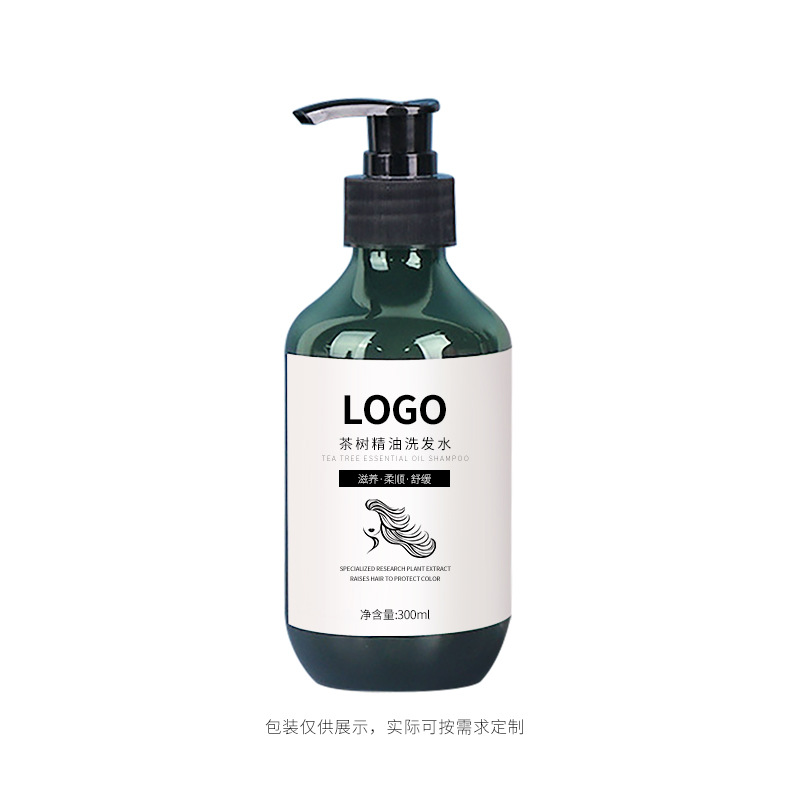
The workshop page describes the production environment and the about us page covers quality systems. Formats that run on shared lines, such as the tea tree shampoo, are listed in the product range. Audit requests can be arranged through contact.
Frequently asked questions
Can you produce Cleaning Validation and Changeover Between Batches in Cosmetic under our own brand?
Cleaning Validation and Changeover Between Batches in Cosmetic is handled as a private label project: you bring the brand and the market position, we cover formula, bulk, filling and packing. Existing bases can be adjusted for texture, fragrance and active level, or we develop from a new brief. Tooling and artwork belong to you, and our name does not appear on the pack.
What is the minimum order quantity?
MOQ is set by net fill per unit, not by category:
| Net fill | MOQ |
|---|---|
| < 15 ml/g | 5,000 pcs |
| 15-50 ml/g (50 included) | 3,000 pcs |
| 50-200 ml/g (200 included) | 2,000 pcs |
| > 200 ml/g | 1,000 pcs |
Several SKUs in one project can share a production run to reach the threshold, and a smaller trial order is possible once the formula is approved.
How long do samples and bulk production take?
Samples take 7-10 working days from a confirmed brief, or 10-15 days when a new mould or artwork is involved. Bulk runs 25-35 days after sample approval and packaging arrival. Repeat orders with an unchanged formula usually move faster.
Which certificates and documents come with the shipment?
The plant runs under GMPC and ISO 22716 with a 100,000-class cleanroom. Each shipment can include COA, MSDS, the full INCI list, stability data and microbiological reports. For the EU we support CPSR and PIF paperwork; for other markets we prepare the file set your importer asks for.
Can we change the formula, fragrance or packaging?
Yes. Texture, viscosity, fragrance, colour and active percentage are adjustable within regulatory limits. Packaging can be sourced by you or by us: tubes, airless bottles, jars, sachets and aluminium foil bags, with silkscreen, hot stamping or label application.
What information do you need to quote?
Category and target function, quantity per SKU, packaging direction, destination market and launch date. With that we reply within 24 hours on business days with feasibility, MOQ and a price range. An NDA can be signed before formulas are discussed.
Need this produced? Talk to the factory.
Wangsha Bio has run OEM/ODM production since 2006: 60,000 sqm plant, 17 lines, 100,000-class cleanroom, GMPC and ISO 22716 certified. Send your brief and we reply within 24 hours on business days with feasibility, MOQ and a price range.
Email lucky@moksha-bio.com | Product range | Workshop