Qingyuan moksha Biotechnology Co., Ltd


Aloe vera gel looks like a simple product and behaves like a difficult one. It is roughly 99 percent water, it darkens, it can develop off-odours, and it supports microbial growth when preservation is weak. Most aloe gel problems trace back to raw material grade and to the thickening system, not to the aloe content itself. Here is what to settle before sampling.
1. Raw Material Grades
Aloe is supplied as spray-dried powder, freeze-dried powder, 1:1 or 10:1 concentrate, and fresh inner-leaf juice. Each has a different cost and a different marketing story. The grade should be stated as an extract ratio plus a specification, not as a percentage of aloe.
Ask for the certificate of analysis covering aloin content, polysaccharide content, microbial limits, heavy metals and pesticide residues. Aloin is the bitter compound found in the latex; for cosmetic use it should be low, and the specification should say how low. A supplier that cannot state an aloin figure is not giving you a specification. Cheaper grades are rarely a shortcut, because they usually cost more in stabilisation work later.
2. Building the Gel
Carbomer is the usual thickener, neutralised to pH 6.5 to 7.5 with triethanolamine or sodium hydroxide. Carbomer gels are clear and pleasant but sensitive to electrolytes, and aloe concentrates carry salts that can collapse the structure. A low-electrolyte grade of aloe helps more than simply raising the carbomer dose.
Alternatives include xanthan gum blends for a more natural feel, and acrylate thickeners for electrolyte tolerance. Each changes the skin feel: carbomer gives a clean, quick-break gel, xanthan gives slip and a slightly stringy texture. Choose the system before the fragrance, because texture and fragrance together define how the product is perceived.
3. Preservation in a High-Water System
With water activity close to one, aloe gel is a favourable environment for microbes. Preservation must be validated in the finished gel, not assumed from the preservative's label claims. Phenoxyethanol with ethylhexylglycerin is a common combination; sodium benzoate and potassium sorbate work at lower pH but are less robust above pH 5.5.
Chelators improve preservative performance, and pH control is part of the system rather than a separate step. Challenge testing should use the finished pack, because a jar exposes the gel to fingers on every use while a tube does not.
4. Colour and Odour Control
Aloe darkens through oxidation and Maillard-type reactions. Excluding oxygen during manufacturing and choosing an opaque or amber pack slows the change markedly. Adding antioxidants such as sodium metabisulfite is effective but can create sensitivity issues and is restricted in some markets; a chelator plus nitrogen flushing is often a better compromise.
Odour is usually microbial or oxidative in origin. If a batch smells sour, the cause is a preservation or hygiene failure, not the aloe grade. Track colour with a colorimeter at release and during stability, and set a numeric limit rather than a verbal description.
5. Filling and Pack Choice
Aloe gel is often filled into tubes, jars or pump bottles. Tubes are the safest choice for preservation and colour, because they limit air contact. Jars suit the category aesthetically but demand a stronger preservative system and a shorter shelf life claim.
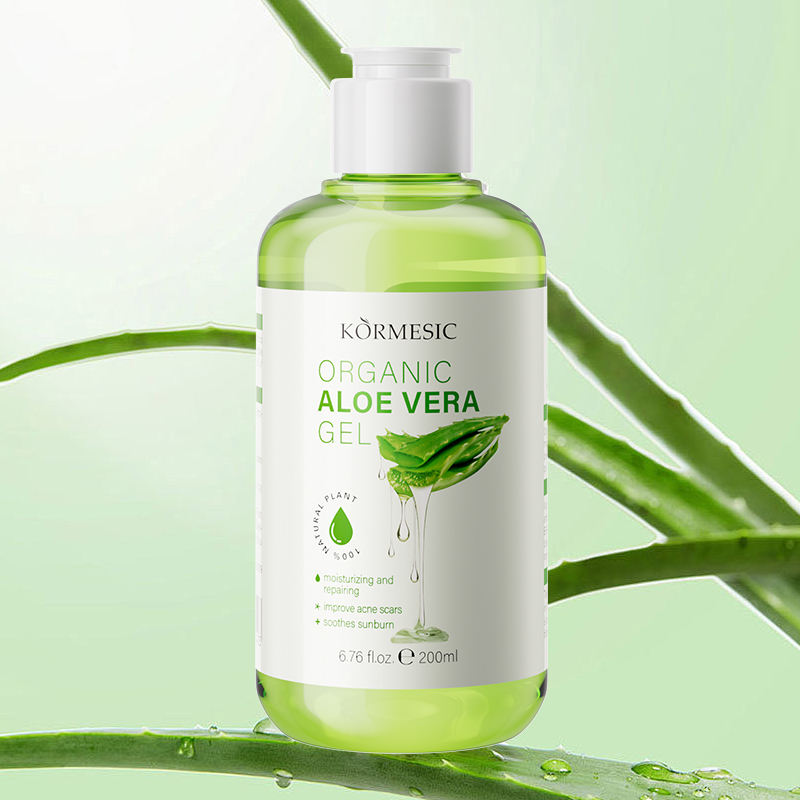
Gel viscosity also affects filling speed and drip at the nozzle. A specification of 20,000 to 40,000 cP at 25°C covers most tube formats; pump formats need a lower viscosity with a yield point that prevents leakage. Ask for a filling trial before the pack is ordered, because gel viscosity and nozzle diameter interact in ways a specification sheet does not capture. An existing gel format is shown in the aloe vera gel listing. The product range shows related formats, about us covers the company profile, and project questions can go through contact.
Frequently asked questions
Can you produce Aloe Vera Gel OEM under our own brand?
Aloe Vera Gel OEM is handled as a private label project: you bring the brand and the market position, we cover formula, bulk, filling and packing. Existing bases can be adjusted for texture, fragrance and active level, or we develop from a new brief. Tooling and artwork belong to you, and our name does not appear on the pack.
What is the minimum order quantity?
MOQ is set by net fill per unit, not by category:
| Net fill | MOQ |
|---|---|
| < 15 ml/g | 5,000 pcs |
| 15-50 ml/g (50 included) | 3,000 pcs |
| 50-200 ml/g (200 included) | 2,000 pcs |
| > 200 ml/g | 1,000 pcs |
Several SKUs in one project can share a production run to reach the threshold, and a smaller trial order is possible once the formula is approved.
How long do samples and bulk production take?
Samples take 7-10 working days from a confirmed brief, or 10-15 days when a new mould or artwork is involved. Bulk runs 25-35 days after sample approval and packaging arrival. Repeat orders with an unchanged formula usually move faster.
Which certificates and documents come with the shipment?
The plant runs under GMPC and ISO 22716 with a 100,000-class cleanroom. Each shipment can include COA, MSDS, the full INCI list, stability data and microbiological reports. For the EU we support CPSR and PIF paperwork; for other markets we prepare the file set your importer asks for.
Can we change the formula, fragrance or packaging?
Yes. Texture, viscosity, fragrance, colour and active percentage are adjustable within regulatory limits. Packaging can be sourced by you or by us: tubes, airless bottles, jars, sachets and aluminium foil bags, with silkscreen, hot stamping or label application.
What information do you need to quote?
Category and target function, quantity per SKU, packaging direction, destination market and launch date. With that we reply within 24 hours on business days with feasibility, MOQ and a price range. An NDA can be signed before formulas are discussed.
Need this produced? Talk to the factory.
Wangsha Bio has run OEM/ODM production since 2006: 60,000 sqm plant, 17 lines, 100,000-class cleanroom, GMPC and ISO 22716 certified. Send your brief and we reply within 24 hours on business days with feasibility, MOQ and a price range.
Email lucky@moksha-bio.com | Product range | Workshop