
 Qingyuan moksha Biotechnology Co., Ltd


Caffeine is one of the few actives that consumers already understand. Coffee means wakefulness, so a cream that contains caffeine seems to promise the same for tired eyes and heavy legs. That intuition is exactly why the ingredient sells well, and why its claims get stretched until they break. Caffeine products live or die on how honestly the claim matches what the formula does. This article covers extracts, realistic concentrations, the claim line and production notes for private label buyers.
What Caffeine Does in a Cosmetic Base
Caffeine is a small, water-soluble xanthine that penetrates readily. In cosmetic use it is associated with a temporary tightening or de-puffing feel, which is why it clusters in eye patches, morning eye serums and body contouring formats. The effect is short-lived and perception-driven. Selling caffeine as an event, a morning ritual, works; selling it as a structural change invites disappointment.
It is also stable and cheap, which makes it easy to formulate. The risks are elsewhere: colour contribution from botanical carriers, odour at higher loads, and crystallisation if the water phase is pushed too cold. The ingredient is forgiving; the extract it arrives with is what needs checking.
Extracts Versus Pure Caffeine
Buyers can source pure caffeine powder or botanical extracts such as coffee seed extract, green coffee oil or guarana. The extract route carries the story and the colour; the pure route carries the potency and the clean label. Many finished products combine both. Decide first whether the coffee story or the caffeine function is the selling point, because it changes the whole ingredient panel.
With extracts, standardisation matters: ask for the caffeine content per gram and the batch consistency. With pure caffeine, assay and particle form matter less, but the carrier solvents used at dosing stage should be documented. An extract without a standardisation sheet is a marketing ingredient, not a formulation one. Comparable tone-oriented sets can be reviewed at this ginseng seaweed eye mask.
Concentration Reality and Sensory Effects
Finished products commonly land in a low-to-mid percentage band for eye care and a wider band for body formats. Pushing caffeine higher adds odour and a bitterness risk without obviously improving the perception of results. More caffeine reads well on a spec sheet and rarely reads well on skin.
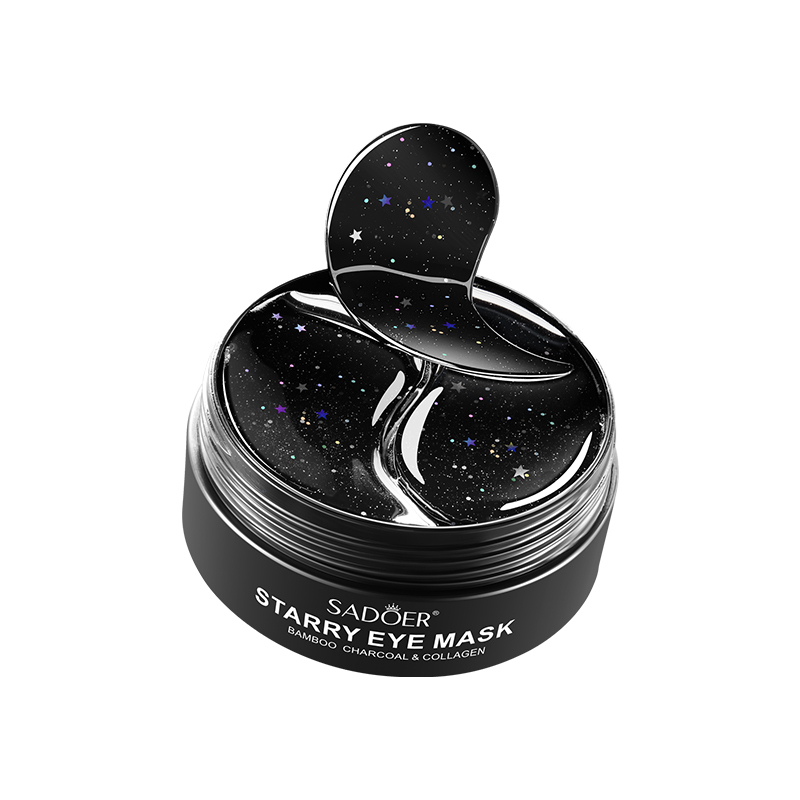
The sensory partners decide user satisfaction. Cooling agents, massage-friendly textures and patches that hold contact all amplify the perceived de-puffing effect far more than extra active does. Design the ritual, not just the recipe, and the ingredient performs better at lower cost. Under-eye formats in the wider product range show how patch and serum roles divide.
The Claim Line for Puffiness and Tone
Cosmetic claims should describe appearance: the look of puffiness, the feel of firmer skin, a more awake appearance around the eyes. Statements about fat tissue, circulation as a medical outcome or lasting anatomical change cross into regulated territory in most markets. Say the eye area looks less puffy, and the claim holds; say puffiness is removed, and it does not.
Different export markets draw the line differently, so a claim that passes in one region may need softening in another. Keeping a master claim sheet with regional variants saves rework. Claims are a supply chain document, not just a marketing one, and they age with each new market. Market-entry notes appear in the news section.
Production Notes for OEM Buyers
Caffeine dissolves in the water phase at moderate temperature, so processing is straightforward. The watch items are the extract carriers, which can darken over time, and colour stability of the finished gel under light. Run the light-exposure stability early, because a yellowing eye gel kills a brightening story fast.
Patch formats add substrate questions: essence load, release liner behaviour and seal integrity all shape the experience. Buyers who fix the format before fixing the claims avoid most rework. A caffeine patch is half formula and half materials engineering, and the second half is the one buyers forget. Production capability is described on the workshop page, and line planning can be raised through the contact page or the inquiry form.
Caffeine remains one of the friendliest actives a private label line can adopt. Keep the claim about looks, standardise the extract, and design the morning ritual, and the ingredient pays for itself.
Frequently asked questions
Can you produce Caffeine in Body and Eye Care under our own brand?
Caffeine in Body and Eye Care is handled as a private label project: you bring the brand and the market position, we cover formula, bulk, filling and packing. Existing bases can be adjusted for texture, fragrance and active level, or we develop from a new brief. Tooling and artwork belong to you, and our name does not appear on the pack.
What is the minimum order quantity?
MOQ is set by net fill per unit: under 15 ml/g 5,000 pcs; 15-50 ml/g 3,000 pcs; 50-200 ml/g 2,000 pcs; above 200 ml/g 1,000 pcs. Several SKUs in one project can share a production run to reach the threshold.
How long do samples and bulk production take?
Samples take 7-10 working days from a confirmed brief, or 10-15 days when a new mould or artwork is involved. Bulk runs 25-35 days after sample approval and packaging arrival. Repeat orders with an unchanged formula usually move faster.
Which certificates and documents come with the shipment?
The plant runs under GMPC and ISO 22716 with a 100,000-class cleanroom. Each shipment can include COA, MSDS, the full INCI list, stability data and microbiological reports. For the EU we support CPSR and PIF paperwork; for other markets we prepare the file set your importer asks for.
Can we change the formula, fragrance or packaging?
Yes. Texture, viscosity, fragrance, colour and active percentage are adjustable within regulatory limits. Packaging can be sourced by you or by us: tubes, airless bottles, jars, sachets and aluminium foil bags, with silkscreen, hot stamping or label application.
What information do you need to quote?
Category and target function, quantity per SKU, packaging direction, destination market and launch date. With that we reply within 24 hours on business days with feasibility, MOQ and a price range. An NDA can be signed before formulas are discussed.
Need this produced? Talk to the factory.
Wangsha Bio has run OEM/ODM production since 2006: 60,000 sqm plant, 17 lines, 100,000-class cleanroom, GMPC and ISO 22716 certified. Send your brief and we reply within 24 hours on business days with feasibility, MOQ and a price range.
Email lucky@moksha-bio.com | Product range | Workshop
