
 Qingyuan moksha Biotechnology Co., Ltd


Late in development, the delay that hurts most is rarely the formula. It is packaging that has not arrived. A bottle, a pump, a cap and a carton often come from four different suppliers, and a slip in any of them stops the filling line. Packaging delivery, more often than formulation, decides the launch date. This guide breaks down what makes up a lead time, how safety stock should be set for a first launch, and where stock-outs actually come from.
What Makes Up a Packaging Lead Time
A pack lead time is a stack of fixed blocks: tooling or plate making, sample approval, bulk production, decoration, inspection and transport. Each block consumes calendar time, and tooling plus sampling is where estimates most often fail. Breaking the total into blocks is the only way to see which block can be compressed.
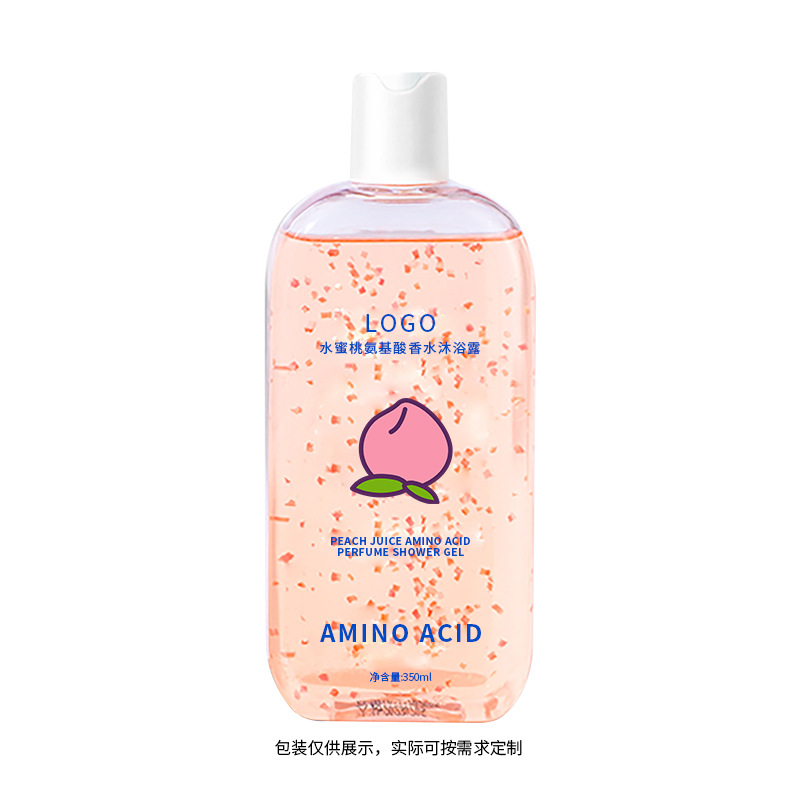
A stock mould removes tooling time but limits choice; a custom mould creates distinction at the cost of investment and a longer cycle. For a first launch, running the schedule on an existing mould is usually the safer way to protect the date. Formats already in production are listed in the product range, and one reference body of this type is this body wash pack.
Material and Component Differences
Plastic bottles and tubes run on short cycles with modest tooling cost. Glass needs moulds plus kiln scheduling and therefore a much longer window. Pumps and airless mechanisms are multi-part assemblies that many plants build to order, which makes them the first item to queue in peak season. The more complex the component, the wider the variation in delivery.
Decoration adds another layer: spraying, metallising, hot stamping and screen printing each need curing and inspection time. Several processes do not simply add up, because transfer and waiting sit between them. Every additional process step increases schedule uncertainty and therefore the buffer required.
Setting Safety Stock on a First Launch
Safety stock is a buffer against variation. For a product with history it can be calculated from consumption and lead-time variance; a first launch has no history, so the figure is derived from forecast volume and minimum order quantity instead. On a first launch, safety stock is really the quantity that carries you to the next replenishment, not a precise calculation.
Three factors that get left out
Component loss during filling, transport and inspection, which should be reserved as a percentage. Print rework, because a colour or registration deviation may require a reprint. Seasonality, since both logistics and plant scheduling tighten before major holidays. Building a loss allowance into the order quantity is faster and cheaper than placing an emergency reorder.
Where Stock-Outs Come From
Three patterns account for most shortages: a single supplier with limited capacity, a missing sub-component such as a pump, and transport delay. Sole sourcing is the easiest of the three to fix and the most commonly ignored.
Useful measures include qualifying a second supplier for critical packs, standardising pumps and caps so they are not custom items, and holding two to three weeks of buffer in the plan. Buffer is not waste; it is the insurance premium on a schedule. Compatibility testing between pack and fill also belongs here, because a failed test that forces a material change invalidates the whole schedule behind it.
Locking the Filling Window with the Factory
The efficient arrangement writes the packaging arrival date into the project plan and lets the factory reserve a filling window against it. Once the window is booked, the packaging date is back-scheduled rather than the line being queried after the goods land.
Capacity should be reserved early, especially before peak season, when plants are often full two months ahead and a late insertion rarely succeeds. Capacity behaves like packaging: it has to be booked in advance. Cooperation routes are described on the about us page, and schedules can be discussed through the inquiry form.
Packaging management looks like purchasing but behaves like project management. Break the lead time down, hold enough stock, qualify a second source and lock the window, and a single pump will stop being able to delay a launch.
Frequently asked questions
Can you produce Packaging Lead Times and Safety Stock under our own brand?
Packaging Lead Times and Safety Stock is handled as a private label project: you bring the brand and the market position, we cover formula, bulk, filling and packing. Existing bases can be adjusted for texture, fragrance and active level, or we develop from a new brief. Tooling and artwork belong to you, and our name does not appear on the pack.
What is the minimum order quantity?
MOQ is set by net fill per unit: under 15 ml/g 5,000 pcs; 15-50 ml/g 3,000 pcs; 50-200 ml/g 2,000 pcs; above 200 ml/g 1,000 pcs. Several SKUs in one project can share a production run to reach the threshold.
How long do samples and bulk production take?
Samples take 7-10 working days from a confirmed brief, or 10-15 days when a new mould or artwork is involved. Bulk runs 25-35 days after sample approval and packaging arrival. Repeat orders with an unchanged formula usually move faster.
Which certificates and documents come with the shipment?
The plant runs under GMPC and ISO 22716 with a 100,000-class cleanroom. Each shipment can include COA, MSDS, the full INCI list, stability data and microbiological reports. For the EU we support CPSR and PIF paperwork; for other markets we prepare the file set your importer asks for.
Can we change the formula, fragrance or packaging?
Yes. Texture, viscosity, fragrance, colour and active percentage are adjustable within regulatory limits. Packaging can be sourced by you or by us: tubes, airless bottles, jars, sachets and aluminium foil bags, with silkscreen, hot stamping or label application.
What information do you need to quote?
Category and target function, quantity per SKU, packaging direction, destination market and launch date. With that we reply within 24 hours on business days with feasibility, MOQ and a price range. An NDA can be signed before formulas are discussed.
Need this produced? Talk to the factory.
Wangsha Bio has run OEM/ODM production since 2006: 60,000 sqm plant, 17 lines, 100,000-class cleanroom, GMPC and ISO 22716 certified. Send your brief and we reply within 24 hours on business days with feasibility, MOQ and a price range.
Email lucky@moksha-bio.com | Product range | Workshop
