Qingyuan moksha Biotechnology Co., Ltd


Most private label moisturisers compete on humectants and lipids. A smaller family competes on turnover: urea and lactic acid, which draw water into the upper skin layers and gently loosen the bonds between dry surface cells at the same time. Urea and lactic acid occupy a rare position where a moisturiser and a smoothing agent are the same molecule set. This guide covers the level ranges that define each positioning, the pH conditions both ingredients prefer, and the specification items buyers usually leave out.
What Urea Actually Does at Different Levels
Urea behaves differently across its dose range, and the label claim should match the dose. At low single-digit percentages it acts mainly as a humectant, binding water in the upper layers of the skin. At medium levels it starts to soften keratin, which is why moisturisers aimed at very dry skin sit around ten percent. At twenty percent and above the smoothing effect is unmistakable and the product reads as a repair item for cracked heels and persistent roughness. Choose the dose from the claim, not the claim from the dose, because the two must agree on the pack.
Urea also destabilises emulsions at higher levels, since it competes for water in the continuous phase and can push some thickener systems out of their working range. High-urea formulas usually need a thickener chosen specifically for electrolyte and urea tolerance. Reference lotion formats are listed in the product range.
Lactic Acid: Two Jobs in One Molecule
Lactic acid combines humectant action with gentle surface renewal, and its contribution depends on the free acid fraction rather than the total amount added. Only the unneutralised portion of the molecule works on the skin surface, so a heavily buffered formula loses most of its benefit even at a respectable inclusion rate. Calculate the free acid content after neutralisation, because the label percentage alone overstates what the formula delivers.
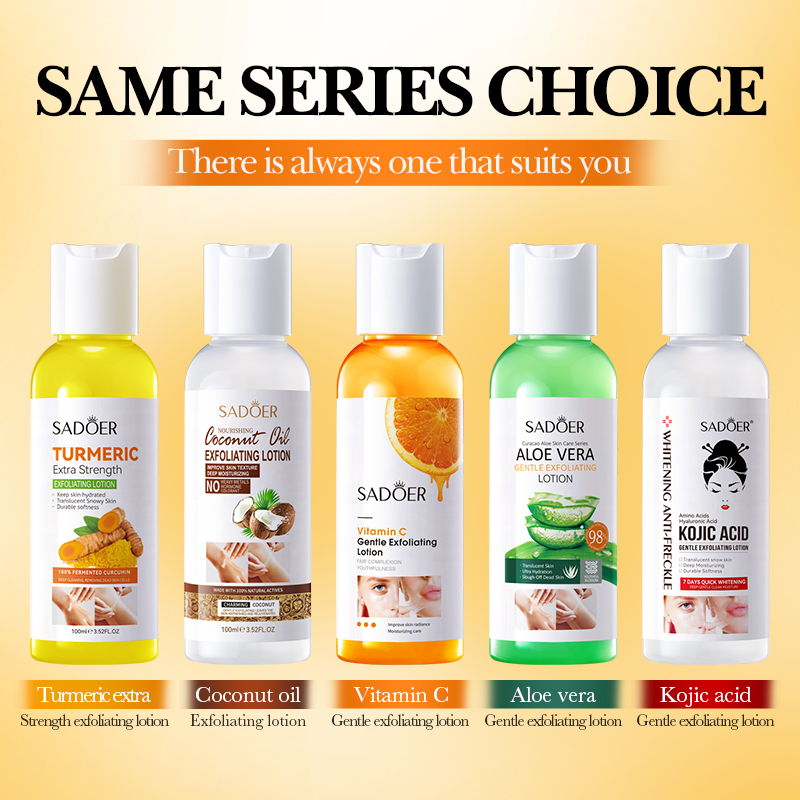
Lactic acid also improves the feel of a moisturiser in a second way: at modest levels it softens the perception of roughness within days, which shortens the interval before a consumer judges the product effective. A visible smoothing result inside one week is the commercial argument for this ingredient family. A related hydrating direction is shown in this exfoliating lotion reference.
pH Windows and Preservative Fit
Both ingredients prefer an acidic environment. Urea is more stable below neutral pH, and lactic acid needs a low pH to keep a meaningful free acid fraction. This pulls the whole formula toward pH values where common preservatives perform unevenly, so the preservation decision has to be made alongside the pH decision rather than after it. Settle the pH target and the preservative system in the same meeting, because each constrains the other.
Stability testing should track pH drift and active content together. Urea can hydrolyse slowly in water-based systems, and lactic acid esters can shift over time in the presence of certain humectants. An assay at every stability checkpoint is the only way to know how much of the active survived the shelf.
Sensory consequences worth planning for
Both materials bring a slight tackiness at functional levels, and high-urea products can feel sticky on application. Odour is the second consideration, since lactic acid carries a faint characteristic smell that low-fragrance formulas will not hide. Plan the sensory adjustments while the formula is still open.
Claim Boundaries and the Specification File
Claims for keratolytic moisturisers sit close to the line between cosmetic language and skin-conditioning language. Wording should describe the look and feel of the skin surface and avoid any suggestion of altering skin structure in a physiological sense. Describe what the surface looks like after use, and the claim stays defensible in every major market.
Three items belong in the written specification: the urea or lactic acid level with an acceptable assay tolerance, the pH window with drift limits, and the pack format used for stability and challenge testing. Urea products in open jars deserve particular attention, since humidity exchange changes the water activity of the remaining product. For a jar pack, humidity uptake belongs in the risk assessment next to preservation. Production conditions are described in the workshop overview.
Urea and lactic acid reward brands that want a functional story without exotic ingredients: the materials are inexpensive, well documented and easy to source. Match the dose to the claim, hold the pH where both actives work, and verify the active content across shelf life. Requirements can be submitted through the contact page, and manufacturer credentials are summarised on the about us page.
Frequently asked questions
Can you produce Urea and Lactic Acid in Private Label Moisturisers under our own brand?
Urea and Lactic Acid in Private Label Moisturisers is handled as a private label project: you bring the brand and the market position, we cover formula, bulk, filling and packing. Existing bases can be adjusted for texture, fragrance and active level, or we develop from a new brief. Tooling and artwork belong to you, and our name does not appear on the pack.
What is the minimum order quantity?
MOQ is set by net fill per unit: under 15 ml/g 5,000 pcs; 15-50 ml/g 3,000 pcs; 50-200 ml/g 2,000 pcs; above 200 ml/g 1,000 pcs. Several SKUs in one project can share a production run to reach the threshold.
How long do samples and bulk production take?
Samples take 7-10 working days from a confirmed brief, or 10-15 days when a new mould or artwork is involved. Bulk runs 25-35 days after sample approval and packaging arrival. Repeat orders with an unchanged formula usually move faster.
Which certificates and documents come with the shipment?
The plant runs under GMPC and ISO 22716 with a 100,000-class cleanroom. Each shipment can include COA, MSDS, the full INCI list, stability data and microbiological reports. For the EU we support CPSR and PIF paperwork; for other markets we prepare the file set your importer asks for.
Can we change the formula, fragrance or packaging?
Yes. Texture, viscosity, fragrance, colour and active percentage are adjustable within regulatory limits. Packaging can be sourced by you or by us: tubes, airless bottles, jars, sachets and aluminium foil bags, with silkscreen, hot stamping or label application.
What information do you need to quote?
Category and target function, quantity per SKU, packaging direction, destination market and launch date. With that we reply within 24 hours on business days with feasibility, MOQ and a price range. An NDA can be signed before formulas are discussed.
Need this produced? Talk to the factory.
Wangsha Bio has run OEM/ODM production since 2006: 60,000 sqm plant, 17 lines, 100,000-class cleanroom, GMPC and ISO 22716 certified. Send your brief and we reply within 24 hours on business days with feasibility, MOQ and a price range.
Email lucky@moksha-bio.com | Product range | Workshop