Qingyuan moksha Biotechnology Co., Ltd


Peptides, certain vitamin derivatives and concentrated botanical extracts often enter a formula at fractions of a percent, and the commercial story rests on that fraction. In a lab beaker everything disperses; at production scale the question becomes whether every drum, every filling hour and every unit carries the same content. Uniformity of low-level actives is a dosing-process problem, not a stirring problem. This guide covers pre-blends, staged dilution and powder pre-dispersion, and what to verify when a batch is scaled up.
Why Direct Dosing Fails at Scale
Adding a small amount of powder into a one-tonne main vessel risks local enrichment: some filling hours run high, others run low, and the variation hides inside normal production records. High-viscosity bases make it worse, because material circulation inside the vessel is slower than intuition suggests. The lower the dose and the thicker the base, the more the active must be pre-dispersed before it enters the main batch.
The problem is also invisible to routine release testing, which covers microbiology and physical parameters and may not include an active-content assay. Without content testing at agreed points, a uniformity defect can reach the market before anyone notices.
Pre-Mix Concentrates: Turning Grams into Litres
For water-soluble actives the standard route is a concentrate prepared in a premix vessel, dissolving the active in a portion of the water phase, humectant or solubiliser, then dosing the liquid into the main batch. The concentrate typically runs one order of magnitude stronger than the target, converting a few grams of powder into tens of kilograms of pumpable liquid. A concentrate shrinks both weighing error and dispersion error at the same time.
Three constraints bound the design: the solvent must not destabilise the main system, the concentrate has a limited holding time, and its pH must be compatible with the batch it joins. Stronger is not better; an over-concentrated premix creates local overexposure inside the vessel.
Oil-soluble and dual-solubility actives
Oil-soluble materials usually dissolve into the oil phase before emulsification. Dual-solubility materials deserve an early phase-behaviour check, because they can precipitate invisibly when temperature or solvent balance shifts. Confirm solubility across the process temperature curve during sampling, before the scale-up batch is scheduled.
Powder Actives: Pre-Dispersing and Granules
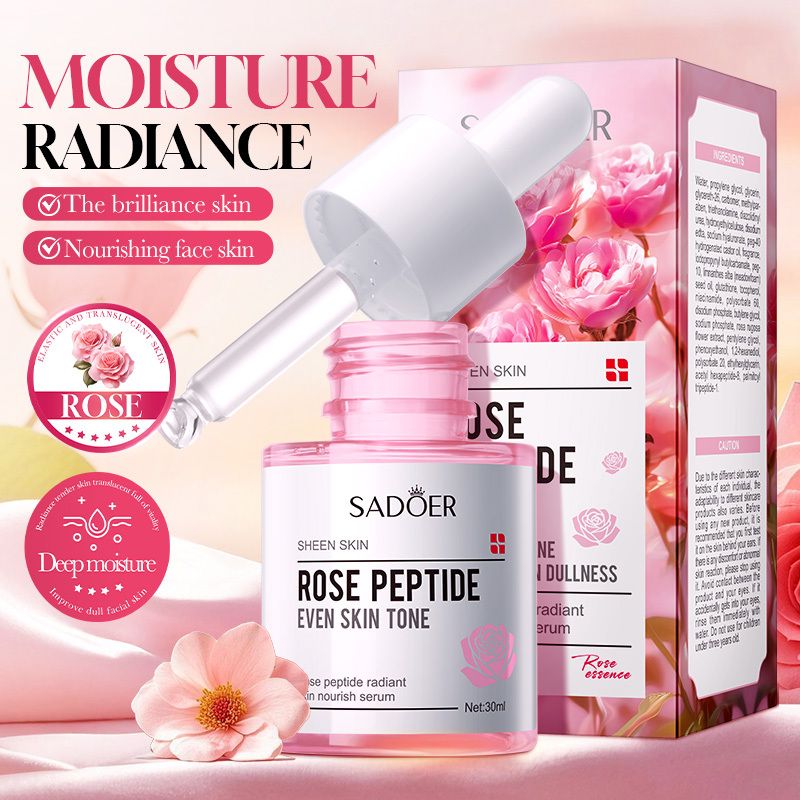
Dry powders thrown into liquid clump, and once a wetted clump forms it resists further dispersion. The usual answers are a pre-dispersed slurry made from a portion of the base, or a supplier-provided granulated or coated grade designed for dispersion. Particle size and wettability decide the pre-dispersion route; finer powders need wetting before shear. Encapsulation is the related route, carrying an unstable active inside a carrier that also improves distribution, as in this polypeptide serum reference.
Verifying the Scale-Up Batch
Small-sample success does not transfer automatically: agitation patterns, addition order and time windows all change with vessel size. A practical acceptance method samples the batch at the start, middle and end of filling and assays active content, with the spread between the three points judged against a written tolerance. Three-point sampling with content assay is far more reliable than accepting a process record on its own. Production and filling conditions are described in the workshop overview.
Acceptance criteria belong in the specification: tolerance range, sampling method, assay method and the responsible party for each. An unwritten verification standard fails exactly when it is needed, so put it on paper before the first production batch.
For brand owners, the request is simple: state the active level, the assay method and the allowed variation in the project brief, and ask for scale-up verification during sampling rather than after market complaints. Uniformity is the floor under every efficacy claim, and it deserves a day of process design more than a week of dispute later. Manufacturer credentials appear on the about us page, and requirements can be submitted through the inquiry form.
Frequently asked questions
Can you produce Pre-Blends and Dilution Stages under our own brand?
Pre-Blends and Dilution Stages is handled as a private label project: you bring the brand and the market position, we cover formula, bulk, filling and packing. Existing bases can be adjusted for texture, fragrance and active level, or we develop from a new brief. Tooling and artwork belong to you, and our name does not appear on the pack.
What is the minimum order quantity?
MOQ is set by net fill per unit: under 15 ml/g 5,000 pcs; 15-50 ml/g 3,000 pcs; 50-200 ml/g 2,000 pcs; above 200 ml/g 1,000 pcs. Several SKUs in one project can share a production run to reach the threshold.
How long do samples and bulk production take?
Samples take 7-10 working days from a confirmed brief, or 10-15 days when a new mould or artwork is involved. Bulk runs 25-35 days after sample approval and packaging arrival. Repeat orders with an unchanged formula usually move faster.
Which certificates and documents come with the shipment?
The plant runs under GMPC and ISO 22716 with a 100,000-class cleanroom. Each shipment can include COA, MSDS, the full INCI list, stability data and microbiological reports. For the EU we support CPSR and PIF paperwork; for other markets we prepare the file set your importer asks for.
Can we change the formula, fragrance or packaging?
Yes. Texture, viscosity, fragrance, colour and active percentage are adjustable within regulatory limits. Packaging can be sourced by you or by us: tubes, airless bottles, jars, sachets and aluminium foil bags, with silkscreen, hot stamping or label application.
What information do you need to quote?
Category and target function, quantity per SKU, packaging direction, destination market and launch date. With that we reply within 24 hours on business days with feasibility, MOQ and a price range. An NDA can be signed before formulas are discussed.
Need this produced? Talk to the factory.
Wangsha Bio has run OEM/ODM production since 2006: 60,000 sqm plant, 17 lines, 100,000-class cleanroom, GMPC and ISO 22716 certified. Send your brief and we reply within 24 hours on business days with feasibility, MOQ and a price range.
Email lucky@moksha-bio.com | Product range | Workshop