Qingyuan moksha Biotechnology Co., Ltd


A frequent brief in private label development asks for two things at once: a skincare product with the look and feel of water, carrying actives that are oils by nature. The bridge between those demands is micellar solubilisation. When it is done well, the product stays crystal clear from production through retail; when it is done poorly, the first cold winter turns the bottle cloudy. Solubilisation design decides whether a clear essence stays clear for its whole shelf life.
How Micellar Solubilisation Works
Surfactant molecules in water assemble into micelles with hydrophobic cores, and lipophilic molecules hide inside those cores while the bulk phase stays transparent. Common solubilisers include polysorbates, PEG-40 hydrogenated castor oil and alkyl polyglucosides, each with its own capacity, odour and skin feel. Solubiliser levels carry a double cost: higher doses raise tackiness on skin and widen the irritation question at the same time.
Fragrance is the everyday solubilisation task in a toner, while lipophilic actives such as certain brightening agents demand a heavier load. The more nonpolar and the higher the dosage of the active, the harder the solubilisation brief becomes, so confirm the feasible loading in a clear system before promising the claim.
Processing Order Matters
Identical formulas can turn out with visibly different clarity depending on how they were built. The reliable route pre-mixes the lipophilic ingredients with the solubiliser until homogeneous, then adds this concentrate slowly into the water phase under steady agitation so micelles form gradually. Dumping oil directly into water and hoping strong stirring will rescue the batch is the classic failure in this category.
Temperature and shear need limits too. Excess heat destabilises micelles and reduces effective capacity, while overly aggressive shear loads the batch with foam that spoils filling appearance. Lock the processing window at pilot scale, because laboratory parameters rarely transfer unchanged to production tanks. A clear fermentation-based toner reference is the blue gemstone essence water on the Chinese catalogue, and comparable formats appear in the product section.
Cold Weather Is the Real Examination
The common failure arrives in winter logistics or cold warehouses: the solubilisation system saturates, the load drops out, and the bottle turns milky. Recovery is unreliable, and even when the batch re-clears at room temperature, micro-crystals often remain as seeds for faster recrystallisation. Run freeze-thaw cycling between refrigerated and ambient conditions for at least three cycles before approving any clear formula.
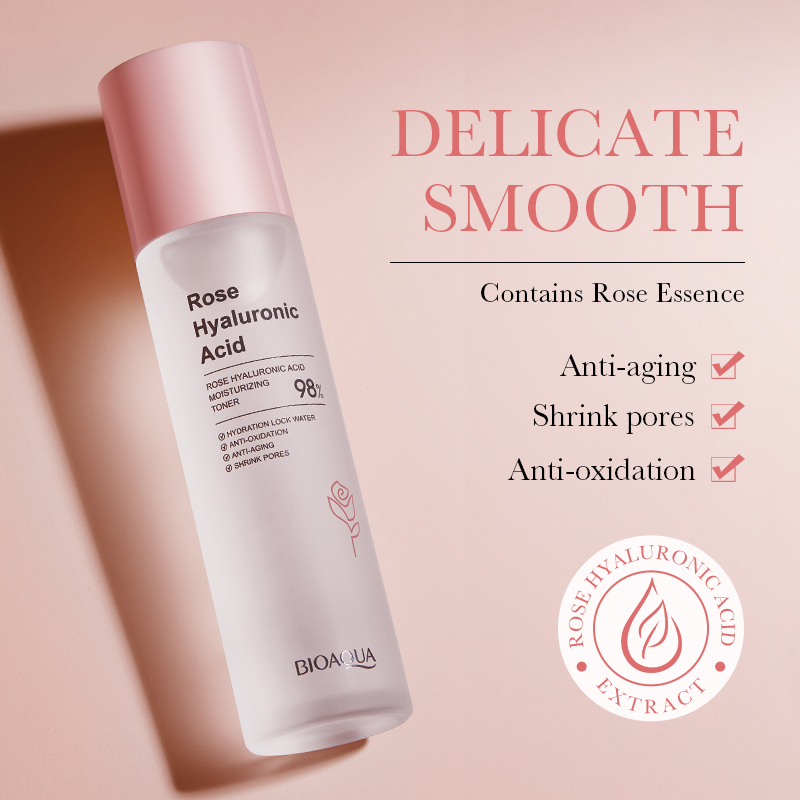
Countermeasures include raising solubiliser margin, switching to a stronger blended system, or trimming the active dosage. Each path trades cost, clarity or concentration, and the trade-off should be made deliberately. Reserving low-temperature margin at the formulation stage costs far less than reformulating after a market launch. The rose hyaluronic acid toner on the product page shows a comparable clear format.
Claims and Consumer Communication
Clarity itself is a selling point, but wording must stay precise. Describing the sensory experience of a water-light texture is supportable; implying that transparent equals better absorption drifts into unevidenced territory that platform reviews and consumer groups watch closely. Write the appearance claim as an appearance claim and back the efficacy claim with data, keeping the two lanes separate.
Ingredient lists place solubilisers after actives, and informed consumers sometimes question them. Prepare a short technical explanation of why solubilisation is part of the formulation technology rather than filler. Presenting the solubilisation logic openly usually converts a sceptic question into a credibility point. Company background is on the about us page.
Practical Briefing Advice
When briefing a clear water-based product, state three inputs: the target active and its concentration, the clarity grade, full transparency or slight pearl, and the climate range of the sales regions. Those three inputs fix the solubilisation route and the cost band before sampling starts. Sampling runs through the contact page, the RFQ form is on the Inquiry page, and further formulation notes are in the news section.
Frequently asked questions
Can you produce Solubilising Lipophilic Actives into Clear Water-Based Formulas under our own brand?
Solubilising Lipophilic Actives into Clear Water-Based Formulas is handled as a private label project: you bring the brand and the market position, we cover formula, bulk, filling and packing. Existing bases can be adjusted for texture, fragrance and active level, or we develop from a new brief. Tooling and artwork belong to you, and our name does not appear on the pack.
What is the minimum order quantity?
MOQ is set by net fill per unit: under 15 ml/g 5,000 pcs; 15-50 ml/g 3,000 pcs; 50-200 ml/g 2,000 pcs; above 200 ml/g 1,000 pcs. Several SKUs in one project can share a production run to reach the threshold.
How long do samples and bulk production take?
Samples take 7-10 working days from a confirmed brief, or 10-15 days when a new mould or artwork is involved. Bulk runs 25-35 days after sample approval and packaging arrival. Repeat orders with an unchanged formula usually move faster.
Which certificates and documents come with the shipment?
The plant runs under GMPC and ISO 22716 with a 100,000-class cleanroom. Each shipment can include COA, MSDS, the full INCI list, stability data and microbiological reports. For the EU we support CPSR and PIF paperwork; for other markets we prepare the file set your importer asks for.
Can we change the formula, fragrance or packaging?
Yes. Texture, viscosity, fragrance, colour and active percentage are adjustable within regulatory limits. Packaging can be sourced by you or by us: tubes, airless bottles, jars, sachets and aluminium foil bags, with silkscreen, hot stamping or label application.
What information do you need to quote?
Category and target function, quantity per SKU, packaging direction, destination market and launch date. With that we reply within 24 hours on business days with feasibility, MOQ and a price range. An NDA can be signed before formulas are discussed.
Need this produced? Talk to the factory.
Wangsha Bio has run OEM/ODM production since 2006: 60,000 sqm plant, 17 lines, 100,000-class cleanroom, GMPC and ISO 22716 certified. Send your brief and we reply within 24 hours on business days with feasibility, MOQ and a price range.
Email lucky@moksha-bio.com | Product range | Workshop