
 Qingyuan moksha Biotechnology Co., Ltd


Tranexamic acid has moved from a niche ingredient to a routine name on brightening labels, largely because it suits consumers who find stronger tone actives uncomfortable. It is water-soluble, easy to handle at the bench, and compatible with most base systems. That ease is also why it gets over-promised: a material that is simple to dissolve still has to survive shelf life inside a finished product. Being easy to formulate is not the same as being easy to formulate well. This guide covers what to settle with a manufacturer before sampling.
What Tranexamic Acid Brings to a Brightening Brief
Tranexamic acid suits products aimed at visible evenness rather than dramatic change. It tolerates a wide pH band, dissolves readily in the water phase, and does not require encapsulation or a special delivery system, which keeps cost and process complexity low. Its commercial value lies in being the gentle option that still carries a credible tone story.
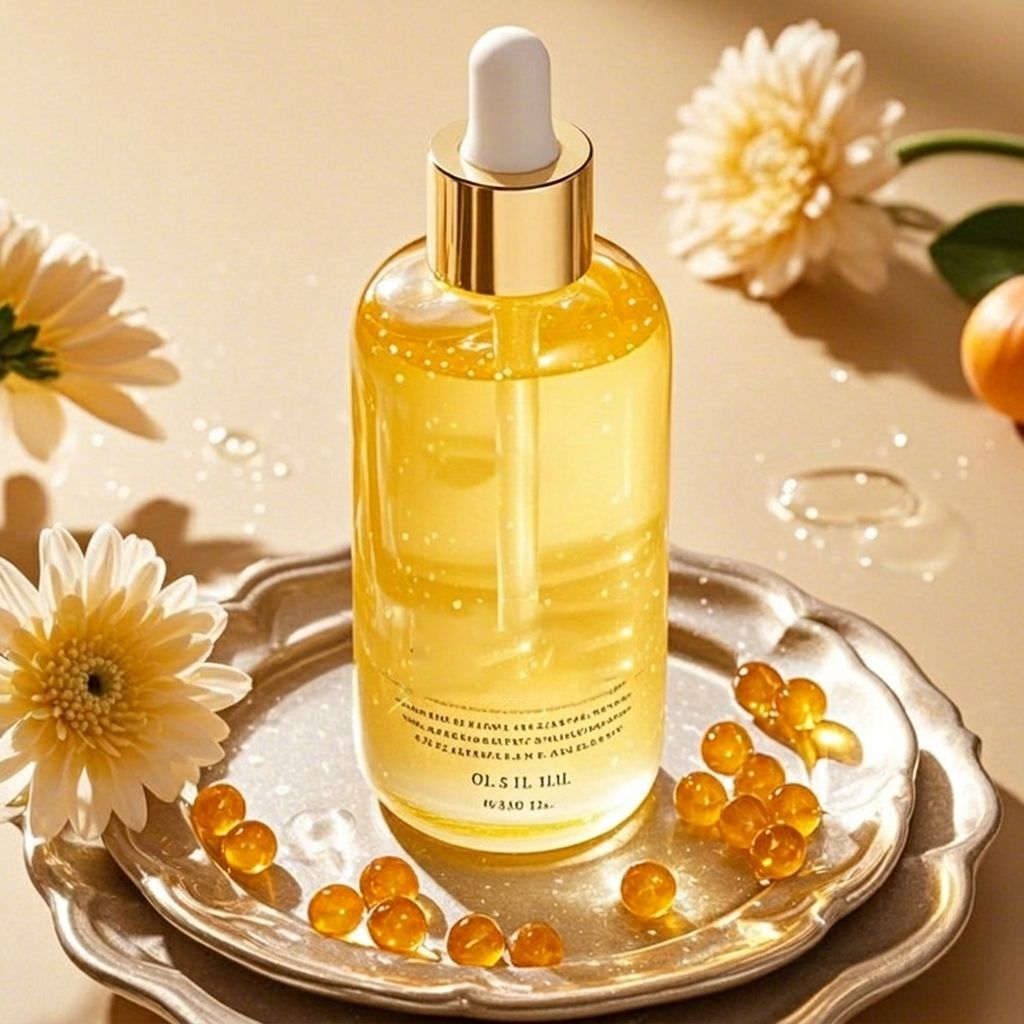
Because it is simple to handle, it is often used to prop up a formula that already carries several other actives. That approach raises the compatibility load without adding much to the story. A brightening product built around one well-supported active usually outperforms one built around five. Reference formats in the existing range include this brightening serum direction.
Pairing Tranexamic Acid with Other Tone Actives
The common pairings are niacinamide for general tone work and barrier support, vitamin C derivatives for antioxidant positioning, and botanical tone actives for a softer marketing angle. Each pairing introduces its own constraints: niacinamide prefers a near-neutral pH, many vitamin C derivatives need a lower one, and some botanicals bring colour that drifts over time. Settle the pH question before choosing the pairing, because it decides which combinations are even possible.
Where two actives pull the pH in opposite directions, the practical answer is often to split them across two products in a routine rather than to force them into one bottle. Two well-behaved products beat one compromised formula, and the routine also carries more retail value. Existing multi-step formats are listed in the product range.
Humectant and soothing support
Tone-focused routines are usually used for months, so tolerance over time matters as much as the first application. Pairing the active with a well-built humectant and soothing base keeps the product usable daily, which is where results are actually built.
pH, Solubility and Process Temperature
Tranexamic acid is stable across a reasonably wide pH band, which gives formulators room, but the surrounding system usually narrows it. Preservative performance, thickener choice and the other actives all impose limits, and the working pH has to satisfy all of them at once. The useful pH is the one that satisfies the whole system, not the one that suits the headline active.
Process temperature is the second lever. A hot emulsification stage is efficient but puts more thermal load on water-soluble actives, and a late-stage addition at a lower temperature reduces that exposure. Adding the active after the emulsification step is the cheapest protection available and costs almost nothing in process time. Where pH is critical, also request that it be measured at every stability checkpoint rather than only at the start and end, since drift is gradual and easy to miss.
Stability, Colour and Packaging
Brightening products are judged on appearance before they are judged on anything else, and colour drift is the usual failure mode. Light exposure, trace metal content and the presence of botanical extracts all accelerate it. Colour is a specification item for this category, not a cosmetic detail.
Stability work should run on the finished pack across three temperature conditions with an added light-exposure condition, and it should record colour and odour at each checkpoint alongside pH and viscosity. Packaging choice matters here: a clear bottle on a lit shelf exposes the contents continuously, while an opaque or coated pack removes that variable entirely. Deciding the pack early turns a colour problem into a design decision instead of a reformulation. Production and cleanroom conditions are described in the workshop overview.
Dosage, Cost and Claims
Dosage should be set at the highest level the system carries comfortably rather than at the highest number that reads well on a label. High loadings can shift viscosity, affect odour and change the preservative picture, so more is not automatically better. The right dose is the one that stays stable from batch one to the last batch produced.
On claims, wording should describe the appearance of the skin and the experience of use, and avoid any implication of a physiological effect. Claims that mention how quickly a change appears need a documented basis before they go on pack. Write the claim set while the formula is still open so the supporting work gets scheduled with the project. Manufacturer documentation is summarised on the about us page, and requirements can be submitted through the inquiry form.
Tranexamic acid rewards restraint rather than novelty. Choose one credible pairing, fix the pH for the whole system, remove colour drift as a variable, and keep claims inside the data. A brightening product that stays stable and tolerable for months will outlast a louder launch that changes colour in eight weeks. Send your brief through the contact page to scope a sampling plan.
Frequently asked questions
Can you produce Tranexamic Acid Brightening Skincare under our own brand?
Tranexamic Acid Brightening Skincare is handled as a private label project: you bring the brand and the market position, we cover formula, bulk, filling and packing. Existing bases can be adjusted for texture, fragrance and active level, or we develop from a new brief. Tooling and artwork belong to you, and our name does not appear on the pack.
What is the minimum order quantity?
MOQ is set by net fill per unit, not by category:
| Net fill | MOQ |
|---|---|
| < 15 ml/g | 5,000 pcs |
| 15-50 ml/g (50 included) | 3,000 pcs |
| 50-200 ml/g (200 included) | 2,000 pcs |
| > 200 ml/g | 1,000 pcs |
Several SKUs in one project can share a production run to reach the threshold, and a smaller trial order is possible once the formula is approved.
How long do samples and bulk production take?
Samples take 7-10 working days from a confirmed brief, or 10-15 days when a new mould or artwork is involved. Bulk runs 25-35 days after sample approval and packaging arrival. Repeat orders with an unchanged formula usually move faster.
Which certificates and documents come with the shipment?
The plant runs under GMPC and ISO 22716 with a 100,000-class cleanroom. Each shipment can include COA, MSDS, the full INCI list, stability data and microbiological reports. For the EU we support CPSR and PIF paperwork; for other markets we prepare the file set your importer asks for.
Can we change the formula, fragrance or packaging?
Yes. Texture, viscosity, fragrance, colour and active percentage are adjustable within regulatory limits. Packaging can be sourced by you or by us: tubes, airless bottles, jars, sachets and aluminium foil bags, with silkscreen, hot stamping or label application.
What information do you need to quote?
Category and target function, quantity per SKU, packaging direction, destination market and launch date. With that we reply within 24 hours on business days with feasibility, MOQ and a price range. An NDA can be signed before formulas are discussed.
Need this produced? Talk to the factory.
Wangsha Bio has run OEM/ODM production since 2006: 60,000 sqm plant, 17 lines, 100,000-class cleanroom, GMPC and ISO 22716 certified. Send your brief and we reply within 24 hours on business days with feasibility, MOQ and a price range.
Email lucky@moksha-bio.com | Product range | Workshop
