Qingyuan moksha Biotechnology Co., Ltd


Cleansing oils sit at the intersection of two opposing expectations: dissolve stubborn makeup and sunscreen like an oil, rinse away like a milk. That single tension shapes every formulation decision in the category, from oil selection to emulsifier ratio to pump design. A cleansing oil is judged twice, on the massage and on the rinse, and both judgements are unforgiving. This guide covers the design choices that separate a repeat purchase from a returned bottle.
Why Cleansing Oils Keep Growing
High-protection sunscreens, long-wear foundations and waterproof mascara are exactly the products users struggle to remove, and they are exactly the products consumers wear more of every year. Oil dissolves them on contact in a way micellar water never will. The growth of cleansing oils follows directly from the growth of high-performance complexion products.
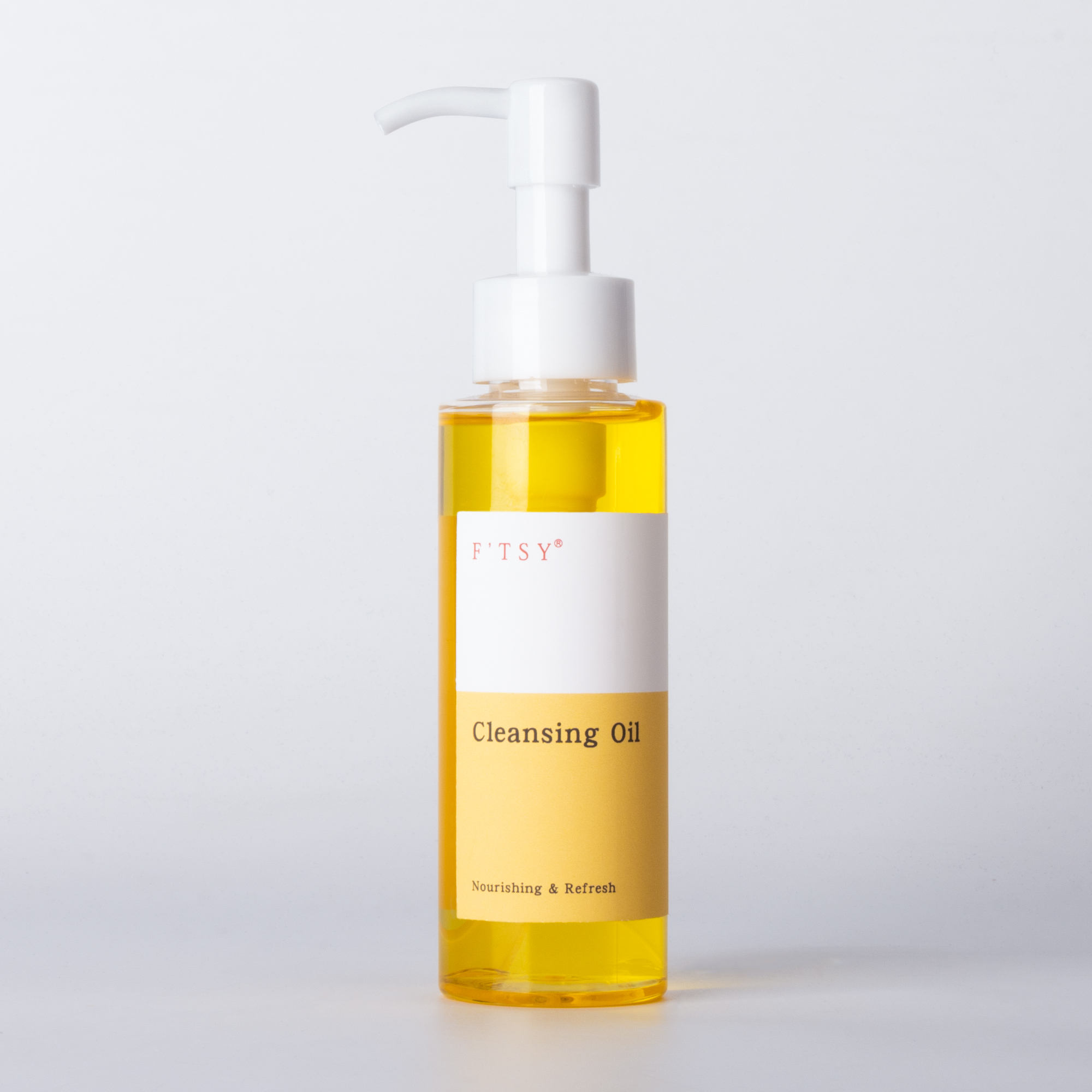
Oil cleansing also fits the gentle-cleansing narrative better than strong surfactant gels, because the cleaning work is done by dissolution rather than by aggressive foaming. Formats in the current range include this pure cleansing oil reference, and a multi-effect cleansing oil direction is shown in this sensitive-skin cleansing oil.
The Oil Phase: Esters, Triglycerides and Slip
The base oil decides the feel of the massage phase. Light esters glide and rinse easily; triglyceride oils feel richer and dissolve pigment well; mineral oil options offer maximum tolerance at the cost of a plant-based story. Blend rather than choose a single oil, because no single oil covers dissolve, slip and rinse at once.
Pigment load capacity matters for markets with heavy makeup use, and it is measurable: a dispersion test against standard foundation and mascara gives a comparable score across variants. Test the oil phase against the actual makeup products of the target market, because wear-performance formulas differ by region.
The Emulsifier: Where Rinse-Off Feel Is Decided
Water-soluble emulsifiers turn the oil into a milky emulsion on contact with water, letting it rinse clean instead of leaving a film. The choice of emulsifier, and its proportion, is the single most consequential decision in the formula. Too little emulsifier leaves a residue; too much strips the slip that makes oil cleansing feel like care rather than detergence.
Residue and after-feel targets
The professional target is a rinse that finishes without tightness and without slip. Panels should score after-feel at a fixed interval after towel-drying, because the perception shifts over the following minutes. Define the after-feel in writing before sampling, so the panel argues about the product rather than about the goal.
Preservation is straightforward in an anhydrous product, but water ingress during use is real, so the pack and the usage instructions must acknowledge it. Manufacturing and filling conditions are described in the workshop overview.
Eye Area and Sensitive Positioning
Many users employ cleansing oils on eye makeup, which puts the formula near the most reactive skin on the face. Low-irritation oil choices, fragrance restraint and ophthalmologist-style testing all strengthen a sensitive positioning. A cleansing oil that stings eyes once loses the user for good, so this test belongs in the acceptance criteria.
Sensitive-skin positioning also benefits from short ingredient lists and transparent emulsifier choices, since the format is often marketed as an alternative to surfactant cleansers. The wider range is listed in the product range.
Pack and Specification Items
Cleansing oils are usually sold in pump bottles, and pump quality decides daily experience: a slow or dripping pump undermines an otherwise excellent formula. Viscosity has to match the pump, not the other way round. Specify the pump flow rate alongside the viscosity, because they must be developed as one system.
Four items belong in the specification: the oil phase composition, the emulsifier ratio and after-feel target, pigment load capacity against reference makeup, and eye-area tolerance results. A cleansing oil lives or dies on the rinse, so the specification has to describe the rinse, not just the ingredients. Manufacturer credentials are summarised on the about us page, and briefs can be submitted through the inquiry form.
Cleansing oils reward precision on the two moments the user actually remembers: the glide of the massage and the clean finish of the rinse. Blend the oil phase deliberately, tune the emulsifier to a written after-feel target, and match the pump to the viscosity, and the format becomes one of the most loyal categories in a private label range.
Frequently asked questions
Can you produce Cleansing Oils under our own brand?
Cleansing Oils is handled as a private label project: you bring the brand and the market position, we cover formula, bulk, filling and packing. Existing bases can be adjusted for texture, fragrance and active level, or we develop from a new brief. Tooling and artwork belong to you, and our name does not appear on the pack.
What is the minimum order quantity?
MOQ is set by net fill per unit: under 15 ml/g 5,000 pcs; 15-50 ml/g 3,000 pcs; 50-200 ml/g 2,000 pcs; above 200 ml/g 1,000 pcs. Several SKUs in one project can share a production run to reach the threshold.
How long do samples and bulk production take?
Samples take 7-10 working days from a confirmed brief, or 10-15 days when a new mould or artwork is involved. Bulk runs 25-35 days after sample approval and packaging arrival. Repeat orders with an unchanged formula usually move faster.
Which certificates and documents come with the shipment?
The plant runs under GMPC and ISO 22716 with a 100,000-class cleanroom. Each shipment can include COA, MSDS, the full INCI list, stability data and microbiological reports. For the EU we support CPSR and PIF paperwork; for other markets we prepare the file set your importer asks for.
Can we change the formula, fragrance or packaging?
Yes. Texture, viscosity, fragrance, colour and active percentage are adjustable within regulatory limits. Packaging can be sourced by you or by us: tubes, airless bottles, jars, sachets and aluminium foil bags, with silkscreen, hot stamping or label application.
What information do you need to quote?
Category and target function, quantity per SKU, packaging direction, destination market and launch date. With that we reply within 24 hours on business days with feasibility, MOQ and a price range. An NDA can be signed before formulas are discussed.
Need this produced? Talk to the factory.
Wangsha Bio has run OEM/ODM production since 2006: 60,000 sqm plant, 17 lines, 100,000-class cleanroom, GMPC and ISO 22716 certified. Send your brief and we reply within 24 hours on business days with feasibility, MOQ and a price range.
Email lucky@moksha-bio.com | Product range | Workshop