Qingyuan moksha Biotechnology Co., Ltd


Soothing skincare has become a volume category in its own right, and formulators keep looking for actives that do more than feel cooling. Ectoine, a small protective molecule originally studied in extremophile microorganisms, has moved steadily into that role, joined by a family of related osmolytes. Ectoine's appeal is that its story is scientific without being medical, which is exactly where soothing claims need to sit. This guide explains what the ingredient does, how to dose it and what belongs in the file behind it.
What Ectoine and Osmolytes Actually Do
Ectoine is a compatible solute: microorganisms produce it to protect proteins and cell structures under stress such as salt, heat and drought. In cosmetics it is positioned as a cell-protective and hydration-supporting active, working through water binding and structural stabilisation rather than through any drug-like action. The mechanism is protection, and the claim language should be protection too.
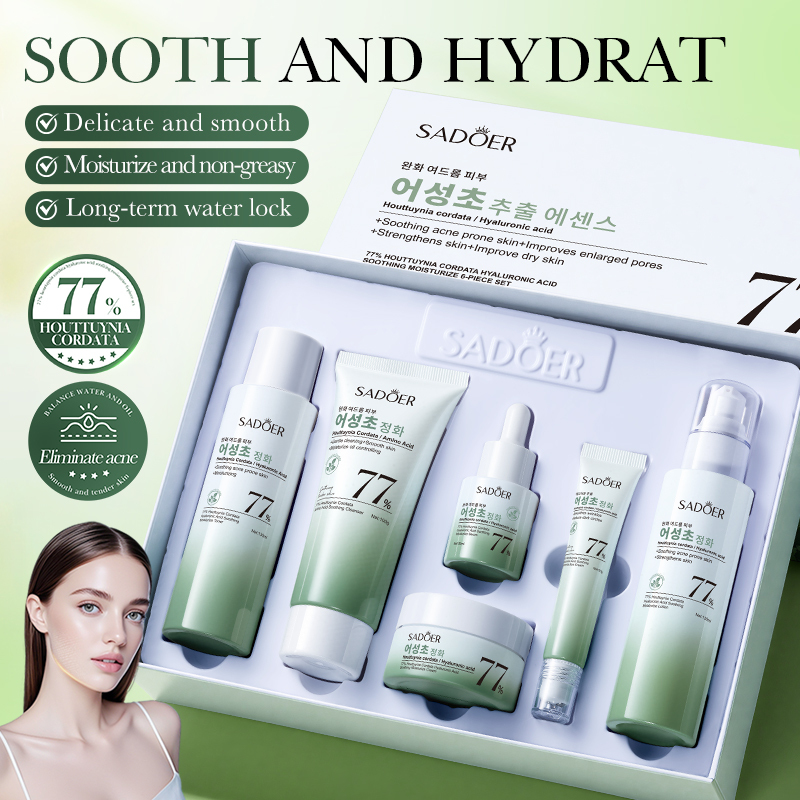
The osmolyte family includes betaine, taurine and inositol alongside ectoine, each with its own cost profile and evidence depth. They are frequently combined, which reads well on a label but multiplies the documentation work. One well-documented osmolyte outsells three undocumented ones on the same panel. A soothing set built on botanical calming agents is shown in this houttuynia soothing reference.
Dosage and Where It Fits in a Range
Ectoine is water-soluble and easy to incorporate: no emulsifier complications, no pH drama, no heat sensitivity worth writing home about. Effective positioning usually puts it in serums, essences and light creams aimed at reactive or environmentally stressed skin. Ectoine belongs in a daily-use soothing product, not in an occasional intensive mask, because its logic is continuous protection.
Use levels follow supplier guidance, and honest sampling compares two or three levels in the same base. The ingredient itself is comparatively expensive, so dosage discipline matters commercially as well as technically. Price ectoine products by the value of the positioning they unlock, not by the raw material cost alone.
Pairing With a Calming Base
Osmolytes work within a system, and the system for reactive skin is well understood: mild humectants, barrier-supporting lipids, low fragrance or none, and minimal penetration enhancers. A centella-based range shows how the botanical and osmolyte layers can complement each other, as in this centella soothing set reference.
Avoid the temptation to stack ectoine with strong actives in the same product, because the combination complicates both tolerance testing and the claim story. A soothing product that also promises resurfacing undermines its own positioning. Cleanroom and production conditions are described in the workshop overview.
Stability and compatibility checks
Ectoine is stable in typical cosmetic pH ranges and coexists with common preservative systems, so standard three-temperature stability work usually suffices. Pay attention instead to the finish of the formula: high levels of small water-soluble solids can shift the drying feel, so sensory re-checks after storage belong in the programme.
Claims and Documentation
Soothing claims must stay on the appearance side: reduced-looking redness, comfortable feel, skin that looks calm. Words implying a physiological or medical action are the classic failure mode in this category. Write every claim as an observation about how skin looks and feels, and the file stays defensible.
Supplier documentation should cover origin, purity, and any test data the brand intends to reference. Because ectoine marketing often leans on studies from adjacent fields, keep only the claims the finished formula itself can carry. Borrowed evidence is the most common and most avoidable compliance risk with trendy actives. Manufacturer credentials are summarised on the about us page.
Sourcing and Buyer Questions
Ectoine supply is concentrated among a few producers, so continuity terms matter more than for commodity actives. Ask the supplier for grade options, typical use levels, and whether a lower-cost osmolyte blend achieves the positioning at a better unit cost. A blended osmolyte system often delivers the label story at a price the range can carry. The wider range is listed in the product range, and briefs can be submitted through the contact page.
Ectoine and its relatives give private label brands a credible soothing story backed by real chemistry rather than by cooling sensations. Fit it into a disciplined calming base, keep the claims observational, and confirm the supply terms before the launch calendar depends on it.
Frequently asked questions
Can you produce Ectoine and Osmolytes in Private Label Soothing Skincare under our own brand?
Ectoine and Osmolytes in Private Label Soothing Skincare is handled as a private label project: you bring the brand and the market position, we cover formula, bulk, filling and packing. Existing bases can be adjusted for texture, fragrance and active level, or we develop from a new brief. Tooling and artwork belong to you, and our name does not appear on the pack.
What is the minimum order quantity?
MOQ is set by net fill per unit: under 15 ml/g 5,000 pcs; 15-50 ml/g 3,000 pcs; 50-200 ml/g 2,000 pcs; above 200 ml/g 1,000 pcs. Several SKUs in one project can share a production run to reach the threshold.
How long do samples and bulk production take?
Samples take 7-10 working days from a confirmed brief, or 10-15 days when a new mould or artwork is involved. Bulk runs 25-35 days after sample approval and packaging arrival. Repeat orders with an unchanged formula usually move faster.
Which certificates and documents come with the shipment?
The plant runs under GMPC and ISO 22716 with a 100,000-class cleanroom. Each shipment can include COA, MSDS, the full INCI list, stability data and microbiological reports. For the EU we support CPSR and PIF paperwork; for other markets we prepare the file set your importer asks for.
Can we change the formula, fragrance or packaging?
Yes. Texture, viscosity, fragrance, colour and active percentage are adjustable within regulatory limits. Packaging can be sourced by you or by us: tubes, airless bottles, jars, sachets and aluminium foil bags, with silkscreen, hot stamping or label application.
What information do you need to quote?
Category and target function, quantity per SKU, packaging direction, destination market and launch date. With that we reply within 24 hours on business days with feasibility, MOQ and a price range. An NDA can be signed before formulas are discussed.
Need this produced? Talk to the factory.
Wangsha Bio has run OEM/ODM production since 2006: 60,000 sqm plant, 17 lines, 100,000-class cleanroom, GMPC and ISO 22716 certified. Send your brief and we reply within 24 hours on business days with feasibility, MOQ and a price range.
Email lucky@moksha-bio.com | Product range | Workshop